Why green investors are warming to nuclear opportunities
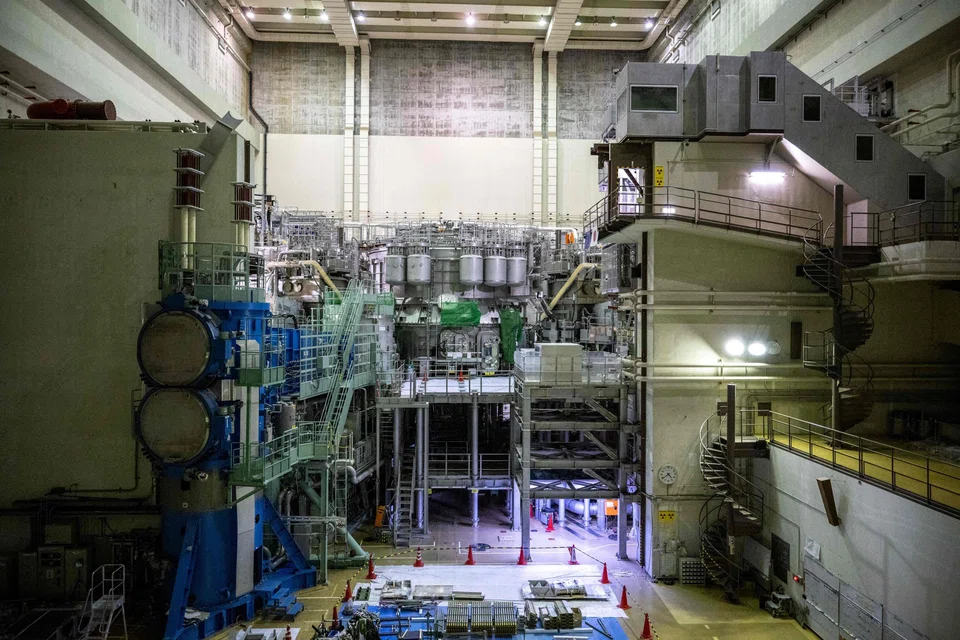
NUCLEAR energy is a controversial topic among sustainable investors. While the technology does not require the burning of fossil fuels and does not release carbon dioxide, nuclear power stations pose other social concerns over safety and the treatment of radioactive waste.
Many investors focused on environmental, social and governance (ESG) factors have therefore chosen to exclude nuclear energy from their portfolios.
Attitudes towards nuclear power, however, are changing in many countries. Nowhere is this more noticeable than in Japan, where the world’s most recent serious nuclear accident took place in 2011 following an earthquake and tsunami. Tokyo has since launched a major nuclear push, restarting dormant reactors and extending the operational lives of others.
The situation between Russia and Ukraine has made energy security a priority for governments everywhere, and there is growing recognition that the battle against climate change will not be won without nuclear power.
According to the International Energy Agency, global nuclear energy capacity will need to double between 2020 and 2050 to put the world on track to net zero.
A big bang moment is approaching. At the COP28 climate conference in Dubai, world leaders formally recognised nuclear energy as a solution to climate change. Twenty-two countries – including Japan and South Korea – agreed to treble their nuclear capacity by 2050. About 60 reactors are being built around the globe.
Investment increasing
This global policy shift is pulling more investment into the nuclear energy sector, facilitated by an evolving approach to sustainable financing.
In 2022, Europe reinstated nuclear power in its taxonomy of sustainable activities. The same year, South Korea included nuclear power in its so-called “K-Taxonomy” – a classification of green activities.
The United Kingdom, where nuclear energy is a vital pillar of a net zero strategy, followed suit in 2023, classifying the technology as “environmentally sustainable”. Nuclear power generation remains eligible for green financing in China.
Major economies have also rolled out subsidies to accelerate the deployment of nuclear energy. The United States’ Inflation Reduction Act includes support for nuclear development, as does Canada’s Made-in-Canada Plan. The British and French governments also provide financial support.
The capital markets are warming to the nuclear energy industry, too. Barclays’ research indicated that less than 20 per cent of sustainable investment funds now exclude the nuclear energy sector.
A 2022 Barclays survey found that 40 per cent of respondents became more positive on nuclear energy in response to the rise in fossil fuel prices following the Russia-Ukraine situation.
Late last year, French utility company EDF priced Europe’s first nuclear green bond – highlighting the appeal of nuclear energy to sustainable investors.
This bodes well for continued growth of the nuclear energy sector. Indeed, the sector is becoming a popular theme for equity investors globally.
Yet it is Asia – where strong economic momentum and population growth are driving a rapid increase in electricity demand – that will be at the heart of the growth story. This gives local investors access to attractive opportunities related to the region’s nuclear push.
China, India, South Korea and Japan are building 60 per cent of the world’s new reactors, and could see operating capacity grow 84 per cent between 2022 and 2030.
Asia leads the way
China – where nuclear power is an essential part of the government’s economic and energy strategy – is leading the pack.
In 2022, the country was already the world’s third-largest nuclear economy. Beijing’s approvals of nuclear power have clearly accelerated in the past two years. China is expected to overtake the US and France to have the world’s largest nuclear power fleet by 2030. Nuclear power is seen to meet 10 per cent of China’s electricity demand by 2035.
There is promise elsewhere across the region. Approvals in India are ticking up too. In South-east Asia, which last year consumed more coal than the US and the European Union, excitement is growing about how small modular reactors (SMRs) can be deployed.
SMRs – which are less expensive and can be used to power smaller grids – are also safer than existing reactors, according to the International Atomic Energy Agency.
The market for SMRs is expected to reach US$1 trillion by 2050, and Asia will be a substantial part of that.
There are green shoots of progress, especially among island nations. Indonesia and the US announced in 2023 a partnership on the technology.
The Philippines signed a pact with the US late last year, opening the door to US exports of SMR technology. Public support for nuclear power is especially high in these nations.
Growth opportunity
A growing Asian nuclear energy sector offers investment opportunities across the entire ecosystem of companies involved in the deployment, operation and decommissioning of nuclear facilities. These include miners, utilities, equipment manufacturers, construction companies and nuclear power plant operators.
In China, where there is limited room for foreign participation, home-grown companies will likely benefit. In other markets, there is the potential for export growth as established companies share their technology and know-how in new markets.
The opportunity set spans multiple asset classes. For stock investors, the nuclear energy supply chain already includes many listed companies that could benefit from increased revenues. In the medium and long term, SMR expertise may be an interesting source of growth.
Credit investors, meanwhile, are likely to see more chances to gain exposure to Asia’s nuclear sector through bond issues, following the template set by EDF’s recent green bond in Europe.
Asia’s growing nuclear energy investment boom will create ample opportunities for investors to consider adding to their portfolios.
As perceptions towards nuclear energy continue to improve, investors are also helping the technology play an increased role in the region’s transition towards a net zero future.
The writer is head of ESG research, Asia-Pacific, at Barclays