

Design as the bridge to human-centric AI
This year’s Design AI and Tech Awards judges consider changing landscapes, industry transformations and more

ROUNDTABLE PANELLISTS:
- Prof Tai Lee Siang, chairman of judging panel; deputy president, chief innovation and enterprise officer, SUTD
- Chen Huifen, editor, The Business Times
- Jenny Lee, senior managing partner, Granite Asia
- Dawn Lim, executive director, DesignSingapore Council
- Dr Leslie Teo, senior director of AI products, AI Singapore
Moderated by Dylan Tan, senior correspondent, The Business Times
What is the single biggest shift you’ve seen in how Singapore firms are moving from “AI experimentation” to “AI-driven impact”?
Prof Tai Lee Siang: I am glad to say that the percentage of fence-sitters has shifted significantly towards enthusiastic users. Today, almost everyone is keen to try artificial intelligence (AI) in everything. However, AI’s real impact is probably still a distance away.
Chen Huifen: The most telling shift is how companies are now actively encouraging staff to apply AI in their day-to-day work, while simultaneously developing internal policies to govern its use responsibly.
More large corporations are openly sharing how AI is being embedded into business units, and that has created a fear-of-missing-out effect. Organisations that were once cautious observers are now feeling the pressure to act.

Dawn Lim: Singapore saw high-profile developments, including the launch of Microsoft Research Asia – Singapore and home-grown bank DBS being named the “World’s Best AI Bank”. The government also announced that it will invest more than S$1 billion in AI research from 2025 for the next five years.
These signal that AI has gone beyond disruption; it’s now necessary for AI to be designed to be part of business operations and embedded in business decisions and capabilities.
In the design industry, Hypersketch, an AI-assisted sketching tool, helps designers explore directions and test assumptions at the earliest stage. This matters because this is exactly where a lot of design value is created.
This is the kind of shift that matters, when AI is no longer treated as a standalone experiment, but embedded into the way work is actually done.
Dr Leslie Teo: The shift is accountability. Pilots had data scientists. Impact has business owners with P&Ls attached.
Most firms are still bolting AI onto old workflows; the ones creating real impact have redesigned the workflow. That’s organisational work, not technical work.
SEE ALSO




Jenny Lee: The biggest shift is that AI has moved from being a boardroom talking point to a P&L line item. Leadership is asking: “Where is the return on investment?”
That accountability shift is forcing teams to move from showcasing demos to shipping products that actually change how the business operates. The firms making a real impact are the ones embedding AI into core workflows, not bolting it onto the side.
This year’s awards specifically split entries into startups/SMEs and large enterprises. How do you balance startup agility against the data resources and governance of large enterprises?

Lee: I don’t think it’s an either-or. Startups win on speed and conviction; they can build for a specific pain point without layers of approval. Enterprises win on data depth and distribution.
The best entries in both categories share one trait: clarity of the problem they’re solving. That matters more than agility or resources alone.
Lim: I don’t see these as mutually exclusive considerations. Even agile startups need to take into account ethics when designing their idea; large enterprises need to move fast to stay ahead of the competition.
It is important to ensure they are starting with the right business or user challenge rather than starting with the tech looking for a problem to solve.
Teo: The category matters less than the quality of the solution and the importance of the problem.
Startups are agile, but to varying degrees lack data, paying customers and a track record. Enterprises have inherent advantages in all three, but often need to fundamentally redesign workflows, incentives and roles to capture them.
Both are difficult design and leadership challenges in their own right.
Tai: There remains a gulf of AI adoption between startups/SMEs and large enterprises.
Some startups/SMEs seek to use AI as a game-changer, and some use it to build their innovations. For large enterprises, the availability of a higher budget affords them the application of AI in critical functions and systems to achieve greater efficiency and productivity.
Chen: Our approach accounts for the stage and scale of the organisation.
For startups, we examine whether meaningful risk mitigation and management frameworks are in place – recognising that a lean team operating responsibly is a different proposition from a large enterprise. The bar is calibrated, not lowered.
How does the Daita 2026 cohort demonstrate Singapore’s capacity to design and engineer original, home-grown technology rather than simply adopting existing off-the-shelf AI solutions?
Chen: What’s striking about this cohort is that even within the same industry, the solutions are distinct. The built environment sector generated a significant number of submissions, yet each one tackles a different problem in a different part of the workflow. That specificity is a mark of genuine, ground-up innovation.
Lim: We’re seeing AI solutions that are fit for our purpose and context: our demographics, our buildings and our geography. The submissions include lift-monitoring technology for housing estates and an AI-powered facade inspector that detects defects while generating insights for urban quality.
Overall, there is a promising pipeline of Singaporean solutions and local innovations grounded in real-world context.
Lee: Singapore has always punched above its weight in applied innovation, taking global technology and adapting it to solve very specific regional problems.
What excites me about this cohort is the number of teams leveraging AI to provide solutions in South-east Asian contexts: local industries, demographic and other prevalent issues. True home-grown innovation is about engineering solutions that work only because you deeply understand the local terrain.
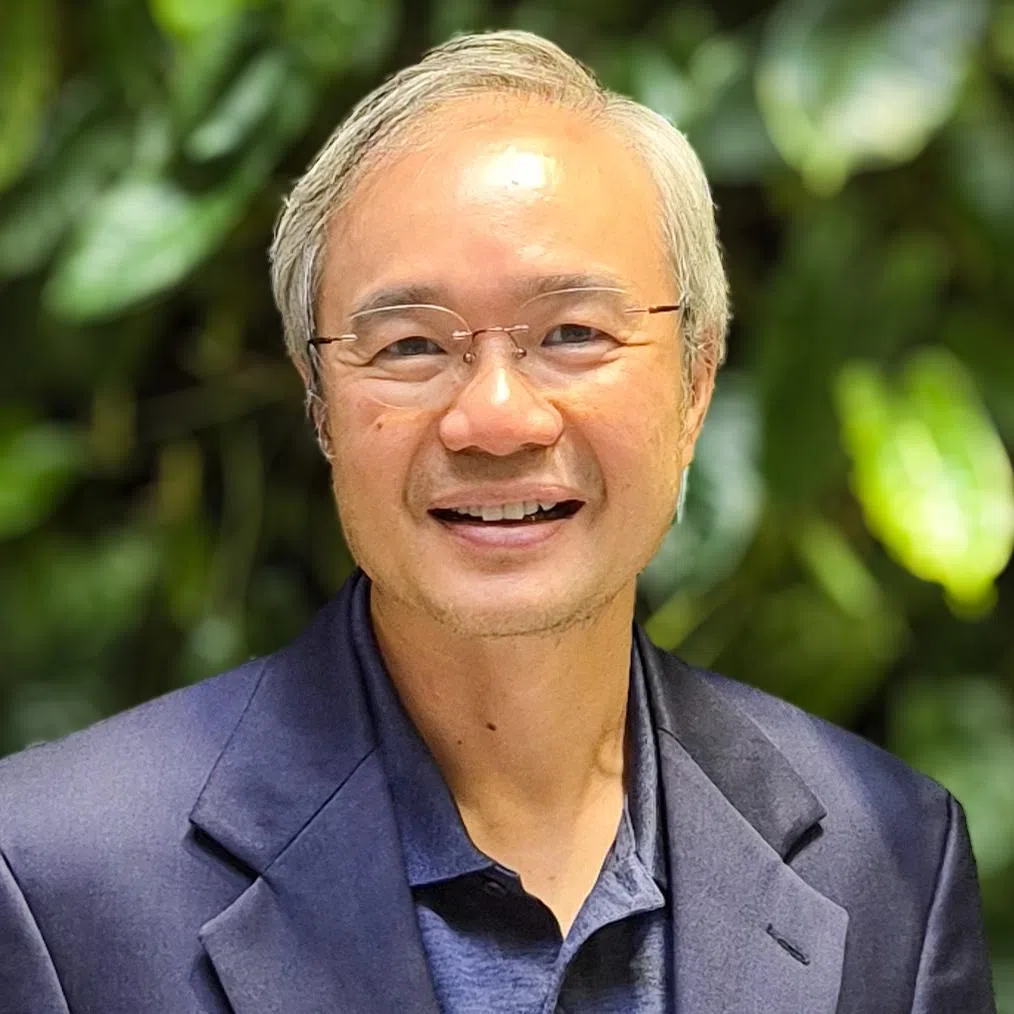
Teo: For many problems, off-the-shelf is perfectly fine – use it. For others, where local knowledge matters or you can’t share the data, building makes sense. Small countries such as the Nordics, Switzerland, Israel – they all build. So congratulations to everyone who attempted something original.
Tai: The Daita 2026 cohort represents a cross-section of firms and organisations which use AI to innovate products, systems, processes and solutions.
Most require adaptation and customisation of off-the-shelf AI solutions. This is made possible with the available AI infrastructure and ecosystem of service providers.
While AI often dominates the technical conversation, the “design” element remains the bridge to the end-user. How are the finalists ensuring AI enhances human-centricity and intuitive user experience, rather than just driving back-end efficiency?
Lim: The finalists articulated design thinking clearly and put user-centricity at the heart of their solutions.
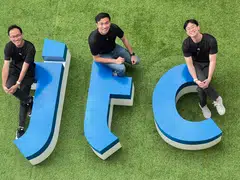
They reframed the challenge, for instance, in JTC’s tender-evaluation tool, asking: “How might generative AI support the process for users so it’s faster yet consistent and transparent?”
They also created a continuous feedback loop, such as what Alityics did for its operational safety tool. These design decisions result in AI that enhances human experience and integrates seamlessly into everyday workflows.
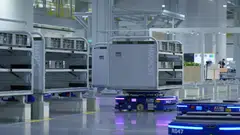
Chen: The most compelling solutions aren’t designed to replace people; they’re designed to work alongside them. The Hyundai submission is a good example: Its robotics are scoped to eliminate the dull, dirty and dangerous tasks, freeing workers to step into higher-value roles. The human is still central but just operating at a different level.
Lee: The best AI is invisible to the user. What I’m seeing from the stronger finalists is that they’re leading with the user experience, and AI happens to power it.
Design is what makes AI trustworthy and accessible, especially for non-technical users. The finalists that stand out are the ones where you interact with the product and think “this is intuitive”, not “this is AI”.
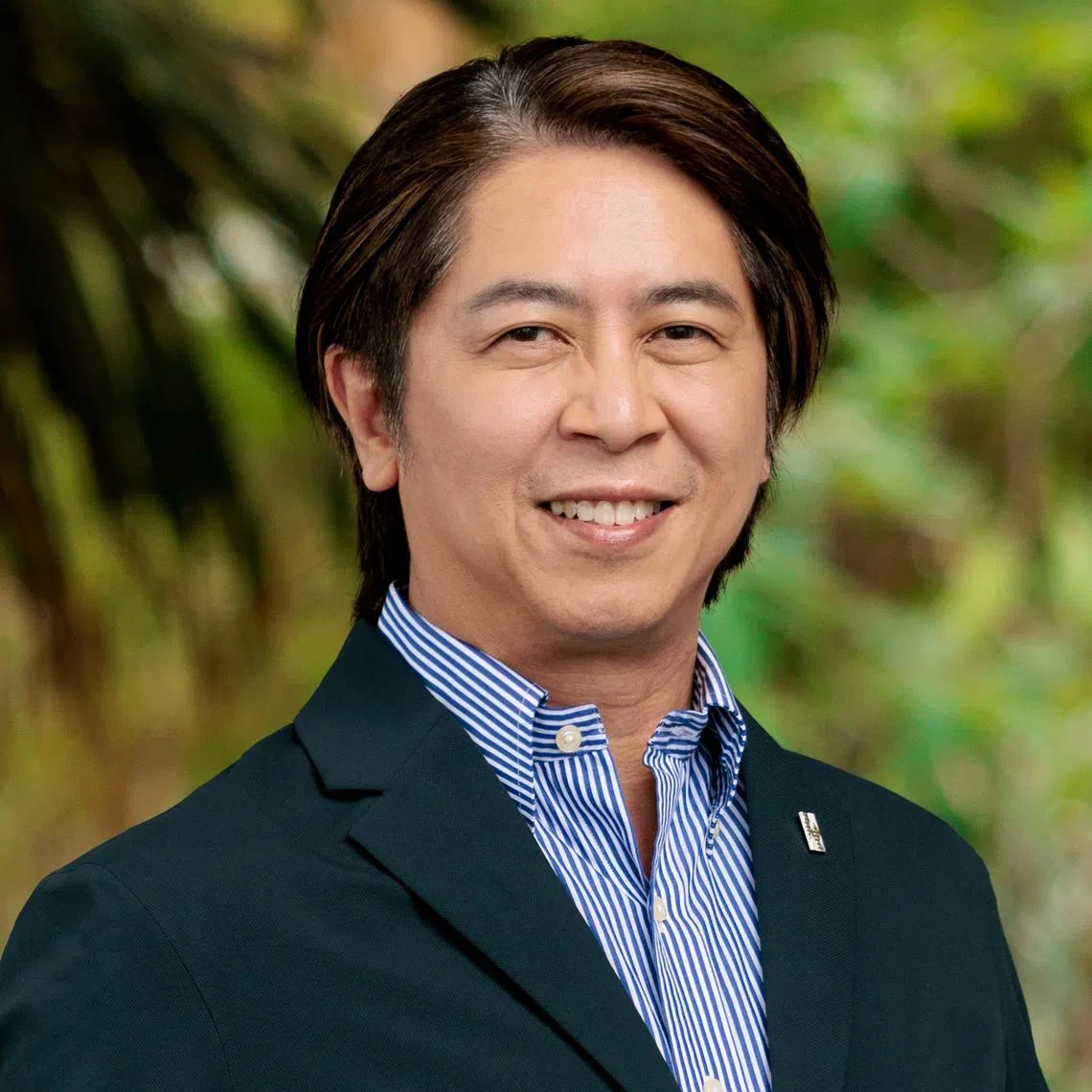
Tai: The use of design and AI jointly is the secret recipe of innovation. The introduction of AI in the design process is more than just increasing efficiency; it is a co-creation with AI by tapping into its rapid data harvesting, exploration of options and predictive evaluation. The 2026 finalists demonstrated such processes to different degrees.
Teo: The best AI is invisible. You don’t notice it; you notice the outcome. This is only possible with good design. Design isn’t an add-on; it’s how one thinks and solves the problem.
What qualities in the 2026 finalists convince you their approach will create a lasting legacy?
Teo: First, let’s be honest. We try, but we don’t really know what will last. Better not to overthink it; just build, iterate, learn. That said, the likely moat is data and workflows – good design and execution – not the AI model.
Lee: Three things. First, is the solution solving a problem that will still exist in five years? Second, does the team have a feedback loop? Third, does the approach create compounding value, meaning the product gets better with more usage and data over time? Trends fade; compounding advantages don’t.

Chen: All the finalists have solutions that are already commercially viable or actively deployed in real-world settings.
I don’t expect the solutions to remain stagnant; as more operational data is gathered, I expect these companies to keep refining and optimising. That iterative mindset is what separates enduring innovation from a one-cycle fix.
Tai: While the judges look for impactful solutions that are otherwise not possible without the power of AI, the judges are looking for solutions that are founded on strong design principles. Strong designs must still meet functional requirements, resource efficient, affordable, durable and beautiful. These are the qualities of great design.
Lim: By embedding AI thoughtfully within larger workflows and systems, their designs are adaptable, resilient, and capable of evolving. This approach creates long-term value as it delivers measurable results and stays relevant over time. Design is the differentiator.
Finally, which traditional industry will be most fundamentally transformed by design and AI by 2027?
Tai: The impact of AI is not different from the computer age. By now, AI or physical AI will be present in every sector without exception in the near future.
The traditional industries that will be more fundamentally transformed by design and AI will be sectors that still depend heavily on human labour. Due to the lack of human labour and talent pipeline, the use of design and AI will be inevitable.
Chen: Logistics and transport are already deep into that transformation. But the sectors I’m watching closely are the built environment and healthcare. Both are labour-intensive and face acute challenges in attracting workers. The economic and social returns of getting that transformation right would be significant.
Lee: Healthcare – not just clinical AI, but the full patient experience – from how you book an appointment to how a diagnosis is communicated to you.
South-east Asia has massive gaps in healthcare accessibility, and the intersection of thoughtful design and AI can compress what used to take weeks into minutes.
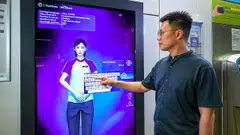
Lim: I believe healthcare will see a profound impact and shift through AI. One Daita finalist, SBS Transit, developed Silvia, a real-time AI sign-language assistant for deaf and hard-of-hearing commuters.
AI is also able to provide tailored, patient-centric care – an increasingly critical need in ageing Singapore. For instance, Rememo, a dementia care tool, uses AI-generated images to augment therapists’ ability to surface personal memories with patients.
Teo: Professional knowledge work is the most obvious candidate – junior lawyers, accountants, analysts.
But the less visible transformation may be informal education and healthcare: tutoring, coaching, health triage and mental wellness support. These services are desperately needed at scale and have never been accessible to most people. AI can change that through direct-to-person tools.
Decoding Asia newsletter: your guide to navigating Asia in a new global order. Sign up here to get Decoding Asia newsletter. Delivered to your inbox. Free.
Copyright SPH Media. All rights reserved.
TRENDING NOW

LTA proposes combining car COE categories, adding rebate-surcharge system

StarHub to acquire MyRepublic’s mobile business amid ongoing telco consolidation

DBS, OCBC, UOB rout lops billions off STI as inflation, rate concerns spook investors

Grab CEO’s wife Chloe Tong on life with Anthony Tan and finding her purpose

