

From idea to action: How AI is changing the way innovation happens
The challenge now lies in how quickly ideas can be turned into something that works
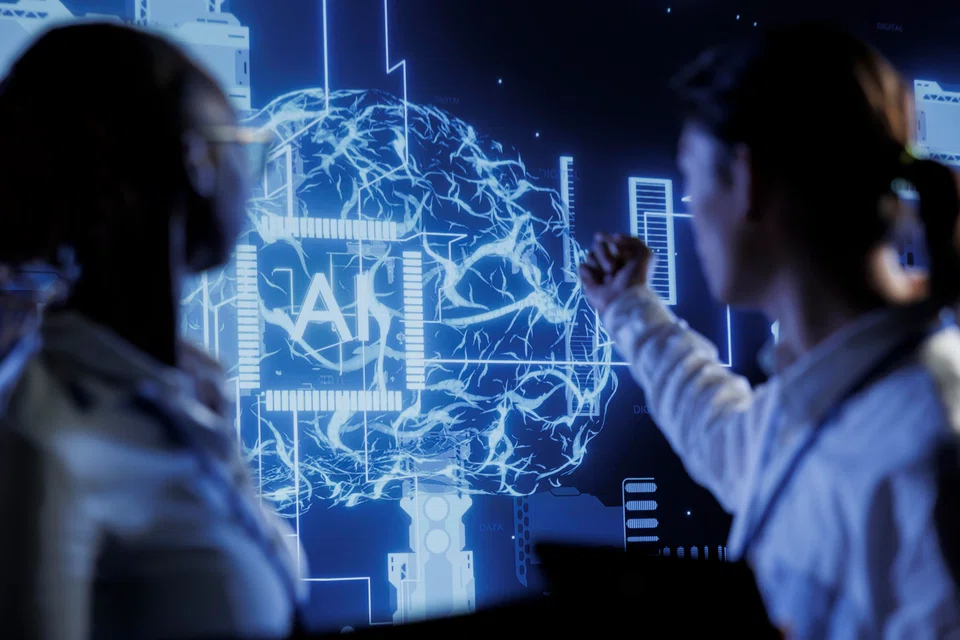
[SINGAPORE] For a long time, innovation followed a familiar path. You define a problem, study it carefully, develop a solution, test it, and only then bring it into the real world.
It was a process that took years.
But that model is starting to break. Research itself has also changed; it no longer takes years to move from idea to outcome.
Today, artificial intelligence (AI) can search, analyse and generate information almost instantly. The challenge is no longer access to knowledge; it is what you do with it – how quickly you can turn an idea into something that actually works.
In other words, the bottleneck no longer lies in thinking, but in doing.
We are reaching a turning point where the gap between thinking and doing is narrowing fast. The organisations that move ahead not only analyse well, but can also build, test and adapt quickly in real-world settings.
Practical application
One clear response to this change is the rise of fast, hands-on problem-solving done together with industry.
Platforms such as the Design AI Fab Lab at the Singapore University of Technology and Design show how this works in practice.
Instead of working on case studies, student teams work directly with companies on real problems, from process inefficiencies to system improvements. These provide live challenges with real consequences.
SEE ALSO


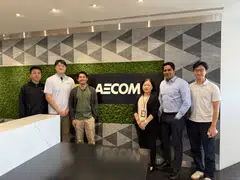



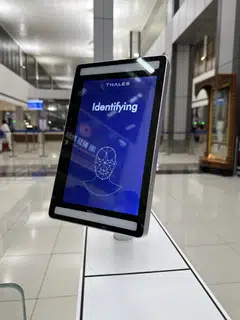
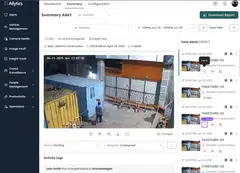

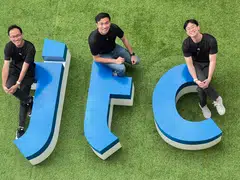
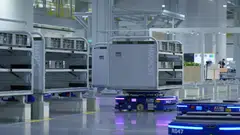
Students are involved from the start, helping to define the problem, explore solutions and build prototypes that can be tested quickly.
What stands out is the speed. Ideas move quickly into prototypes. AI tools help teams explore options, test ideas and refine solutions much faster than before. What used to take months now takes mere weeks.
The result is a different way of working: more practical, collaborative, and grounded in real conditions from the start. Students are not sitting on the sidelines; they are part of the delivery.
This is real-world problem-solving happening from the start. It also reflects a broader Design AI approach, where design, AI and domain knowledge come together to move quickly from problem to solution. Known as trilingualism, this is essential for the new world.
From tools to systems
What this looks like in practice can be seen in how industries such as architecture and engineering are beginning to work differently.
Traditionally, architectural design has been a slow, linear process. Teams rely heavily on deep domain expertise, and iteration is constrained by tools and workflows. Only highly experienced professionals can meaningfully participate in early-stage design, which creates bottlenecks.
When AI is introduced in a limited way, it is often used at the end of the process: to render visuals, format outputs or automate small tasks. While this improves efficiency slightly, it does not fundamentally change how work is done.
But when design, AI and domain expertise are combined, the workflow changes.
In one example, a team at SJ Group built a suite of AI agents to support the design process. Instead of working through ideas one at a time, they were able to explore multiple design configurations in parallel. What used to take half a day of iteration could be done in about 30 seconds.
This changes the role of expertise. Architects no longer need to generate every option manually. Instead, they guide the process, evaluate outputs, and apply judgment – checking, for instance, whether design constraints such as building setbacks are correctly interpreted.
A similar evolution is taking place in engineering and operations.
In green energy firm Vector Green, engineers traditionally relied on deep but siloed knowledge, often approaching problems in broad, intuitive ways. Early use of AI did little to change this; tools were used mainly to draft e-mails or retrieve information.
But when teams adopted a more structured, design-led approach, their role changed.
Engineers began breaking problems into smaller, testable parts. They combined user needs, AI capabilities and business constraints to build practical solutions. In doing so, they moved from passive users of technology to active builders.
The impact was clear. Teams saw a significant improvement in how they integrated ideas and made decisions. More importantly, they developed working prototypes for their own daily use, from contract review tools to operational dashboards and automation systems.
What they realised was that domain expertise still matters, but in a different way. Beyond knowing, it is also about shaping, guiding and validating what AI produces so that it works in the real world.
Speed matters more than ever
What we are seeing is a shift in how innovation works.
The best idea on paper is no longer enough. What makes a difference is how fast one can turn that idea into something real – and improve it quickly.
AI is speeding up this process. It helps teams explore more options, test ideas faster and move from concept to prototype in less time.
Students working alongside industry teams are part of this acceleration. They bring speed, fresh thinking and a willingness to experiment, often pushing solutions forward faster than traditional processes allow.
At the same time, solutions still need to work in the real world. They must fit into existing systems, meet safety standards and deliver consistent results.
This is why working closely with industry matters. It ensures that solutions are shaped by real needs and constraints from the beginning, not adjusted after the fact.
From ideas to impact
AI is changing not just what organisations can do, but how they do it.
Innovation is becoming faster, more hands-on and more connected to real-world needs. The gap between idea and implementation is shrinking.
Increasingly, students are part of that shift as contributors, working alongside industry to build and test solutions in real time.
For businesses, the message is straightforward.
Competitive advantage will depend less on who knows more, and more on who can act faster – and turn ideas into working solutions that perform in real conditions.
Because in the end, intelligence is not judged by what it knows. It is judged by what it can do.
The writer is chief strategy and Design AI officer, Office of Strategic Planning, at the Singapore University of Technology and Design; he is concurrently director of the Lee Kuan Yew Centre for Innovative Cities
Decoding Asia newsletter: your guide to navigating Asia in a new global order. Sign up here to get Decoding Asia newsletter. Delivered to your inbox. Free.
Share with us your feedback on BT's products and services
TRENDING NOW

DBS, OCBC, UOB rout lops billions off STI as inflation, rate concerns spook investors

Grab CEO’s wife Chloe Tong on life with Anthony Tan and finding her purpose

OCBC sheds S$8 billion in value as shares close nearly 6% down; analysts cautious on banks

Deal between tycoon friends sparks scrutiny of Philippine power sector

