

SBS Transit breaks communication barrier with Singapore’s first AI sign-language assistant
The program helps deaf and hard-of-hearing commuters navigate the transport operator’s rail network

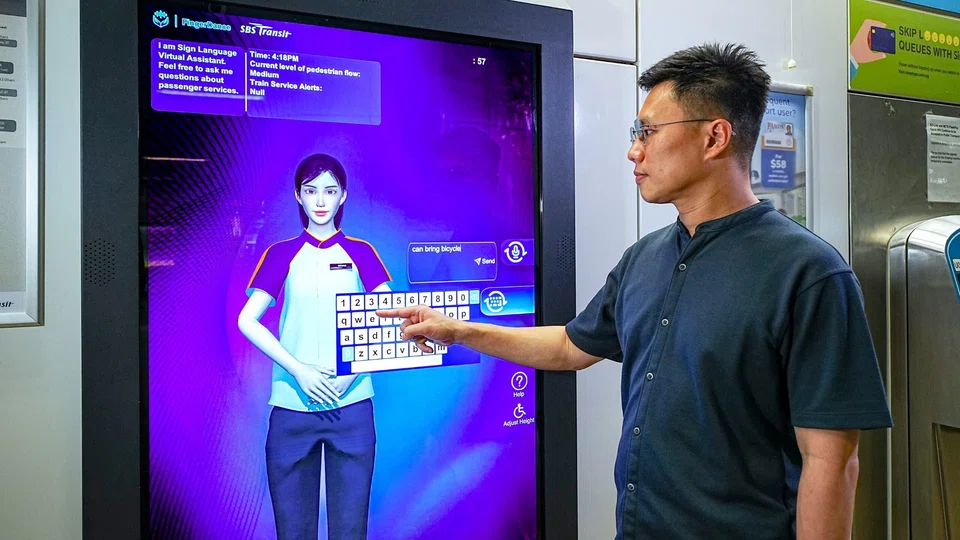
[SINGAPORE] Leading a breakthrough for inclusive mobility in the public transport system, SBS Transit piloted its real-time artificial intelligence (AI) sign-language assistant to help deaf and hard-of-hearing commuters navigate its rail network.
The Sign Language Virtual Assistant (Silvia) features an “expressive, lifelike” avatar on platform screens to instantly translate public service announcements into grammatically and contextually accurate sign language.
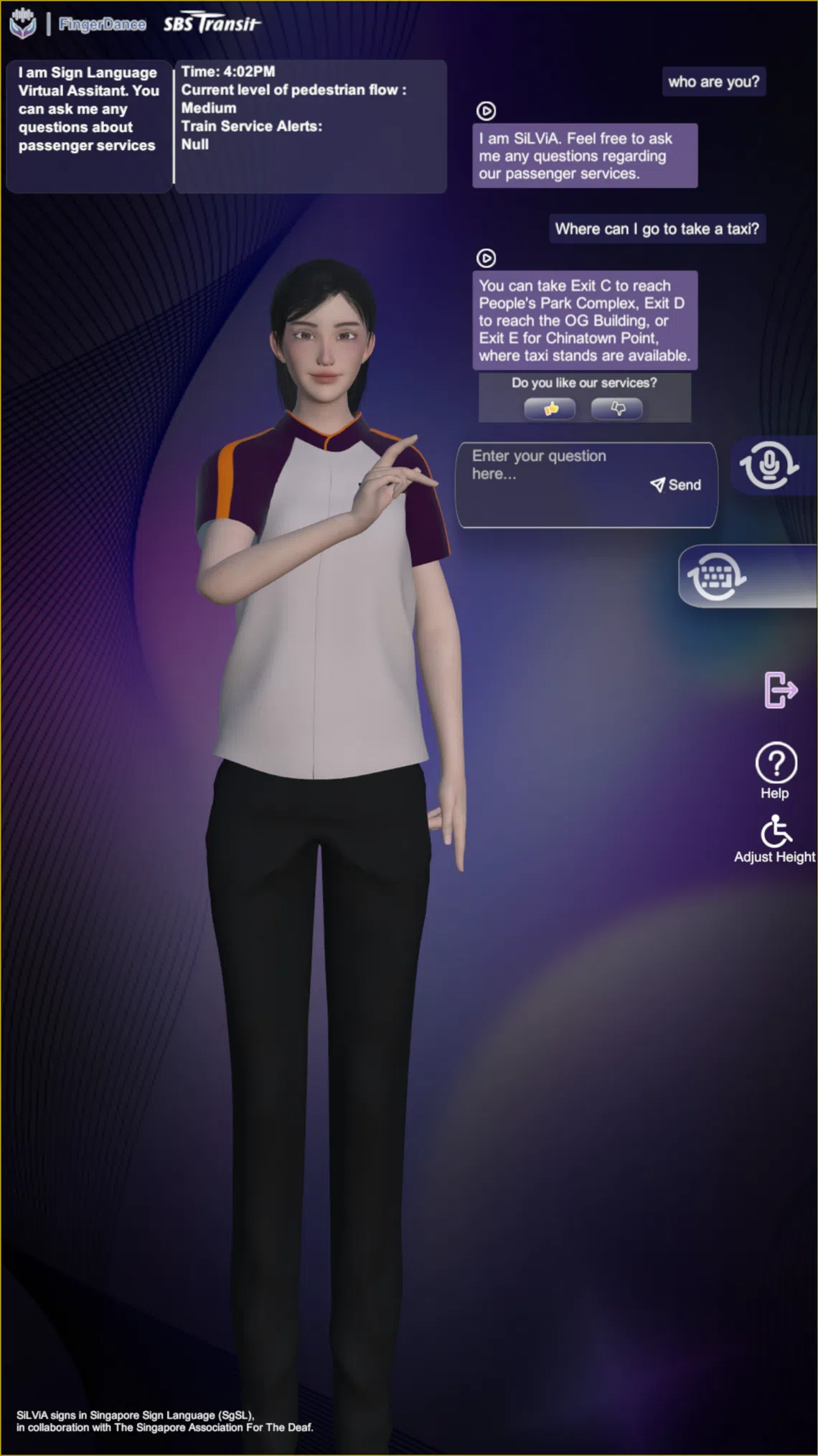
Developed with partner FingerDance Pte. Ltd, in collaboration with the Singapore Association of the Deaf, Silvia also delivers culturally nuanced translation of station announcements.
The program is engineered to feature active two-way communication, so commuters can communicate with it too. This is done by processing sign language as a natural language, allowing Silvia to respond with real-time expressive signing.
Silvia will be available around the clock without interpreter dependency, enhancing SBS Transit’s service efficiency while maintaining accessibility to its transport.
A ground-up approach
Deaf and hard-of-hearing commuters have typically had to rely mainly on visual cues during service disruptions and routine broadcasts.
To gain a better understanding of the challenges they face, SBS Transit conducted interviews with members of the community, interpreters and frontline staff. They also observed challenges faced by commuters in MRT stations.
The transport operator said that Silvia had “strong early adoption post-launch”, handling some 2,000 queries during its pilot phase at Chinatown MRT station between October and November 2025.
Silvia marks a significant step for SBS Transit in its push for inclusivity, as it aligns with Singapore’s Enabling Masterplan 2030, which aims to create a more inclusive society.
SEE ALSO





The company manages a daily ridership of more than 1.2 million across the Downtown Line and North East Line, as well as the Sengkang and Punggol LRT lines. It will also operate the upcoming Jurong Region Line, which is slated to begin operations in 2028.
Beyond geographical borders
Beyond public transport, SBS Transit noted that Silvia can serve as a sign-language interpreter at conferences and events.
SBS Transit’s ground-up approach is now scaling globally and is gaining recognition. Silvia beat more than 230 international entries to win the Global Rail Innovation Award 2025.

The technology’s modular nature allows for rapid localisation. SBS Transit is already adapting the system for Abu Dhabi, with adaptation to Emirati sign language – a localised version of sign language in the United Arab Emirates – in progress.
Decoding Asia newsletter: your guide to navigating Asia in a new global order. Sign up here to get Decoding Asia newsletter. Delivered to your inbox. Free.
Copyright SPH Media. All rights reserved.
TRENDING NOW

ComfortDelGro appoints two new independent directors

Once staunchly pro-China, Malaysian Chinese businesses are now distancing themselves from Beijing

NoonTalk needs continued financial support from CEO Dasmond Koh, auditors warn

DP Architects sets the benchmark for sustainability disclosure and design

