

Synqbox’s sensor-based kiosk engages communities to fight dengue transmission
C-Dews speeds up egg counting, leading to faster detection and elimination of Aedes mosquito breeding sites
Koh Kim Xuan

[SINGAPORE] In January 2025, the Philippines reported more than 25,000 cases of dengue fever. One year later, that figure fell more than two-thirds to 7,400.
The steep decline followed the country’s launch of the Alas-Kwatro Kontra Mosquito programme in February 2025. The nationwide drive encouraged households to clean their homes regularly and clear the breeding sites of dengue-carrying Aedes aegypti mosquitoes.
Filipino technology company Synqbox is taking that community-engagement-centric approach one step further, with its Community Dengue Early Warning System (C-Dews) kiosk and its linked Web platform.
Based in Isabela State University, Synqbox specialises in smart-city systems, developing ecosystems that support the government, institutions and industry partners, to improve operational efficiency and predictive planning.
Advanced capabilities
The C-Dews kiosks are distributed in subdivisions of cities knowns as barangays, and are meant for community members to survey the spread of dengue fever in their environment.
Inside the kiosks are ovicidal-larvicidal (OL) traps – which kill mosquito eggs and larvae – and Internet-connected sensors that automate egg counting and allow for the remote monitoring of eggs.
This speeds up the traditionally time-consuming process of egg counting, and can lead to the quicker identification – and elimination – of breeding sites.
Members of the public can view images of the eggs and larvae trapped in the kiosks via a touchscreen.
Presenting the data
Data gathered at the C-Dews kiosks is consolidated by an artificial intelligence model. The information is then displayed on a Web platform that helps users visualise dengue fever transmission risks in their community.
SEE ALSO







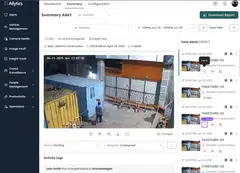

Synqbox said that the platform presents complex data through intuitive interfaces and actionable alerts, with the goal of enhancing community participation in preventing the spread of dengue fever.
Through the platform, community members can access dashboards, records and analytics modules. They can also monitor individual OL traps in various kiosks.
Users can see the prevalence of dengue fever in their own community through the OL index, a four-tier alert system. They can also view the OL indices of other communities, along with environmental data that shows the correlation of environmental factors with mosquito breeding.
In addition, the Web platform allows users to track sanitation activities with codes, locations and inspection dates. This links environmental sanitation data with dengue risk surveillance.
Decoding Asia newsletter: your guide to navigating Asia in a new global order. Sign up here to get Decoding Asia newsletter. Delivered to your inbox. Free.
Share with us your feedback on BT's products and services






