

Bringing eco-friendly solutions to market
These finalists of the Emerging Enterprise Sustainability Awards are using technology and sustainable practices to tackle waste and cut emissions


AS DEMAND for eco-friendly solutions grows, these five companies are meeting the challenge with innovations ranging from plant-based snacks to AI-powered inventory management.
They are among 15 finalists of the Emerging Enterprise Sustainability Awards (EESA), launched in 2023 to recognise small and medium-sized enterprises driving growth in the green economy.
The EESA, which will have up to three recipients, is part of the wider Emerging Enterprise Awards.
Established in 2008, the Emerging Enterprise Awards empower startups and young businesses under 10 years old across Singapore and Asia, providing a springboard for growth.
This year’s awards are co-presented by The Business Times and OCBC, and supported by Mastercard, Rajah & Tann Asia, RSM Singapore, the Agency for Science, Technology and Research, Enterprise Singapore and Paia Consulting.
Snacking with a purpose
Boxgreen plans to enter the US market and expand its retail presence
'%3e%3cpath%20d='M12.1475%2025.5262C13.7713%2025.4295%2014.94%2023.913%2014.94%2021.8832C14.94%2019.5359%2013.474%2018.093%2011.5917%2018.093C11.3745%2018.093%2010.9582%2018.093%2010.8393%2018.1413V25.2086L11.8891%2025.5745C11.8891%2025.5745%2012.207%2025.5262%2012.1475%2025.5262ZM11.4934%2017.6281C13.2567%2017.6281%2014.3843%2016.4292%2014.3843%2014.4501C14.3843%2012.372%2013.275%2011.2973%2011.4339%2011.2973H10.8393V17.6305H11.4934V17.6281ZM6.66078%2025.6482L7.39265%2025.5492C8.02617%2025.4502%208.26403%2025.3053%208.26403%2025.1097V11.6149C8.26403%2011.4193%208.1451%2011.3709%207.23484%2011.249L6.68137%2011.173L6.6219%2010.7588H11.9508C15.7153%2010.7588%2017.0624%2012.0797%2017.0624%2014.1578C17.0624%2015.9666%2015.7748%2017.1909%2013.4969%2017.6305V17.7041C16.111%2017.948%2017.6571%2019.5382%2017.6571%2021.7636C17.6571%2024.3318%2015.8937%2026.0417%2012.1109%2026.0417H6.60132L6.66078%2025.6482Z'%20fill='%232B2B2B'/%3e%3cpath%20d='M20.6287%2025.6505L21.5596%2025.5515C22.1725%2025.4779%2022.4104%2025.3076%2022.4104%2025.112V11.249H21.9346C20.073%2011.3479%2018.982%2013.0095%2018.408%2014.6227L18.1907%2015.5018H17.6555L18.1701%2010.7588H29.3837L29.6421%2015.4787H29.1664L28.9491%2014.6227C28.3728%2012.8645%2027.3047%2011.2743%2025.5002%2011.249H24.9856V25.1856C24.9856%2025.3812%2025.1251%2025.4548%2025.9965%2025.5515L26.7695%2025.6505L26.829%2026.0417H20.5693L20.6287%2025.6505Z'%20fill='%232B2B2B'/%3e%3c/g%3e%3cdefs%3e%3cclipPath%20id='clip0_5242_21648'%3e%3crect%20width='24'%20height='16.8'%20fill='white'%20transform='translate(6%2010)'/%3e%3c/clipPath%3e%3c/defs%3e%3c/svg%3e)
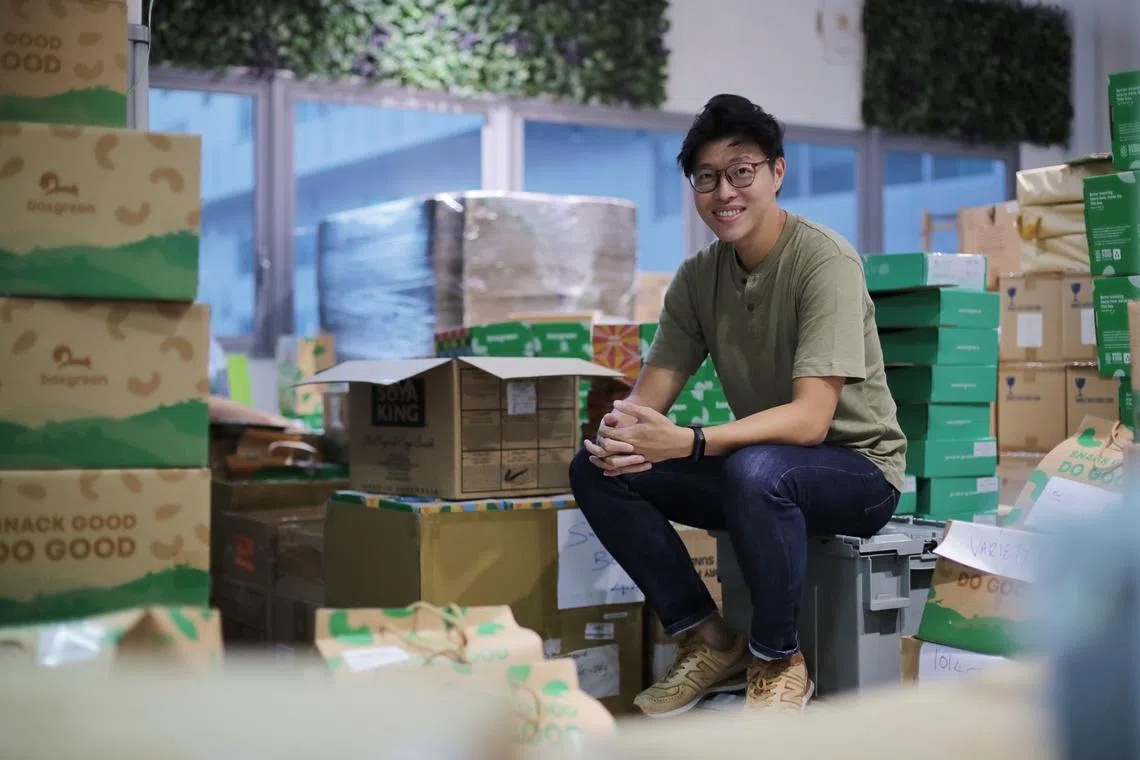
Our core business is creating delicious, plant-based snacks that are good for both you and the planet.
We use simple, natural ingredients and sustainable practices, such as sourcing directly from farms, minimising packaging and reducing plastic use.
Our products are available through a subscription, or as customisable snack boxes and corporate gifts.




Additionally, we support inclusive hiring by offering job opportunities to those facing employment barriers, ensuring that each purchase contributes to a better future.
For instance, every Boxgreen snack is packed in prison by beneficiaries of the Yellow Ribbon Project, to enhance their skills and employability.
We aim to expand our reach both locally and internationally, leveraging our strong digital presence and innovative products.
Near-future plans include expanding into the US and opening physical retail spaces and pop-up stores, while growing our food service business in the hotel sector.
On the innovation front, we are expanding our product range with a focus on food upcycling: using ingredients that would have otherwise been thrown away. We aim to boost our upcycling rate to 40 per cent by 2027, from 20 per cent now.
Our sustainability goals include achieving carbon neutrality at our Changi production workshop and enhancing our packaging with greener solutions.
We also plan to launch a socially inclusive bakery in Singapore to support individuals with mental disabilities and create further job opportunities for marginalised groups.
On-demand and low-emission shuttle services
RushOwl’s on-demand shuttle model aims to increase efficiency and reduce congestion
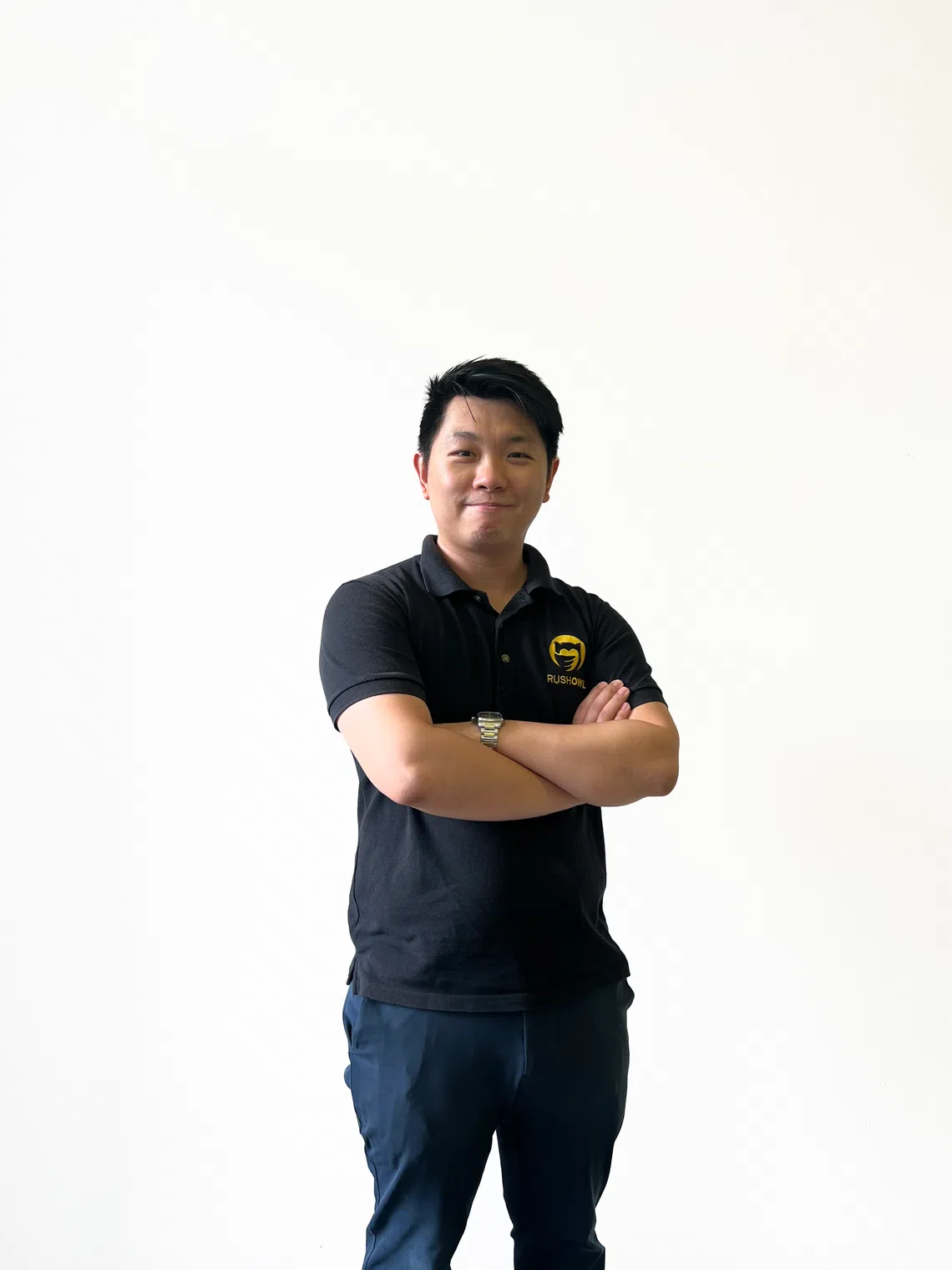
We are a transportation company with a fleet of modern, comfortable shuttle buses. We’re currently operating in Singapore; Hong Kong; and the cities of New Delhi, Gurugram and Noida in India.
Our on-demand model addresses the limitations of traditional, rigid transit. In our approach, shuttle services are adjusted dynamically based on real-time demand, allowing for more flexible and efficient transportation.
This means that services are deployed based on current passenger needs, rather than fixed schedules or routes.
We ensure that every part of a city is reachable, making transportation more convenient and accessible for everyone.
The on-demand model can also accommodate more passengers with fewer vehicles, reducing congestion and pollution.
We aim to push our decarbonisation journey further by converting our existing operations to zero-carbon emissions, through adopting electric minibuses.
By 2025, we aim to convert 50 per cent of our Singapore fleet to electric vehicles and go almost entirely electric in our India operations.
We will continually expand our business to areas that see many commuters, yet have poor transportation options.
In Singapore, this includes industrial parks and areas like Tuas. In India, we bridge employees who stay in rural areas such as Bhiwadi with larger cities where they work, like New Delhi.
With every shared ride, RushOwl is also gathering mobility data. This can help us provide shared transportation modes more efficiently, and with fewer vehicles required.
We will use the operational data garnered to develop an effective electric vehicle deployment plan, which is something that many traditional fleet operators currently lack.
We are challenging ourselves to also expand to places like India, where public transportation options are lacking, and become an efficient, affordable shared transit model for locals to get to work or school everyday.
Green washing, not greenwashing
Ollo Lifestyle International makes laundry services more sustainable through sensors, solar panels, and water recycling
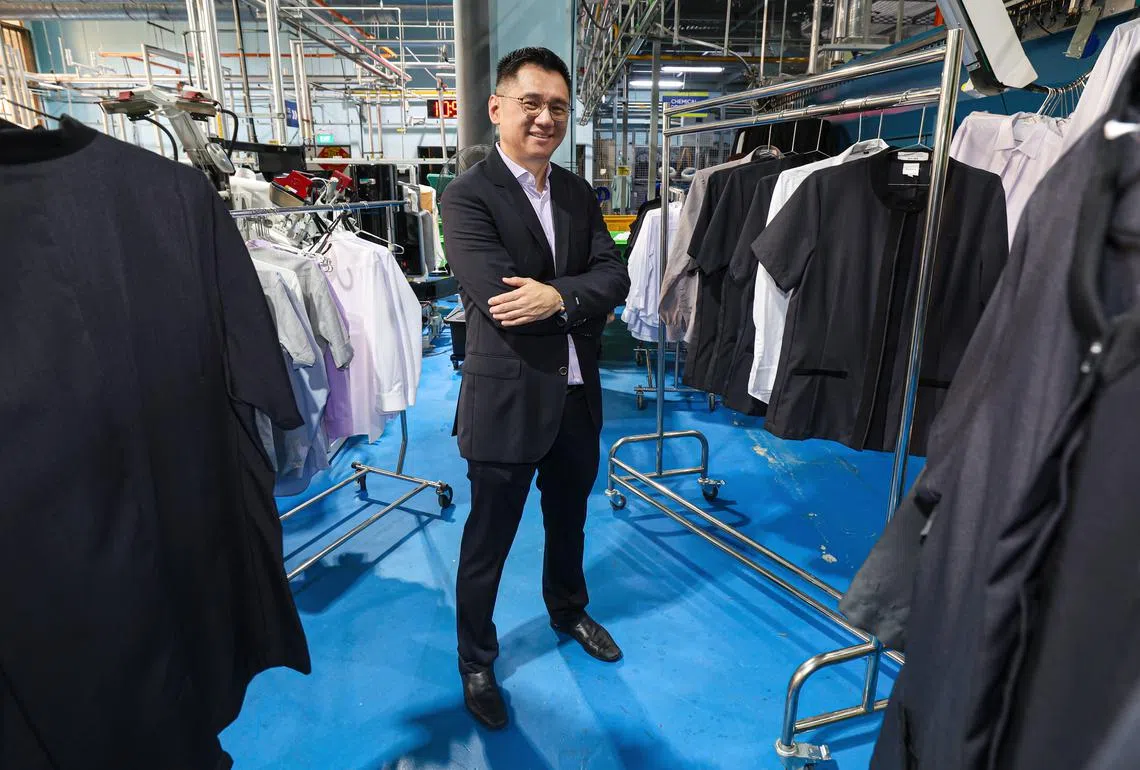
We handle industrial laundry services for clients in the hospitality sector, dealing with textiles such as hotel bedding, linen and towels.
We also help our hotel customers with some of their digitalisation and automation initiatives.
For instance, we have developed and installed RFID sensors, or radio frequency identification tags, that help to control energy use in clothes dryers.
The tags help the machine to identify the type of garments being dried, and thus select the optimal drying settings.
To reduce our water usage, we are installing a water recycling system in our Tampines facility. This will cut our water usage by 50 per cent once it is up and running by the end of this year.
We have also installed about 22,000 square feet of solar panels on our facility’s rooftop, which can help to offset about 20 per cent of energy usage at its peak.
Apart from lowering utility costs, all of these efforts make us greener – thus making our services more attractive to our hotel clients.
This is important because, in most laundry tenders now, many hotels ask for your green credentials before they will award any contract to you.
Currently, we only serve hotels. But in the near future, we will expand from serving just the hospitality industry, to airlines and healthcare too. We also have regional ambitions.
In healthcare and air travel, we foresee very strong growth – both locally and regionally – due to the region’s ageing population and sustained demand for travel, respectively.
Optimising excess inventory with AI
Pollen’s AI platform crunches data to optimise pricing for excess inventory

Pollen is an artificial intelligence company that aims to transform how brands manage excess inventory.
We do this through our proprietary operating system, PollenOS. Through PollenOS, brands can get predictions of future demand and optimal pricing for consumer products that are at risk of being left on the shelves – and thus becoming waste.
About 80 per cent of this inventory is in personal care, home and beauty products. The other 20 per cent range across food, fashion, electronics and other items.
These predictions are powered by our AI engine, the Pollen Slob Index, which uses over one billion data points to calculate the optimal price for an item and thus accelerate excess inventory sales.
To date, Pollen has helped reduce over one million kilograms of excess inventory, significantly lowering disposal risks.
This helps brands mitigate waste and get maximum value for their excess inventory in an increasingly complex supply chain.
We envision a future where brands rely on our AI engine, much like how financial analysts use stock markets to track prices. This will also allow companies to benchmark their excess inventory against industry peers.
Pollen is focused on capturing extensive supply and demand data to deliver highly accurate predictions and enable faster decision-making for its customers.
Given the prevalence of offline sales channels in Asia, Pollen is also investing in ways to gather offline data on consumer purchases.
Pollen has also launched an online trading platform, Pollen Direct, which makes it easier for retailers to buy in bulk directly from brands.
These new channels are continuously enriching our data pool, leading to more accurate predictions on pricing and market demand, and helping brands manage their excess inventory more effectively.
Shampoo with no plastic packaging – nor water
The Powder Shampoo plants one tree for every product sold, aiming to plant 1 million by 2030

We are a Singapore-based brand that specialises in eco-friendly, powder-to-foam personal care solutions – shampoo and body wash – that are vegan, clean and cruelty-free.
We plant one tree for every product sold, with a goal of planting 1 million trees by 2030.
The tree planting project is primarily focused on preserving biodiversity in the rainforests surrounding the Eastern Arc Mountains, a chain of mountains in Kenya and Tanzania.
We also prioritise plastic-free packaging by using refillable aluminium bottles and compostable paper refill pouches.
Our powder-to-foam technology is used to create products that retain the cleansing power and pleasure of foaming shampoos and body washes, without the need for water.
As a waterless, eco-friendly alternative to traditional liquid shampoos, it delivers 10 times more washes per unit – measured in terms of weight – while minimising water usage.
We also have lightweight, travel-friendly versions that offer a convenient, sustainable alternative to traditional liquid shampoos.
Since our launch in early 2022, we have experienced rapid growth, expanding into 12 countries through e-commerce and partnerships with leading retailers such as Sephora, Takashimaya, Isetan, and Scoop Wholefoods.
We are also gearing up to introduce new products that complement our existing shampoo and bath range.
However, we remain selective, launching only products that meet real customer needs – and without compromising on sustainability. For instance, we continue to ensure that our ingredients are from cruelty-free sources.
We actively monitor advancements in eco-friendly technologies and consumer trends, ensuring our growth aligns with rising environmental awareness.
Decoding Asia newsletter: your guide to navigating Asia in a new global order. Sign up here to get Decoding Asia newsletter. Delivered to your inbox. Free.
Copyright SPH Media. All rights reserved.
TRENDING NOW

Once staunchly pro-China, Malaysian Chinese businesses are now distancing themselves from Beijing

Britain’s mansion tax shows the difficulty of targeting wealth

Three hats, one goal: How Ng Kian Swan runs sustainability at NUHS

COE review: The gap between luxury and mass-market cars isn’t the only one worth bridging

