Growing green from the start
Setting out with sustainability in mind informs strategic decisions, shapes business models, and drives long-term success

Renald Yeo

ROUNDTABLE PANELLISTS:
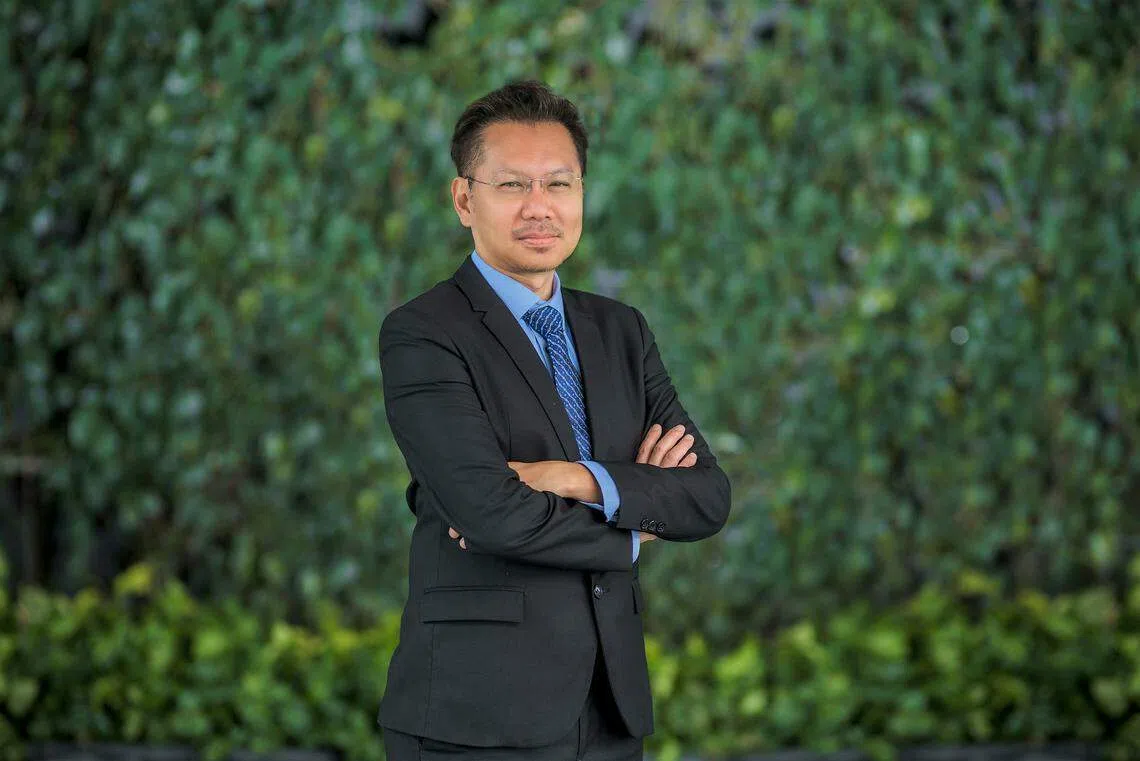
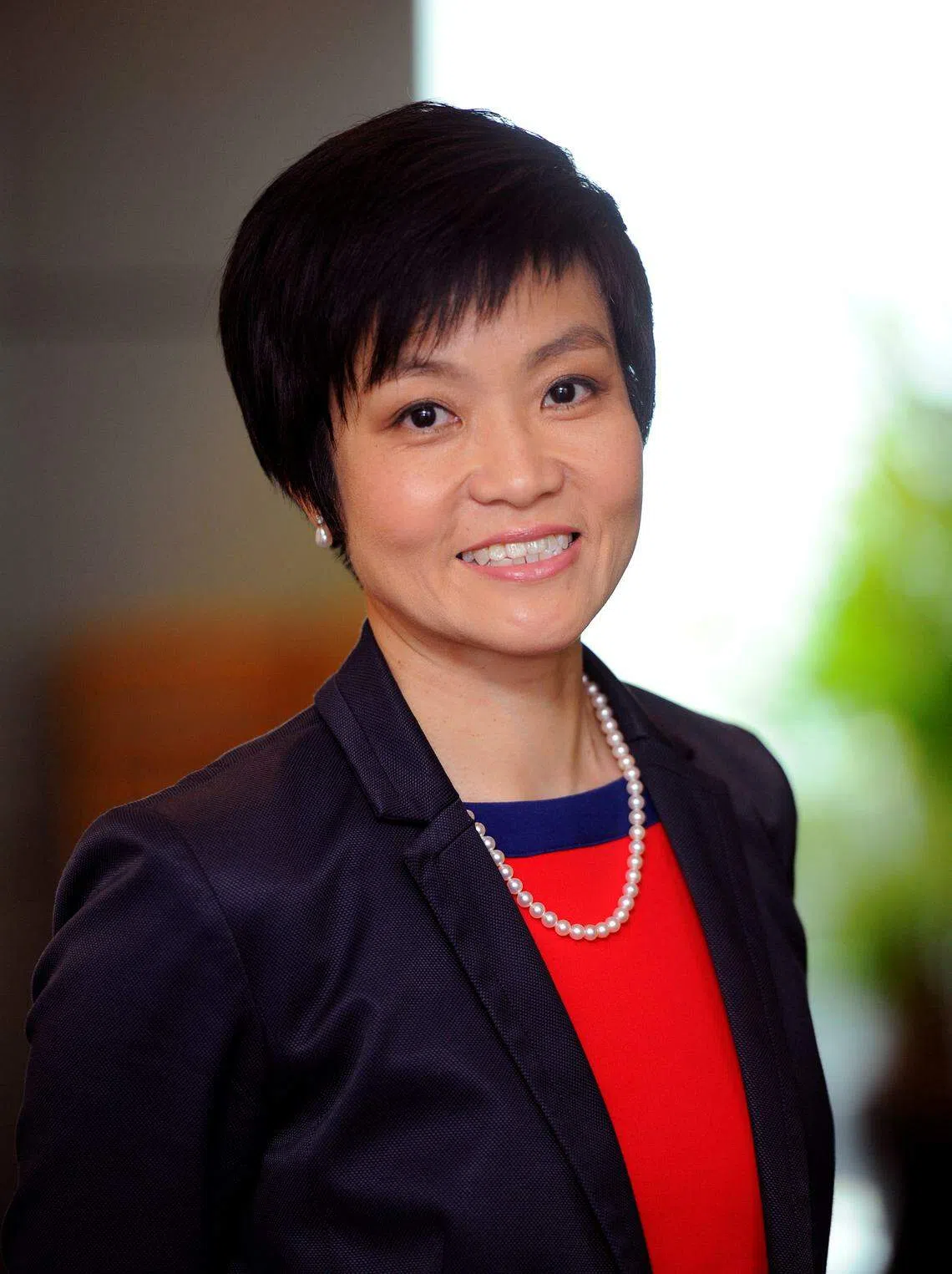
- Iris Ng, business head of middle market for global commercial banking, OCBC
- Lee Weilin, head of sustainability and partner in banking and finance, Rajah & Tann Singapore
- Timothy Colyer, head of climate and sustainability for Asia-Pacific, Oliver Wyman
- Corrado Forcellati, managing director, Paia Consulting
- Deborah Heng, country manager for Singapore, Mastercard
- Yeo Yee Chia, assistant chief executive of the innovation and enterprise group, A*Star
Why should young businesses have sustainability in mind right from the start?
Deborah Heng: This can help them proactively address environmental, social and governance (ESG) issues from the outset, providing a strategic advantage. It also ensures that such considerations are firmly embedded in the fabric of the company, from strategy, culture and mindset to every part of its operations and how it conducts business.
Corrado Forcellati: Young businesses are often innovative and transformational. With sustainability in mind from the start, the key concepts of ESG can be incorporated as part of their core business models and strategy.
Lee Weilin: How businesses operate is of interest to – and could also have an impact on – their stakeholders such as consumers, investors, financiers, civil society, and regulators. By pursuing sustainability, young businesses can reduce risk factors. This builds confidence in stakeholders that the business is far-sighted.

Iris Ng: Regulators around the world are piling requirements on large corporates to measure and report both direct and indirect emissions from their supply chains. As a small or mid-sized enterprise (SME), if you do business with large corporates or public bodies, you are part of the extended supply chain and are expected to follow prescribed practices, including reducing emissions.
Timothy Colyer: The net-zero transition affects young businesses through changing government policies and international agreements; large corporates’ supply chain strategies; and changing customer expectations.
This creates risks for SMEs if they do not adopt sustainable practices. However, it also creates opportunities to deliver products and services that accelerate the transition.
Yeo Yee Chia: Sustainable branding serves as a powerful differentiator for companies. Business owners have realised that positive ESG indicators can improve the company’s reputation and customer engagement.
How does starting with sustainability in mind shape a company’s broader strategy?
Lee: Sustainability puts values at the forefront. Asking “why” serves as a compass for “how” – be it structure, strategy, or day-to-day operations. For example, a business that chooses to be energy-conscious will find such decisions trickle down through their procurement strategy and product innovation.

Heng: When a company starts with sustainability in mind, it helps define its purpose beyond profit, and guide all employees with a vision and mission that prioritise ESG objectives alongside financial goals.
Yeo: Starting with sustainability in mind informs strategic decisions, shapes the overall business model, and drives long-term success.
A company’s ability to demonstrate its sustainability to financial markets and other stakeholders reduces associated risks and lowers the discount rate for future earnings. Therefore, as expectations for corporate responsibility rise and transparency becomes crucial, companies of all sizes and sectors must prioritise sustainable practices.
Ng: It can help companies identify market gaps and business opportunities from the start. This can provide a boost in brand reputation and point of differentiation as consumers become more sustainability-conscious.

An early focus on sustainability can also help companies manage their costs and mitigate risks better. For example, a company that uses renewable or sustainable energy sources early on can start off with low utility bills.
What support or partnerships should SMEs consider at different stages of their sustainability journey?
Forcellati: Tech is an enabler to support SMEs through the different stages of their journey: from providing insights and getting information from stakeholders, to innovating for new solutions, to communicating sustainability progress by facilitating disclosures.

Colyer: At a basic level, partnerships can mean working with other firms to get data and understand the company’s carbon footprint and impact on sustainability. At more advanced levels, it can mean partnering with clients and financial institutions to deliver services at scale.
Lee: With limited resources, SMEs must leverage technology strategically, avoiding “lock-in” technologies from the start.
To develop green capacity, SMEs can tap government support such as the Enterprise Financing Scheme – Green and SME Kickstarter Decarbonisation, as well as sustainable finance schemes such as the OCBC SME Sustainable Financing green loans.
Heng: SMEs can integrate sustainable practices into day-to-day operations. An example is digital payments. By adopting SoftPOS – using mobile phones as a point-of-sale (POS) terminal – or QR code payments, SMEs not only offer an alternative payment option, but no longer need traditional terminals, reducing the resources required for physical hardware and paper receipts.
Yeo: SMEs can leverage A*Star’s co-innovation programmes such as Technology for Enterprise Capability Upgrading, in which senior scientists or researchers are seconded to companies to work on technology upgrading and transfer technical know-how and skills.
A*Star’s SIMTech has also developed a Green Compass tool with TUV, to help companies understand their current state of environmental sustainability and possible areas of improvement.
Ng: A fundamental first step is the ability to measure and track emissions. There are several self-help emissions measurement and reporting tools available to SMEs.
One example is the Building Energy Efficiency Assessment tool by the Building and Construction Authority (BCA), which makes it simpler and more convenient to predict the energy performance of property projects. OCBC has undertaken to provide green loans to projects assessed, via this tool, as having energy efficiency comparable to that of a BCA Green Mark 2021 GoldPLUS building.
Another example is the Carbon & Emissions Recording Tool by the Global Compact Network Singapore, which lets firms compute data on energy, water and waste, to guide their plans to reduce emissions. The data enables banks such as OCBC to finance green capability building or decarbonisation investments, innovations, and projects.
Green financing and ESG-related disclosures might seem to apply to larger companies – but how might SMEs be affected?
Lee: Investors, financiers, other stakeholders and counterparties in the value chain may have their respective ESG or net-zero commitments, and would require SMEs to similarly disclose their ESG factors and impact.
SMEs with good practices will find it easier to adapt as regulatory requirements become more stringent. It can be costlier to overhaul practices or even business models if they are not prepared. SMEs should therefore get started now, rather than to wait for any mandatory requirement being imposed, and gain knowledge through experience.
Colyer: While the first round of ESG disclosures has focused on direct operational and energy consumption emissions, this is being broadened to the full supply chain. That means accounting for the emissions and ESG practices of all companies in a supply chains, and for banks, for all companies they are lending to.
SMEs will need to meet these standards to continue to work with leading corporates and get financing on favourable terms. Such standards don’t only apply to large companies! The recent International Financial Reporting Standards (IFRS) S1 and S2 standards will apply to all companies reporting under IFRS.
Forcellati: Increasingly, capital providers are using sustainability performance indicators to track a company’s alignment to decarbonisation. At the very least, companies that are not aligned may face a premium on capital allocated; at worst, access to capital may be compromised.
The environmental aspect of ESG tends to get more attention. How should SMEs think about the social and governance components?
Colyer: Many social and governance components – for example, minimum standards in labour practices – are now requirements for government, financial institutions, and large corporate procurement.
Standards are rising, with increased focus on how corporate practices support social and governance objectives. Again, SMEs should ensure they can comply, and consider how they support social goals. This could help them win business and attract preferential financing.

Ng: Workplace diversity and inclusion, employee health and safety, and fair labour practices are some social aspects that can help SMEs create a strong and distinctive corporate culture and employee value proposition.
Meanwhile, poor governance has a detrimental impact on businesses’ risk profile and ability to manage risks effectively, particularly for small companies with limited resources. Holistic consideration of all components of ESG can help SMEs to enhance their brand reputation, attract and retain talent, and build a strong and successful business.
Forcellati: By having social and governance components as core to their businesses, SMEs can secure the necessary capital – not only financial but also social, human and natural – to build resilient businesses.
Heng: Social impact and governance factors have a big impact, and companies will benefit by looking at sustainability through a more holistic lens. On the social front, they should ensure employee well-being with a positive work environment, fair wages, diversity and inclusion, and opportunities for growth and development.
Companies should also consider responsible sourcing practices, ensuring supply chains meet ethical standards. Suppliers, partners, investors, and customers all demand to know if a company’s supply chain is sustainable.
For governance, companies should promote transparency, integrity, and ethical behaviour at all levels. They should implement robust anti-corruption policies and practices, as well as a whistle-blowing policy.
Finally, they can put in place risk management processes and internal controls to identify, assess, manage and mitigate their legal, regulatory, reputational and operational risks.
Decoding Asia newsletter: your guide to navigating Asia in a new global order. Sign up here to get Decoding Asia newsletter. Delivered to your inbox. Free.
Copyright SPH Media. All rights reserved.