Sustainable solutions for a circular future
These finalists of the Emerging Enterprise Sustainability Awards are turning waste into opportunities


AS THE “circular economy” movement gains ground in South-east Asia, these five companies are turning trash into treasure: from transforming food waste into animal feed, to making building materials from rice husks.
They are among 15 finalists of the Emerging Enterprise Sustainability Awards (EESA), launched in 2023 to recognise small and medium-sized enterprises driving growth in the green economy.
The EESA, which will have up to three recipients, is part of the wider Emerging Enterprise Awards.
Established in 2008, the Emerging Enterprise Awards empower startups and young businesses under 10 years old across Singapore and Asia, providing a springboard for growth.
This year’s awards are co-presented by The Business Times and OCBC, and supported by Mastercard, Rajah & Tann Asia, RSM Singapore, the Agency for Science, Technology and Research, Enterprise Singapore and Paia Consulting.
Turning food waste back into food
Life Lab Resources processes food waste into nutrient-rich livestock feed
'%3e%3cpath%20d='M12.1475%2025.5262C13.7713%2025.4295%2014.94%2023.913%2014.94%2021.8832C14.94%2019.5359%2013.474%2018.093%2011.5917%2018.093C11.3745%2018.093%2010.9582%2018.093%2010.8393%2018.1413V25.2086L11.8891%2025.5745C11.8891%2025.5745%2012.207%2025.5262%2012.1475%2025.5262ZM11.4934%2017.6281C13.2567%2017.6281%2014.3843%2016.4292%2014.3843%2014.4501C14.3843%2012.372%2013.275%2011.2973%2011.4339%2011.2973H10.8393V17.6305H11.4934V17.6281ZM6.66078%2025.6482L7.39265%2025.5492C8.02617%2025.4502%208.26403%2025.3053%208.26403%2025.1097V11.6149C8.26403%2011.4193%208.1451%2011.3709%207.23484%2011.249L6.68137%2011.173L6.6219%2010.7588H11.9508C15.7153%2010.7588%2017.0624%2012.0797%2017.0624%2014.1578C17.0624%2015.9666%2015.7748%2017.1909%2013.4969%2017.6305V17.7041C16.111%2017.948%2017.6571%2019.5382%2017.6571%2021.7636C17.6571%2024.3318%2015.8937%2026.0417%2012.1109%2026.0417H6.60132L6.66078%2025.6482Z'%20fill='%232B2B2B'/%3e%3cpath%20d='M20.6287%2025.6505L21.5596%2025.5515C22.1725%2025.4779%2022.4104%2025.3076%2022.4104%2025.112V11.249H21.9346C20.073%2011.3479%2018.982%2013.0095%2018.408%2014.6227L18.1907%2015.5018H17.6555L18.1701%2010.7588H29.3837L29.6421%2015.4787H29.1664L28.9491%2014.6227C28.3728%2012.8645%2027.3047%2011.2743%2025.5002%2011.249H24.9856V25.1856C24.9856%2025.3812%2025.1251%2025.4548%2025.9965%2025.5515L26.7695%2025.6505L26.829%2026.0417H20.5693L20.6287%2025.6505Z'%20fill='%232B2B2B'/%3e%3c/g%3e%3cdefs%3e%3cclipPath%20id='clip0_5242_21648'%3e%3crect%20width='24'%20height='16.8'%20fill='white'%20transform='translate(6%2010)'/%3e%3c/clipPath%3e%3c/defs%3e%3c/svg%3e)
Life Lab Resources is on a mission to ensure food security by revolutionising the way we handle food waste. Our biotech solutions recycle and valorise food waste.
First, our proprietary WasteMaster system uses reactive oxygen technology to treat food waste on-site. This reduces its weight by up to 80 per cent, while retaining its nutritional value and eliminating harmful pathogens.
Next, the treated waste is processed in a biorefinery plant, where it is converted into microbial protein.


This microbial protein is then formulated into feed for fish or livestock, which are eventually harvested for human consumption.
We aspire to empower all large food production businesses such as hotels, shopping malls, and catering companies to regenerate all food waste back into food. This ensures that no food is wasted and the food loop is closed.
By closing the loop on food production, consumption and waste, we can create a true circular economy – right here in Singapore.
In doing so, we are reducing the carbon footprint associated with food waste disposal and the cultivation of new resources to produce food.
The company is also undertaking research and development (R&D) to enhance the efficiency and productivity of our existing operations.
The goal is to develop high-quality microbial substrates that can be more efficiently converted to livestock feed, minimising how much time and energy is needed.
Converting used tyres into treasure
MLC Trading helps heavy industrial clients rely less on fossil fuels
MLC Trading is in the recycling business, and we sell green products to heavy industrial clients. In essence, we turn waste into energy.
Using pyrolysis technology, we break down used tyres into three main byproducts: tyre oil, a diesel-like fuel for heating; carbon black, used in cement production as a substitute for coal and petroleum coke; and tyre steel wire, which can be recycled for new steel.
We aspire to be Asia’s largest producer of tyre-derived fuel to replace traditional fossil fuels.
Each year, the world discards over 1.5 billion used tyres, which take hundreds of years to decompose naturally – causing environmental hazards and landfill problems.
By converting tyres into energy and recyclable products, we help create a circular economy.
We are developing an app to collect used tyres from shops and transport operators, and also venturing into dismantling scrap cars for recyclable parts.
Besides our four pyrolysis plants in Perak and Johor, we are setting up two more plants in Pahang and Sabah.
We are preparing to list on Bursa Malaysia’s Ace Market in late 2025, with a projected market capitalisation of RM250 million (S$76 million).
Several Singapore-based consulting firms say that our pyrolysis plants are potential carbon credit generators. Hence, we are also in talks to jointly create and sell carbon credits derived from our plants.
A green alternative to natural wood
Plana turns rice husks and plastic waste into a sustainable construction material
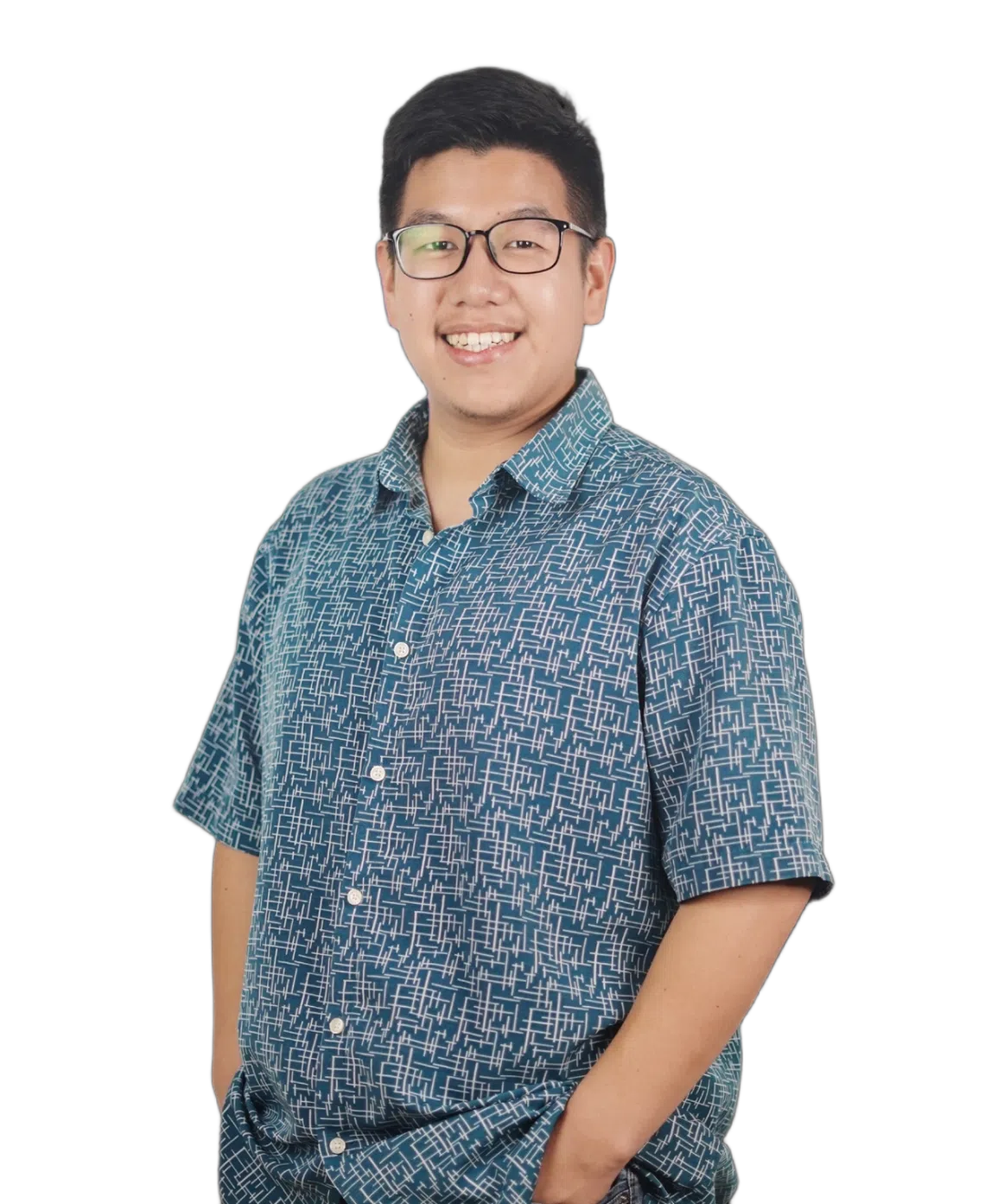
Plana is a social enterprise that creates sustainable material PlanaWood, made from 60 per cent rice husk waste and 30 per cent plastic waste.
As a sustainable alternative to natural wood, PlanaWood can be made into decking and furniture that lasts for decades.
We thus contribute to saving the forests, while increasing the welfare of farmers and rubbish collectors by buying rice husks and plastic waste from them, respectively.
Our long-term vision is to become the top-of-mind brand for sustainable materials that effectively substitute natural wood in the construction industry.
We aim to establish ourselves with architects, contractors and consumers seeking sustainable solutions that can compete with conventional products.
Our specific plans include expanding our reach by targeting new customer segments and exploring the South Korean and Japanese markets, while increasing our production capacity to align with our expansion goals.
We will undertake R&D to improve the performance and versatility of PlanaWood. This includes exploring new materials, refining our process technology and identifying opportunities for product diversification.
With our newly established factory, launched in June, we plan to add more machinery to increase production.
By participating in the Emerging Enterprise Sustainability Awards, we hope to gain mentorship, connections and funding to further our vision of driving sustainability in the construction industry.
From device leasing to workspace solutions
Rentalworks helps businesses reduce their carbon footprint with refurbished and repurposed IT equipment
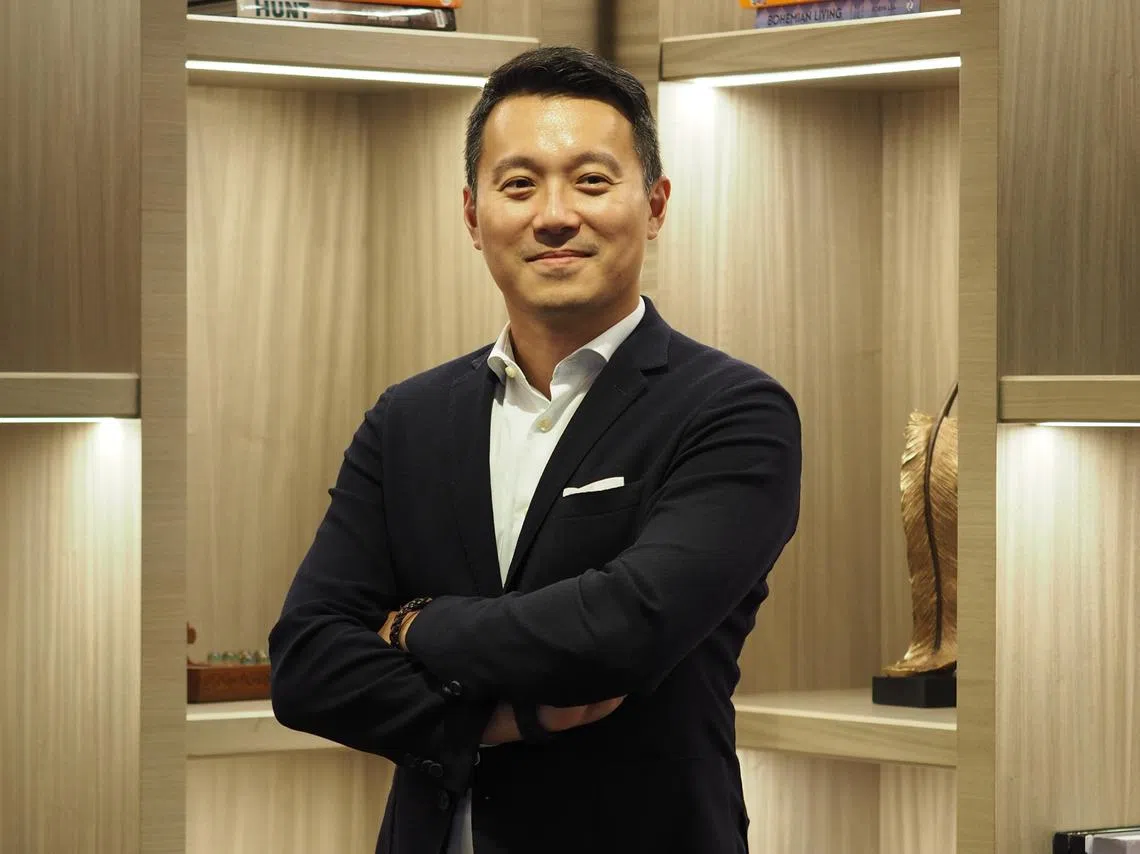
Rentalworks provides end-to-end device life-cycle and leasing services that align with sustainable practices. We help businesses reduce their carbon footprint and e-waste, while optimising IT operations.
Our services cover everything from providing hardware to tech support. We refurbish and repurpose devices to extend their life cycle, contributing to a more sustainable future.
With our device-as-a-service offering, businesses can lease IT devices such as laptops, desktops and tablets, instead of having to buy these.
We have also expanded into workspace-as-a-service. Here, we offer a broader range of IT devices used in the workspace, including printers, servers and connectivity equipment – basically, whatever is needed to support a hybrid work arrangement.
Our aspirations are focused on both growth and sustainability. We aim to expand our services across Asean countries, with immediate plans to enter new markets. Currently, we operate in Malaysia, Singapore and Indonesia.
Our long-term goal is to achieve 50 per cent market share across Asean in the device-related circular economy space, while contributing to sustainability and carbon-reduction efforts within the region.
To increase our capacity for device repurposing, we are enhancing our refurbishing facility. We also innovate by integrating artificial intelligence-driven tech support and enhanced security features to meet our clients’ evolving needs.
Driving Asia’s shift towards greener public transportation
Sun Bus Tech produces eco-friendly conventional and electric buses

Sun Bus Tech designs and manufactures environmentally sustainable public transportation solutions. Our core focus is producing high-quality conventional and electric buses that meet the growing demand for eco-friendly transit options.
We also offer tailored fleet management services, which improve efficiency.
We are committed to reducing carbon emissions and creating greener cities. Our vision is to lead the transformation of public transportation across Asia, driving the shift towards fully electrified bus fleets.
Besides increasing our footprint in Asia by entering the Greater China region, we will also explore markets beyond Asia.
In the near future, we are expanding our manufacturing capabilities, with a new production facility to be completed, too.
We are also committed to broadening our collaborations with government agencies and industry partners, to further advocate for sustainable transport policies.
We aspire to be a key player in shaping the future of urban mobility. Our expansion strategy includes tooling our manufacturing plant to offer a more comprehensive range of services across the entire life cycle of our product – from design and development to production, maintenance and after-sales support.
Through R&D, we are developing new generations of public transport, such as vehicles that run on other renewable fuels like hydrogen.
We are also looking into infrastructure such as charging grids, payment systems, and even intelligent systems that enhance fleet safety, efficiency, and connectivity. This ensures that our solutions stay ahead of the market.
Decoding Asia newsletter: your guide to navigating Asia in a new global order. Sign up here to get Decoding Asia newsletter. Delivered to your inbox. Free.
Copyright SPH Media. All rights reserved.