

BigFoot Logistics is taking a huge step forward to cut carbon footprints
The company is rolling out solar energy initiatives, starting in its Singapore headquarters
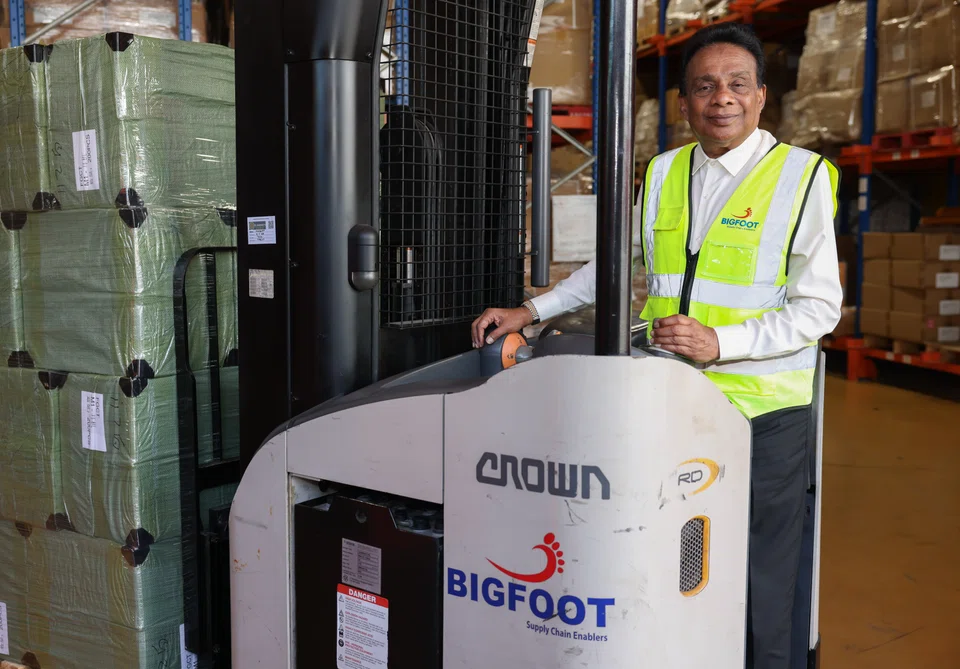
[SINGAPORE] Staff members and visitors entering BigFoot Logistics’ main office building on Joo Koon Road in the western industrial zone of Singapore are required to leave their shoes at the door.
The company’s group CEO, Sanny Abdullah, wants them to feel at home, and he said it is good for his workers to go shoeless.
“They spend the whole day at the office. It’s very uncomfortable and unhealthy to keep their shoes on all day long,” he said in an interview with The Business Times.
It is not part of the global effort to reduce carbon footprints, then? Advocates of sustainability support wearing shoes less because it cuts down material use, manufacturing emissions and landfill waste, but this does not figure in BigFoot Logistics’ green plan. “No, it didn’t cross my mind,” he confessed. The company’s focus is more on conventional steps: controlling emissions from its transport trucks, 320 of them; transitioning to renewable power sources; embarking on waste-to-energy projects; and integrating the ESG framework into its overall business. “We’re converting our vehicles to electric vehicles – our buildings and warehouses are supported by solar panels,” Abdullah said. “We have stopped printing. We don’t print papers anymore. These (measures) are all in place.”
For these efforts and more, BigFoot Logistics is the recipient of the E50 Special Recognition Award for Sustainability Innovation this year.
Diesel-powered vehicles in the company’s fleet are fitted with diesel exhaust fluid systems to reduce harmful emissions. Driver monitors and advanced driver assistance systems are used to improve fuel efficiency and road safety. BigFoot Logistics is rolling out solar energy initiatives, starting in its Singapore headquarters.

This includes modifying and arming its commercial trucks with the capability to harness solar power as well. After Singapore, the company will follow up with its operations in Malaysia, India and Australia. It is using smart digital tools to smooth the workflow in its warehouses, streamlining inventory and trimming operational energy waste. Plans to convert food and farm waste to renewable energy and organic fertiliser have already been announced. Going electric is still a work in progress for BigFoot Logistics’ vehicles – the infrastructure for charging them is not fully in place, Abdullah explained – but it has put a total ban on printing papers, while upping its electricity consumption from solar energy sources to 70 per cent. Its 800 workers in Singapore have also been sent to classes to learn about the importance of going green and how to support it. “It’s part of their (key performance indicators),” he noted. “Their bonuses and promotions may depend on it.” The logistics company, which counts NTUC FairPrice, Changi General Hospital, Samsung and Changi Airport among its clients, was started in 1992. It switched to the green path five years ago, evolving from early operational compliance and fleet efficiency upgrades into a formalised ESG framework in the mid-2020s. Early in 2026, BigFoot Logistics stepped beyond piecemeal operational upgrades. It hired a full-time sustainability manager to centralise its internal ESG reporting, set formal KPIs, track them and structure long-term sustainability road maps. “We want to go green and we want the earth to be a safe place,” Abdullah said. “Once the temperature rises, we will have a lot of disasters. Floods, bad weather. We’re concerned about all these. If all the disruptions come, our business will get affected also.” He added that the sustainability measures adopted “cost a lot” to the company, but he has done the calculations. “We don’t get our savings now, but we will see the fruits over the years – probably in another couple of years.”
Decoding Asia newsletter: your guide to navigating Asia in a new global order. Sign up here to get Decoding Asia newsletter. Delivered to your inbox. Free.
Share with us your feedback on BT's products and services
TRENDING NOW

Nvidia reinstates Jensen Huang as CEO; Trump says move poses no national security risk

Beyond the greenback, Vietnam’s big borrowers turn to Asian-currency bonds

Indonesia’s coal tycoon Low Tuck Kwong replaced as Bayan Resources president-director

Six workers file employment claims against Crystal Jade Food Manufacturing

