

Commonwealth Kokubu Logistics taps technology to green its cold-chain logistics business
It sees sustainable practices as investments that lower long-run operating costs and yield environmental benefits, even if they come at a premium

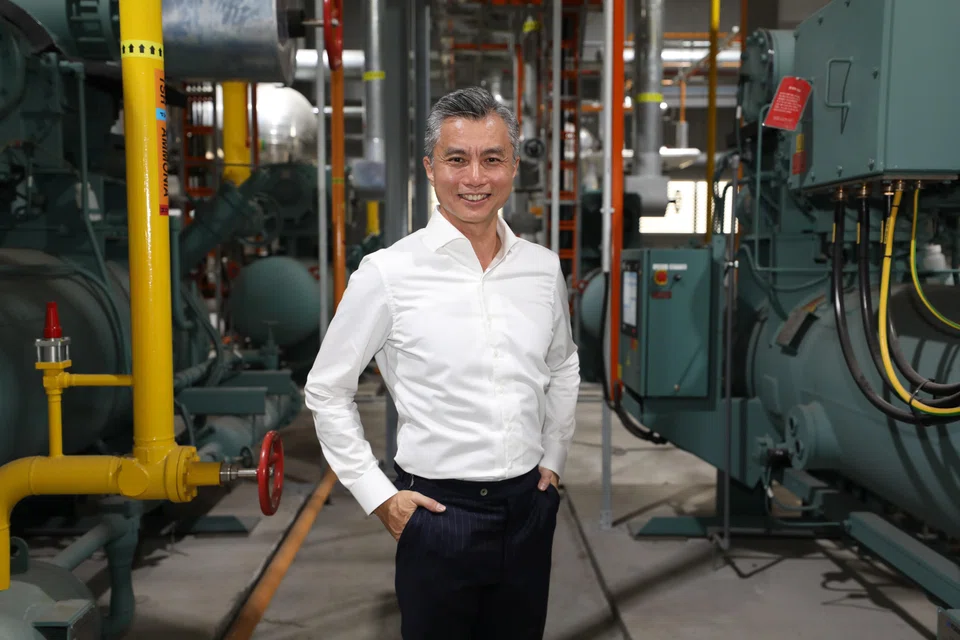
[SINGAPORE] In an industry grappling with massive energy consumption, Commonwealth Kokubu Logistics has chosen to include sustainable practices into its cold-chain operations, adopting ammonia-based refrigeration across 80 per cent of its business.
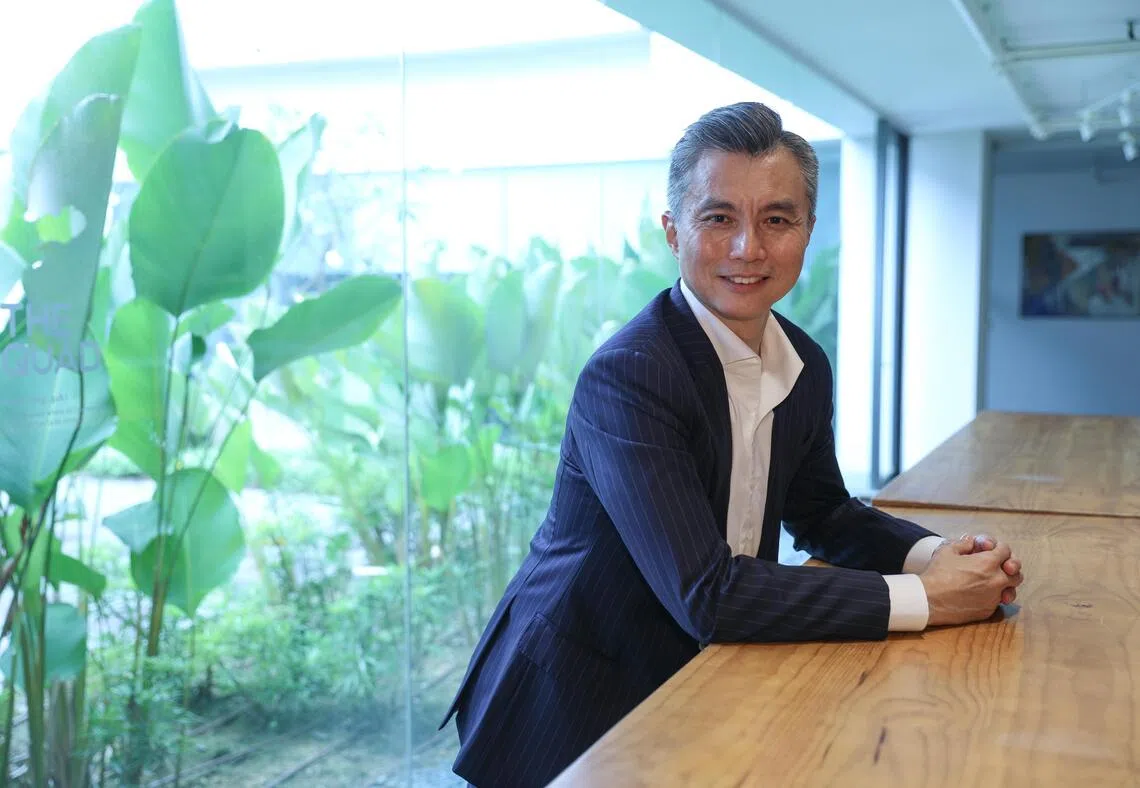
This decision is rooted in the belief that investments in sustainability can yield returns for the environment or employees, and lower long-term costs, even if they come at a premium, said Daniel Tan, the company’s managing director.
Commonwealth Kokubu sees business viability as being tied to sustainability, and believes that investments in greener operations “significantly reduce operating costs over time” and enhance long-term competitiveness.
“Returns can come in benefits to the planet (and) in benefits to people,” said Tan, adding that these will “ultimately drive up performance and lead to business sustainability”.
Commonwealth Kokubu said these investments also build resilience against regulatory shifts and align business’ operations with customer and investor expectations, facilitating partnerships with clients who are conscious of environmental, social and governance matters.
Besides its ammonia-based solutions, Commonwealth Kokubu also plans to roll out a new energy-saving technology – known as a hybrid energy system – at its second facility located at 8 Jalan Besut in Jurong, which is set to be fully operational in March 2026.
This commitment to sustainability earned the company the E50 Sustainability Innovation Special Award for 2025.
Energy-saving systems
Commonwealth Kokubu started as a joint venture (JV) in 2018 between home-grown food and beverage firm Commonwealth Capital and the Kokubu Group, a 300-year-old Japanese food distribution business.
The company offers end-to-end supply chain solutions to food retailers and food services firms in Singapore and the region.
Tan said that ammonia refrigerant systems have been used at Commonwealth Kokubu’s first facility at 7 Buroh Lane since the building was constructed in 2016, even before the JV was formed.
These refrigerant systems are used to bring down the temperature of cold rooms in the energy-intensive cold-chain business, allowing food to be maintained at temperatures as low as minus 22 degrees Celsius.
Tan noted that Commonwealth Kokubu consumes around two million kilowatt-hours of electricity a month – roughly equal to the electricity usage of 10,000 HDB households.
As ammonia decomposes into nitrogen and hydrogen, its ozone depletion potential – a measure of its ability to destroy stratospheric ozone via emissions – is zero. Unlike other refrigerants, such as hydrofluorocarbons (HFCs) and hydrochlorofluorocarbons (HCFCs), ammonia’s global warming potential – a measure of how much a gas warms the earth compared to carbon dioxide – is also zero. Thus, it is considered a more environmentally friendly refrigerant that does not contribute to global warming.
Ammonia-based systems also have higher efficiency than other systems and can extract heat more efficiently. Tan added that such systems also have long life cycles, adding that this was another reason why Commonwealth Kokubu chose them, despite their higher costs.
Compared to a synthetic refrigerant system, an ammonia-based system could incur an upfront premium of around 15 to 30 per cent, although the company said this could vary by circumstance.
Commonwealth Kokubu has placed such refrigerants in its second building, which, at a height of 106 metres, is the tallest cold-chain logistics facility in Singapore, Tan said.
In addition to the ammonia refrigerant system, Commonwealth Kokubu Logistics’ second facility – which is BCA Green Mark certified with a platinum rating – will also feature a hybrid energy system, which reduces energy consumption by around 30 per cent by cutting down losses in the electrical network.
Tan said the launch of the hybrid energy system in 2026 is timed to coincide with a ramp-up in operational load and an expected spike in energy consumption, so that it can mitigate the increase.
The system is set to come into operation at the second facility – which had its groundbreaking in March 2023 – after the building becomes fully operational in March 2026.
Currently, about half of the facility is in operation. The building will also adopt solar and led lighting to reduce its carbon footprint.
Biodiesel and electrification of fleet
Beyond energy-saving technologies at its two facilities, Commonwealth Kokubu also incorporates sustainability into its fleets’ operations by using biodiesel to power some of its trucks.
This is done through a closed-loop reverse logistics initiative that extends the lifespan of used cooking oil by converting it into biodiesel to reduce the company’s carbon footprint. Tan pointed out that this was undertaken even though biodiesel is more expensive than regular diesel and typically costs S$0.10 to S$0.20 more per litre.
The group collects used cooking oil from restaurant partners that it delivers fresh cooking oil to, and passes on the used oil to a biofuel producer who blends and processes it into biodiesel.
Commonwealth Kokubu then purchases the biodiesel from the biofuel producer and uses it to power trucks in its fleet.
The company said it is also exploring the electrification of its fleet, but added that the battery technology required to power its trucks is not sufficiently mature at the moment.
This is because its trucks have significantly higher power needs than conventional counterparts, given that they carry refrigerator units that require batteries capable of powering both the vehicle’s engine and their refrigerators.
Using technology for operational efficiency
Technology is also enabling improved operational efficiencies. For instance, Commonwealth Kokubu plans to deploy an artificial intelligence-powered dock management platform called SyncGate at its second facility, to speed up the time required for trucks to complete tasks.
The system is designed to instantaneously recognise a truck’s purpose from the moment of arrival by matching the vehicle’s licence plate number to the task it is required to perform – for instance, collecting a delivery.
This enables it to send information to the warehouse’s automated retrieval system to direct it to place the collection item at a loading point. It also allows the system to direct the vehicle to the collection point.
Given that items onboard trucks need to be maintained at cool temperatures, which consumes energy, shortening the time taken for tasks to be completed reduces the energy expended and in turn contributes towards making operations more environmentally friendly, Tan said. He added that the system will increase the precision of day-to-day operations.
Another initiative in Commonwealth Kokubu’s pipeline of digital offerings is a tele-drive forklift system that allows staff to operate and control forklifts remotely.
The system is in the proof of concept stage and will be deployed across the group’s two buildings once it is deemed viable. It will be capable of simulating the physical experience of operating a forklift in person by allowing staff to view actual video footage of the warehouse at which the forklift is operating from and receive haptic feedback from the machine.
Tan said this will enhance operational productivity and eliminate the need for workers to operate forklifts on site, relieving staff from having to perform such tasks in person, which can be physically taxing as forklift drivers are often required to operate the machines from environments of minus 22 deg C.
Employee welfare
Business gains are dependent on having a stable and resilient workforce, said Tan. That is why the company also makes significant investments in ensuring employee well-being.
For instance, it provides free annual health screenings for staff and encourages them to participate in the check-ups. Tan noted that its most recent health screening exercise in 2025 recorded a staff participation rate of 100 per cent.
The company also focuses on securing the availability of manpower, to ensure business operations remain sustainable in times of crisis. It has built a 120-bed on-site dormitory at its second facility to house its employees, many of whom commute in and out of Singapore from Malaysia daily.
This was born from a lesson learnt during Covid-19, when many businesses in Singapore struggled with securing enough manpower to continue running operations, Tan said, noting that the question of where to house workers was a key concern then.
Future plans
Looking forward, Commonwealth Kokubu intends to continue focusing on expansion across the region and is “actively exploring” mergers and acquisitions.
The company noted that a core part of its strategy involves enhancing its digital operations, including systems such as SyncGate as well as tele-driving technology.
This comes as it sees these digital offerings as part of its unique selling point, and aims to use them to differentiate itself in terms of operational execution and customer experience.
Decoding Asia newsletter: your guide to navigating Asia in a new global order. Sign up here to get Decoding Asia newsletter. Delivered to your inbox. Free.
Copyright SPH Media. All rights reserved.
TRENDING NOW

NEA identifies 7 firms responsible for haze fires, notices issued urging action: Grace Fu
DBS remains analysts’ pick ahead of Q3 earnings after Singapore banks’ share slump
High Court rules against Julius Baer’s Singapore trust arm in US$50 million family trust dispute

Could stablecoins be the future of money?

