

Rico Engineering sparks a new approach to fire protection
Second-generation leader Clement Piak is steering the fire protection specialist towards greater productivity and growth

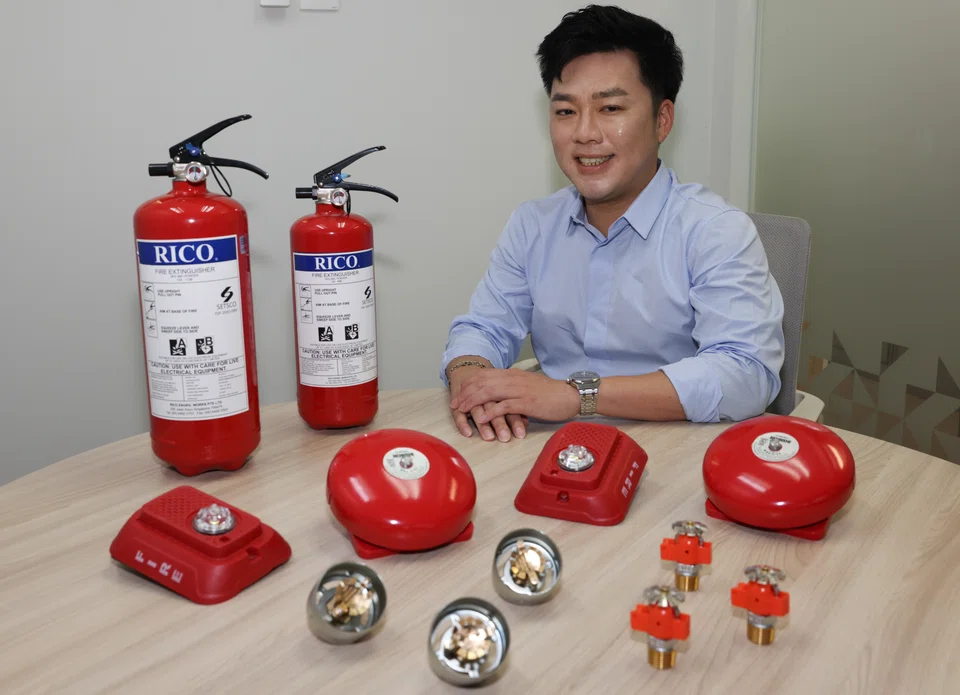
MOST people rarely give a second thought to the fire alarms above their heads, the sprinklers on their ceilings or the gas extinguishing systems protecting critical facilities. Yet these often overlooked installations form the first line of defence when a fire breaks out.
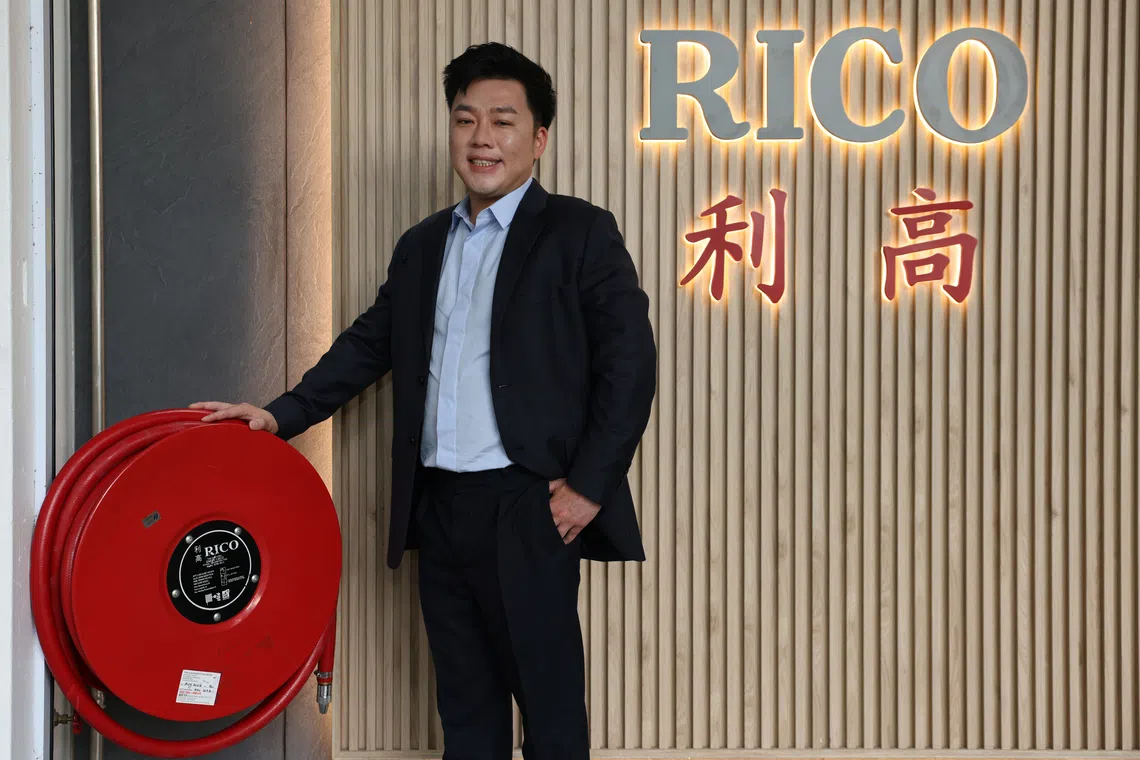
Behind many of these systems across Singapore is Rico Engineering Works, a fire protection solutions provider that designs, installs and maintains them in a wide range of buildings.
For chief executive Piak Tong Yeow, who goes by Clement Piak, growing the business is important, but not at the expense of the standards and values on which it was built.
“We always want to ensure that projects are completed on time, to the required quality standards and, most importantly, in a safe manner,” he told The Business Times.
Rico currently maintains 774 buildings across Singapore, comprising 370 commercial properties, 122 public, resort and institutional buildings, and 121 residential developments. Its remaining portfolio includes industrial and storage facilities, specialised facilities and mixed-use developments.
Revenue and headcount have grown by an average of 10 to 15 per cent annually over the past five years, Piak said. The company aims to gain market share and become a leading fire protection solutions provider in Singapore and South-east Asia.

Its financial performance has also reflected this growth. Profit before tax rose 17.3 per cent in 2024 and 17.6 per cent in 2025. Rico projects further increases of 18 per cent in 2026 and 18.6 per cent in 2027.
The company’s project portfolio spans several sectors of Singapore’s built environment. Completed projects include Shaw Towers, Equinix facilities and Mandai Bird Paradise. It is also undertaking major projects for PSA, the new Science Centre and a new Singtel communications centre.
“These projects expand our outreach into commercial buildings, allowing us to contribute to the forefront of Singapore’s economic development,” Piak said.

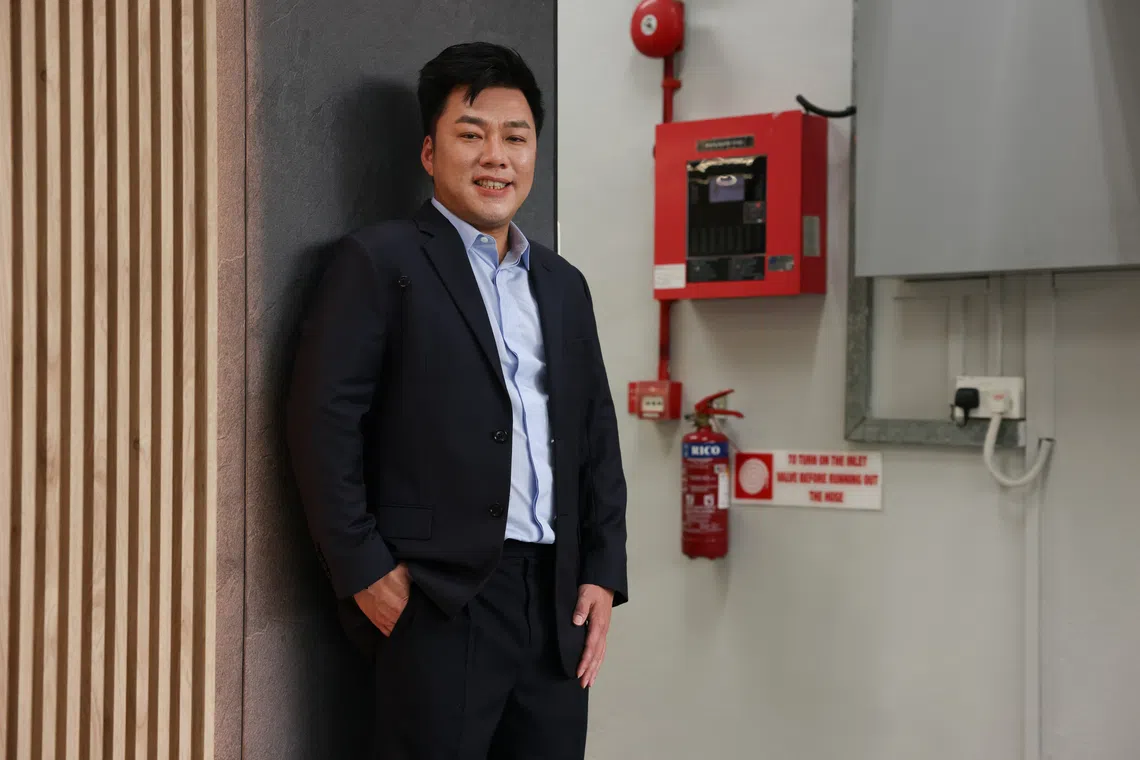
The 38 year old is steering the family business into its next chapter. He took over in January following the death of his father and company founder, Jeffrey Piak Boon Pin, after a relapse of cancer.
Founded in 1990 and corporatised in 1998, Rico Engineering Works has a workforce of more than 200 employees and is part of Rico Cap Holdings.
The group also includes fire safety technology provider Teledata Asia Fire Systems and Rico DFMA Technologies, which focuses on productivity and advanced manufacturing through the prefabrication of fire protection components.
Taking fire protection work off-site
One of the biggest changes Rico has made is its adoption of Design for Manufacturing and Assembly (DFMA), which shifts more fabrication work from construction sites to controlled factory environments.
In a sector grappling with a shortage of skilled workers and rising operating costs, the approach allows Rico to prefabricate components before delivering them to construction sites for installation, reducing the amount of work that needs to be done on-site.
According to Singapore’s Building and Construction Authority (BCA), DFMA is a key pillar of the Construction Industry Transformation Map.
It involves designing building components for off-site manufacturing in a controlled environment before assembling them on-site.
Through Rico DFMA Technologies, the company prefabricates fire protection components such as pipe spools, sprinkler assemblies and risers in its factory, where they can be manufactured and inspected before being transported to project sites.
“DFMA is the biggest change we have made,” Piak said. “We need fewer workers on site, installation is much faster, and we waste far less material.”
Beyond productivity gains, moving more work off-site also reduces the amount of construction activity carried out at height - helping to minimise workplace safety risks.
Rico has also invested in Building Information Modelling (BIM) and 3D modelling tools to coordinate designs with other contractors and sub-contractors earlier in the project cycle.
“Fixing a problem on screen is far cheaper and quicker than fixing it on-site, so this has cut our rework significantly,” Piak noted.
The company also monitors project schedules, manpower productivity and key milestones through weekly progress reports, site reviews and project dashboards.
“If something starts slipping, we see it early and can act on it,” Piak said.
Quality control is similarly built into the process. Every prefabricated component is inspected at the factory before delivery, with further checks carried out after installation.
“Quality is checked at both ends, not just at the finish,” Piak shared.
Safety remains another priority. Rico conducts daily toolbox meetings and regular safety audits, while adhering to bizSAFE-certified processes.
“Our people and their safety come first. We make sure every team member has the right training, equipment and support to work safely,” he said.
Long-held ambition
Rico’s focus on productivity and operational improvements has earned it recognition at this year’s Enterprise 50 Awards, which honour outstanding Singapore-based enterprises for their business achievements and contributions to the economy.
For Piak, this carries a personal significance.
Winning an Enterprise 50 award had been a long-held ambition of his late father. Piak and his sister Ruby Piak, who heads human resources at the company, had promised him they would do their best to make it happen.
Rico has now won the award for the third time, having last received the recognition in 2023.
“It feels like we have achieved my late dad’s target, and we would dedicate this award to him,” Piak said, describing the win as a particularly touching moment for him and his team.
But the award also reflects how the company has evolved, he added.
“Compared to the previous times, we have grown in our organisational setup and efficiencies, traits which show in our strong financial performance.”
Despite its growth, Rico faces challenges that are familiar across Singapore’s construction sector.
“We face a shortage of skilled workers and difficulty attracting young Singaporeans to the industry,” Piak said.
To address this, the company is investing in upskilling its existing workforce, offering structured career progression and working with local universities and the Institute of Technical Education on internships and graduate recruitment.
Rico must also contend with supply chain disruptions, longer lead times for imported fire protection equipment as well as evolving fire safety codes and BCA requirements.
Against this backdrop, Piak’s five-year roadmap is focused on strengthening the company’s domestic foundations before expanding into new markets.
In South-east Asia, Rico is looking at potential acquisitions in markets such as Malaysia and Indonesia. Piak believes acquiring established local businesses would allow it to gain a foothold more quickly, rather than having to navigate unfamiliar markets from scratch.
However, he acknowledged that regional expansion will require additional resources, particularly manpower. Even with local partners, the company would need to deploy some of its own personnel overseas to oversee operations and ensure that its standards are maintained.
“As the local built environment market is getting busier here, it may be difficult for us to do so,” he said.
Decoding Asia newsletter: your guide to navigating Asia in a new global order. Sign up here to get Decoding Asia newsletter. Delivered to your inbox. Free.
Copyright SPH Media. All rights reserved.
TRENDING NOW

Grab eyes financial services arm as next growth engine, targets US$500 million in segment Ebitda by 2028

As Indonesia picks new vice-president to succeed Gibran, investors see risks and opportunities

Singapore telco recovery at least 2 years away despite StarHub-M1 merger, say analysts

Prive liquidators meet with creditors a year after restaurant group’s shutdown

