

Staying rooted in nature helps Mao Sheng Quanji Construction adapt and innovate without losing its core
From 3D-printed models and AI designs to urban rewilding projects, the 38-year-old landscaping firm is embracing new technology while holding firm to horticultural science
Koh Kim Xuan
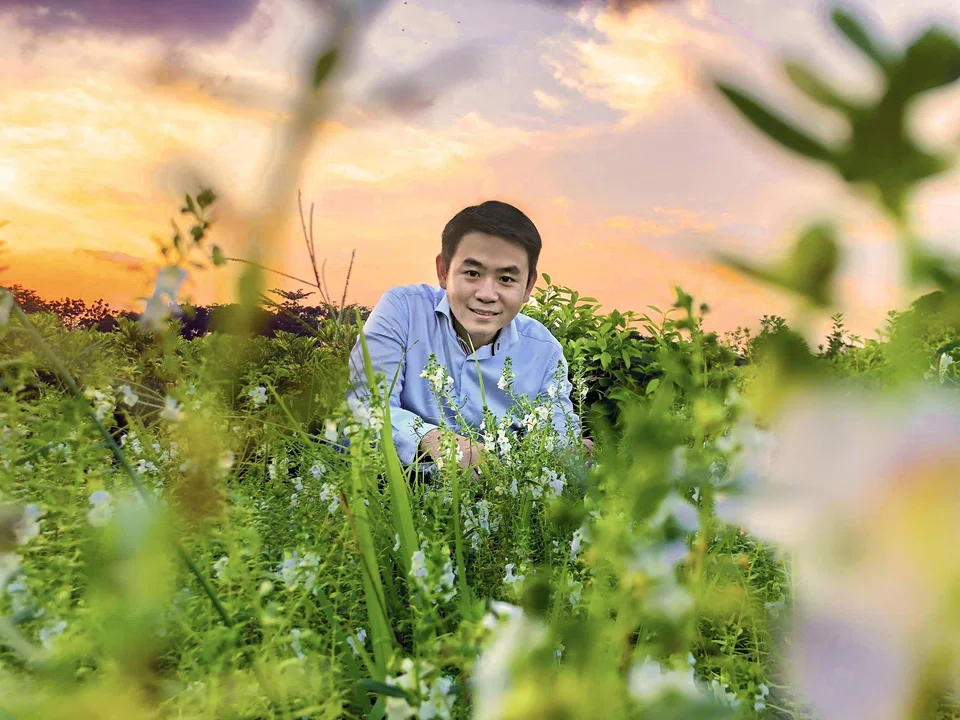
SINCE the start of its landscaping business more than 30 years ago, Mao Sheng Quanji Construction has been committed to its fundamentals – to not go against nature.
Now – and for the years to come – the philosophy continues to guide the firm in its business decisions, client negotiations and innovations, said executive director Choo Jun Wei.
“As a horticulture business, you focus on the fundamentals of science.”
Since its founding in 1988, Mao Sheng has grown to be one of Singapore’s best-known landscaping companies. It specialises in the designing, building and maintenance of landscapes for both large-scale government and private estate projects.
This year, the company received the 10-year award at the Enterprise 50 (E50) Awards. Mao Sheng won its first award in 2015.
For the company, the award gives it a push to do better as a business, and become more aware of its shortcomings, said Choo.

Rooted in the fundamentals
In the landscaping business, companies like Mao Sheng may face disagreements with clients on the type and placement of plants for projects. It is the company’s role to balance the clients’ demands and the sustainability of the landscapes.
For example, Choo noted that some designers and architects want to place sun-loving plants in hotel lobbies lacking natural sunlight. As a result, replacement costs may be incurred when the plants deteriorate due to wrong planting choices.
“Each stakeholder has their own objective and agenda, so it’s really our job to convince them to come to a common point,” said Choo, adding that being truthful to clients is a way to ensure a “long-term working relationship” with them.
“Fundamentally, we always tell clients that we are (dealing with) living things, so it’s very important to respect that.”
While there is a need to prioritise landscape sustainability, Mao Sheng also aims to allow for creativity in designs.
To do so, the company encourages customers to engage in small-scale pilots — either off-site in Mao Sheng’s nursery or on-site at the actual location — to test the viability of landscapes.
Said Choo: “We don’t want to put a cap on (the client’s) creativity… so there’s this constant learning, yet still (adhering) to the fundamentals.”
Staying resilient and adaptable
Faced with an evolving business environment and global supply shocks, Choo said that although there is no “silver bullet”, Mao Sheng will remain resilient in adapting to changes.
At the height of the Middle East war in the first half of 2026, fuel and fertiliser costs shot up globally. Mao Sheng, which engages in long-term maintenance contracts that lock prices charged to clients, had to absorb rising costs instead of passing them on.
The conflict also affected the company’s supply of plants, which are largely imported from Malaysia, as well as from other South-east Asian countries.
Despite the difficulties faced, Choo said Mao Sheng hopes to weather the disruptions with the support of its workforce of landscape managers and horticulture specialists. Even amid the price shocks, the company has invested significant time and resources into training and retaining staff.
Administrative flexibility has also become a focus for Mao Sheng as it faces a “major shift” in how clients enter contracts with the company, said Choo.
Previously, the landscaping firm could directly procure contracts with customers. Now, more clients are engaging third-party facility management companies to draw up major integrated contracts, which aggregate a collection of services like landscaping, pest control and electrical services under one agreement.
Choo said that Mao Sheng will be flexible and adapt to the changes, which add more layers of compliance that the company will have to navigate.
Improving through innovation
To better meet the needs of customers, Mao Sheng has taken to using technology and adjusting its business practices.
This includes changing how the company presents landscaping projects. Instead of solely using pen and paper and handmade cardboard models, Mao Sheng uses three-dimensional (3D) printing to create models for clients to better visualise landscapes.
“Sometimes we do have people who may not understand drawings. Having a 3D object to scale will give (a) tactile feel (of) it,” said Choo, adding that the firm started this practice in 2025.
The company also employs artificial intelligence to design landscapes, which helps generate visual models and make changes faster.
However, Choo noted that while technology increases efficiency in the design phase, landscaping is fundamentally still a “hands-on” job, especially in the construction and maintenance stages which constitute more than 90 per cent of Mao Sheng’s operations.
To illustrate the importance of human intervention, he pointed out how the sensors Mao Sheng uses in its plant nursery and projects have given “many false readings”, requiring human on-site supervision.
City in nature
Mao Sheng is part of a string of “rewilding” projects following the launch of Singapore’s new urban greening vision, “City in Nature”, under the Singapore Green Plan 2030.
Rewilding in landscaping moves away from “manicured” gardens, allowing plants to grow wildly in their natural environment with minimal human intervention, said Choo. The company is currently involved in rewilding projects for the Istana, Pulau Ubin and Raffles Girls’ School (RGS).
However, Choo noted that rewilding requires more than letting “nature take its course”; public education and a willingness to live among nature are needed too.
Mao Sheng’s landscaping project in RGS hopes to achieve that. The garden, which grows within the school’s compound, is equipped with sensors that enable students to monitor soil health.
Choo added that living among plants improves quality of life, a mindset that guides the training of Mao Sheng staff, and one he encourages his clients to embrace.
“(We) invest in our training of people in their plant knowledge… (to) make sure our people will make the plants happy,” he said.
Added Choo: “We have a tagline that says: plants make people happy. So, we tell clients they must put more plants around the places where they work, live and play. It will make their environment more liveable.”
Decoding Asia newsletter: your guide to navigating Asia in a new global order. Sign up here to get Decoding Asia newsletter. Delivered to your inbox. Free.
Share with us your feedback on BT's products and services
TRENDING NOW

Grab eyes financial services arm as next growth engine, targets US$500 million in segment Ebitda by 2028

As Indonesia picks new vice-president to succeed Gibran, investors see risks and opportunities

Singapore telco recovery at least 2 years away despite StarHub-M1 merger, say analysts
Prive liquidators meet with creditors a year after restaurant group’s shutdown

