Leadership in a crisis: the Mewah way
Mewah's Michelle Cheo is learning from the pandemic and keeping her eye on the long-term opportunities for the company.

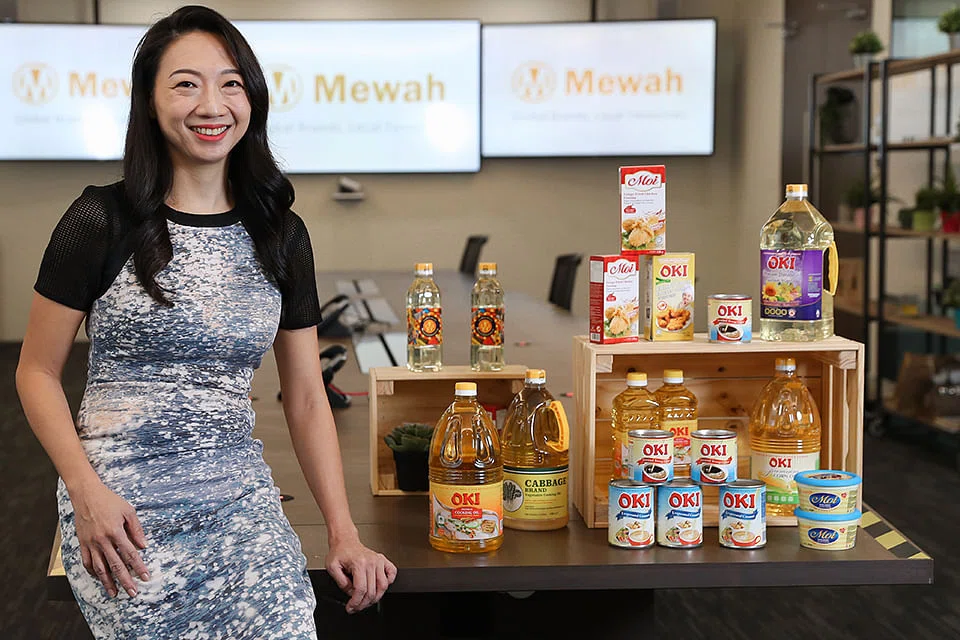
NEVER waste a crisis. That mantra served Mewah International's group chief executive Michelle Cheo well as she seized every opportunity to unpack, learn and adjust from the firm's pandemic experience - a lasting strategy that will likely help the business tolerate more disruptions for years to come.
Battling tough times is not unfamiliar territory for this agri-firm, focused on edible oils and fats, with refineries and processing facilities in Malaysia, Singapore and Indonesia. It has been around the block for seven decades and in the most recent one, like countless businesses across sectors and the world, was tested by two "global catastrophes" - the 2007/08 global financial crisis (GFC) and the coronavirus outbreak, which is still playing out.
While these events have put the firm's strategy, business model and DNA through the wringer, Cheo says Mewah has come out of them even more fortified. The firm's agility and swift response in changing workflows to adapt to the ever-changing border controls and movement restrictions imposed in the various markets have been key to its survival. That Mewah's business is predominantly classified as "essential industries" and hence, was relatively less shackled by the curbs, helped cushion the impact further. "Change is always difficult," Cheo points out, adding: "(But) Insanity is doing the same thing over and over again, but expecting different results."
TOUGH CALLS
Cheo was named the Outstanding Chief Executive of the Year for her leadership in listing Mewah on the Singapore Exchange, expanding the company's footprints and product portfolio to consolidate its position among the global palm oil processors, and steering the firm commendably in this pandemic environment.
She recalls how 2020 started out "normally" for Mewah with the spotlight on expansion plans, goal-setting exercises and Chinese New Year celebrations. Then the virus hit Singapore and the company was forced to implement a split-team working arrangement. In the early days of the outbreak, Cheo says not many foresaw how bad things were about to get. "Not everyone heeded our warnings to avoid personal travel," recalls Cheo. "Then the lockdowns started to happen in Malaysia and Singapore and the financial markets started to shiver. Like everyone else, we were also scared about how this situation was going to develop."
The "fear of the unknown" - as Cheo puts it - pushed Mewah to act. One key focus was to generate maximum liquidity, and hoard cash. It worked - the group's net debt to equity ratio fell from 0.65 in 2019 to a "very conservative" 0.34 last year.
The company also began to look for ways to slash costs by keeping inventory low, yet at healthy levels; it cut back on working capital and cranked up operational efficiency by reducing cycle time from 59 days in 2019 to 48 days in 2020.
Still, the challenges remained aplenty. Across the Asian markets that Mewah was present in, as well as in Africa, the United States and Europe - destination markets where it has distribution networks - these countries were fighting the pandemic with various tools that kept constantly changing.
Moreover, travel restrictions and safe distancing measures compelled Mewah's factories to only operate at a "reduced strength".
The emergence of new virus variants compounded the worries, particularly in the absence of vaccines and "shortage of testing methods", notes Cheo.
As an integrated player in the commodity industry, Mewah was affected by problems at shipping ports. Regulations for cargo shipments were changing frequently, and supply chains were getting disrupted as countries began stocking up on essentials.
The firm produces and sells vegetable-based edible oil and fat products in bulk to distributors and factories involved in confectionery, bakery products and other food items. It also produces a range of consumer products from cooking oils, margarine, rice and evaporated milk to cheese, soap and detergent.
That makes the company fully clued in on ground realities. Hoarding, she says, became a phenomenon in many countries as people scrambled to get their hands on essential items. In Singapore for instance, Cheo recalls how stockpiling back in the early days of the pandemic meant supermarket shelves were quickly emptied. Having been around for a long time meant Mewah had an advantage over its peers. The company's teams worked "round the clock" to ensure that customers could receive their products without any delay.
Government help was also critical during this time, says Cheo. Mewah, as one of the few cooking oil packers in the republic, ramped up production quickly to cater to the bursting demand from supermarkets and fully-occupied large quarantine facilities.
On the back of robust demand from countries to ensure sufficient supply of agri-commodities, Mewah achieved a record sales volume of over 4.8 million metric tonnes last year.
JUGGLING ACT
While ensuring minimum disruptions to operational and business continuity, Cheo and her team were also cognisant of how Covid-19 was taking a mental toll on staff. It helped that the various teams in the firm were experienced and had gone through "many processes together", she remarks.
For instance, when Malaysia's movement control orders (MCOs) were announced, not everyone in the company fully understood what the latest regulations were. Cheo recalls how her team had to pore over the rules and then decide how to operate effectively.
"They would basically take the regulations and burn the midnight oil (over) reading and understanding them, and then pivoting to whatever was required or calling the government to seek clarifications," she says.
Things were not always smooth sailing. When travel restrictions were implemented around the world, Cheo recalls how some employees were separated from their families. Some workers were unable to see their families for more than a year, and others faced personal tragedies and losses.
Through it all, Cheo says employees' health and mental well-being remained the top priority and suggests that companies should pay great attention to these areas.
Mewah had to quickly implement policies to keep its working environment safe. This, she recalls, was especially hard to do. The emergence of new virus variants also turned mitigating policies to fight the pandemic "stale" very quickly and they needed to be replaced with more effective measures.
Cheo says she highly values her employees' willingness to collaborate and their ability to find solutions that are "out of the box" or new ways to complete certain tasks.
Some of these qualities have already surfaced. For instance, Mewah was able to utilise collaborative IT tools to keep the company's operations running despite the pandemic.
EVOLVING WITH TRENDS
Cheo recalls that when she first became Mewah's chief executive in 2010, she focused on strengthening the company's internal processes. "(I spent a lot of time) standardising processes across the group and getting various reports churned out in a timelier fashion," she says, stressing that it wasn't just about generating reports quickly, but analysing these reports to ensure better decision-making for the company.
Once that was sorted out, Cheo then moved on to creating better products for customers and strengthening supply chains.
Over the past few years, the company has created more value-added products and better solutions.
The group's reach has also improved. It currently sells its products in more than 100 countries, and has 15 marketing offices across the world in order to be "closer to the customer" and offer better and more customised solutions.
For instance, Mewah has worked with the Health Promotion Board to create a healthier oil with lower saturated fats than its competitor companies.
Mewah's dairy creamers can also be fortified further to have more Vitamin A in them, while the company's premium bakery and confectionery fats offer cooks and bakers a "solution to fit their unique problem sets".
While Mewah's core business is the manufacturing of cooking oil and associated products, the company has also gradually moved into adjacent businesses such as non-dairy products or rice distribution. This allows the firm to leverage its manufacturing expertise or supply chain network.
The company also has "deep market insights" that stem from its long-term presence in the industry.
Prior to the pandemic, Cheo had already begun Mewah 4.0 - the process of unifying processes in the company and making operations "more digital".
Cheo recalls how in 2017, she visited her friends' factories in different parts of the world, and picked up on their "best practices" and what they were doing differently. She then returned to Mewah and "brought it all together" by making improvements to processes and investing in digital capabilities.
The effects of these efforts were evident. When employees were first asked to work from home, the process was "not effortless", but it was relatively simple because Mewah had already made investments in cloud technologies years earlier. Employees were able to do their jobs online fairly seamlessly without much hassle, says Cheo.
But there is more to be done. Cheo says Mewah 4.0 is a work in progress, and she will continue to explore areas which the company can capitalise on to become a more "data driven organisation".
"For example, if one factory is doing well in certain areas, you can start talking about it in different factories, exchange best practices, and it takes on a momentum of its own," says Cheo.
She stresses that there will always be evolving consumer trends as well as changing regulatory landscapes and it is important for businesses to take stock of these changes and be at their forefront.
FORTIFYING PROSPECTS
While the pandemic is far from over, Cheo is eager to up the ante for Mewah. To retain and grow market share, the business is banking on tapping partnerships. For instance, in July, Mewah invested in refining facilities in Sumatra, Indonesia in a strategic move to further consolidate its position as an integrated vegetable oils and fats business.
"Indonesia is the largest palm oil producer globally. We have not been significantly present in the country, both in the manufacturing space as well as in the marketing space," notes Cheo.
"Historically at Mewah, we have always grown alone. . . This is a new lever of growth for us."
Mewah's priorities have also shifted, in line with changing consumer trends. For instance, sales of food and health products have shot up "multi-fold" even before the pandemic, notes Cheo.
For instance, she says Singaporeans are dining out more frequently now due to changing lifestyles and for convenience purposes, which has pushed Mewah to develop and promote healthier cooking oils.
But as an established and reputable player in the market, Mewah is poised to grow even further even as the palm oil industry goes through consolidation. "Most of the players have already reached a certain size and scale of operation," says Cheo. "The challenges and know-how to operate within this industry continue to grow and these act as impediments for any new entrant."
Cheo says that players with inherent strength in their balance sheets and a market reputation for honouring commitments during volatile times are best placed to survive and grow. Mewah, she says, ticks all these boxes.
The pandemic also had a silver lining for Cheo in the sense that new ideas were generated during virtual meetings where she had the chance to meet people from all over the world. Her immediate priorities for the near term are building a pool of "talented internal leaders" and continuing the company's automation and digitalisation efforts.
As vaccines are rolled out progressively around the world, Cheo is expecting international borders to re-open gradually, which would then lead to further improvements in business conditions.
However, Mewah will continue to support its customers and keep its employees safe, as risks are expected to persist.
"The demonstrated resilience of this sector, confidence in our abilities and the fact that the growing global population will need more to consume keep me enthusiastic and motivated," she says.
"We have been continuously investing in our business. . . As world demand continues to improve and sentiments recover, we believe we will be well-placed to take advantage of this recovery."
Decoding Asia newsletter: your guide to navigating Asia in a new global order. Sign up here to get Decoding Asia newsletter. Delivered to your inbox. Free.
Copyright SPH Media. All rights reserved.