

Bani Mulia steers Samudera Shipping to safety in turbulent times
The 46-year-old Indonesian is planning for his captain post to be taken over before he turns 51

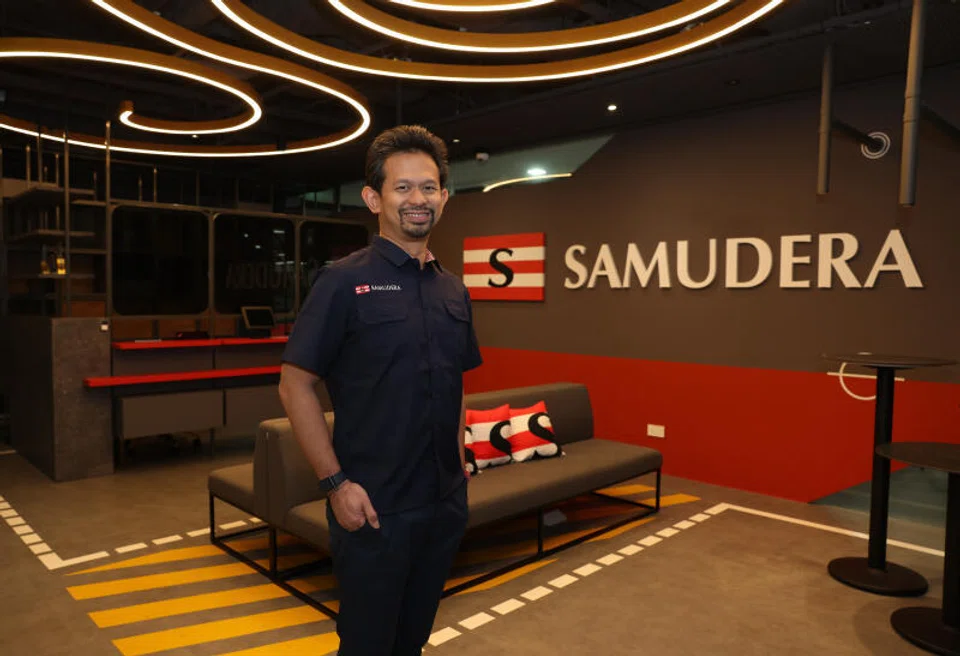
[SINGAPORE] Offers of “very, very high” freight rates were dangling in front of Samudera Shipping Line to operate services to the Middle East after the region became a war zone, but the Singapore-headquartered shipping and logistics services provider said “no” to the attractive reward.
Group CEO Bani Mulia was adamant that it should walk away even though it is perceived to be of low risk of being targeted by the Iran-backed rebels, the Houthis, as it does not provide services to Iran’s war opponent Israel.
Not even if everything is insured, the helmsman said categorically.
The reason? Samudera Shipping, a subsidiary of Jakarta-listed Samudera Indonesia, prioritises safety over the bottom line.
“We don’t want a catastrophe to happen,” he emphasised.
Bani knows this first-hand. About 16 years ago, a vessel operated by Samudera Indonesia was hijacked in Somalia, giving him an unpleasant experience that has stayed with him.
“I know even though everything’s insured, you still have to face a difficult situation: you want to get the crew all back home...You need to talk to the families. So I know that we don’t want to have a ship stuck somewhere... It’s not just about having your risk insured.”
Named the best CEO for mid-cap listed companies at the Singapore Corporate Awards this year, Bani believes that there are plenty of less risky ways to make money.
When the war erupted in the Middle East at the end of February, Samudera Shipping had already acted on risk alert and moved all its vessels out of the Gulf.
SEE ALSO








“We are very fortunate that we did not have any vessels stuck (there)... We are more risk-averse, so we could avoid those situations.”
Samudera Shipping has since resumed some of its Middle East services but avoids sailing through the Strait of Hormuz where vessels have reportedly been attacked in the waterway after being caught in the crossfire of the US-Israel war on Iran.
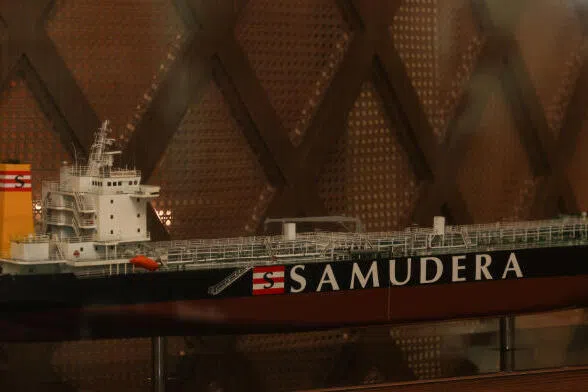
Strength lies in being flexible
Recently, Samudera Shipping’s geographic footprint extended to Europe and South America. On the diversification, Bani said: “We want to be able to have the flexibility to work everywhere, anywhere.”
It values flexibility for its vessels as well – it has a policy of owning only one-third of its fleet, with the remaining split between short-term charter and long-term charter.
By doing so, it will not be stuck with older, less-efficient vessels while allowing it to respond more quickly to changing market conditions.
Samudera Shipping is a small player in the shipping sector – with assets of US$1 billion – and it understands that it must find its own niche. “That niche can always change,” Bani added, explaining that the company tries to look at things differently to identify opportunities and gaps in the market that it can fill.
However, Samudera Shipping is not prepared to acquire companies or make investments at all costs. Instead, it prefers to wait patiently for the opportune time.
Succession plan ranks high on CEO’s agenda
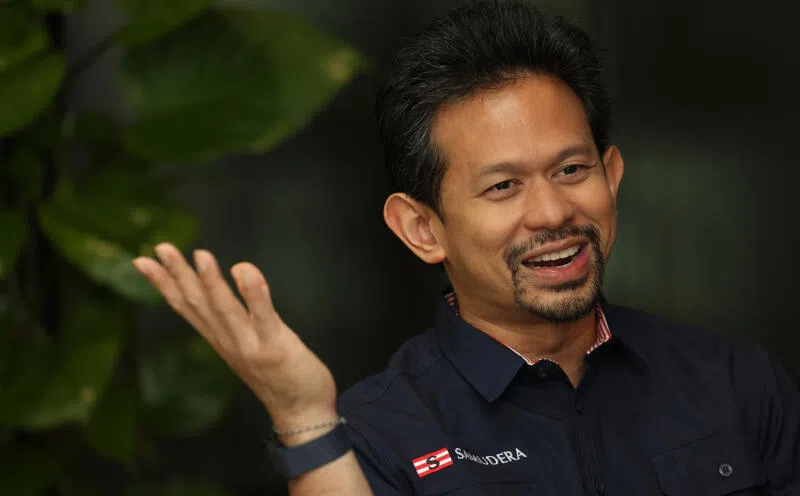
Bani took the helm of the Singapore mainboard-listed Samudera Shipping in 2020, at the age of 40.
The Indonesian is the first member of the Samudera Indonesia owner family to lead the Singapore subsidiary, as he “happened to be the best choice at that moment”. His family has never made it a rule that the honcho must be one of their own, Bani said, but the owner must be involved in the business.
“If this were an F1 team, you don’t have to be the driver... You select the best driver who has the best skills, who is (the best) fit for it, at the right age, and has everything right. Doesn’t have to be a family member that has to become the driver, right?”
At only 46, Bani – whose management style was shaped by his learning at the global peer-to-peer leadership community for CEOs and business leaders, Young Presidents’ Organization – already feels an urgency to look for the next captain for Samudera Shipping.
Integrity is the top quality the new captain must possess, along with humility, he said. The person must also be daring to take the risk of changing things for the better.
The new CEO would ideally take over when Bani is around 50 years old, after which the Singapore permanent resident plans to move on to a different role within or outside the group.
This is part of the succession plan he has for the nearly 600-strong group. Making way for the new CEO, he believes, would also set a good example for his staff.
Bringing the young aboard
Attracting new talents as well as rotating young employees across different functions and pushing for them to step up quickly are all part of his succession plan for the firm.
He has checked with board members after he became CEO if there was a limit to reconfiguring the organisation chart.
To his delight, he was given a free hand to create mentoring roles for senior employees, whom he paired with younger colleagues to accelerate the transfer of knowledge and sharing of experience.
Bani appears to know what would bring the young aboard the maritime sector. “I talked about the potential of the maritime industry. I showed them where we could be… (and that) we can go (places)... I think for young people, that is interesting. The maritime industry is challenging but also, I think, it’s very attractive.”
He believes the use of technology to tackle challenges such as achieving net zero will also appeal to younger workers.
Bani also casts his net beyond the sector in the hunt for talent as he appreciates the fresh perspectives that people from other industries can bring.

However, as much as he values talent, he will not stop any employee from resigning. Staff movement, he believes, can help bring new blood into the firm.
Vanity, not staff departures, is his No 1 fear. He worries that he may become too proud of his achievements or abilities, if his ego gets inflated by people seeking to please him with excessive compliments.
“(Being) big-headed, I think, is the most dangerous thing, and that’s my biggest fear,” said the CEO who chooses a uniform over a suit and tie as his work attire.
Decoding Asia newsletter: your guide to navigating Asia in a new global order. Sign up here to get Decoding Asia newsletter. Delivered to your inbox. Free.
Copyright SPH Media. All rights reserved.
TRENDING NOW
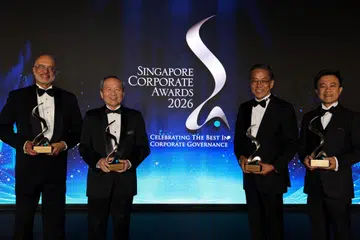
32 companies, 6 individuals bag accolades at Singapore Corporate Awards 2026

He built the Vingroup empire. Now South-east Asia’s richest man is handing some key roles to his sons

URA to review guidelines on floor space to give developers more design flexibility: Chee Hong Tat

Chagee, Mixue and Luckin won the market. Sustaining their edge is the harder part

