

Business that makes good sense and instils sense of good
Boustead Projects is behind one-fifth of all BCA Green Mark Platinum- rated new private sector industrial developments.
 Add BT as a preferred source
DeeperDive is a beta AI feature. Refer to full articles for the facts.
BOUSTEAD Projects - which has positioned itself as a leading real estate solution provider for smart, eco-sustainable and future-ready business park and industrial developments across Singapore, China, Malaysia and Vietnam - is not content to rest on its laurels.
It aspires to offer a full suite of smart eco-sustainable solutions that enhance built environments and accord economic and ecological benefits not just to its clients but also to the broader ecosystem - an articulated vision notably backed by an uncompromising approach that runs deep in its corporate culture.
"We have refrained from specific business expansions that could be highly profitable but yet are questionable on ethical and moral grounds, considered exploitative in nature, deemed as short-term and unsustainable to begin with or violate the sanctity of life," it professes in its annual sustainability report, which it labels a Longevity Report - a term it prefers, "being deeply rooted in the enduring heritage of the Boustead Group".
"The long and short of it is that business expansions must make good sense and instil a sense of good," it adds.
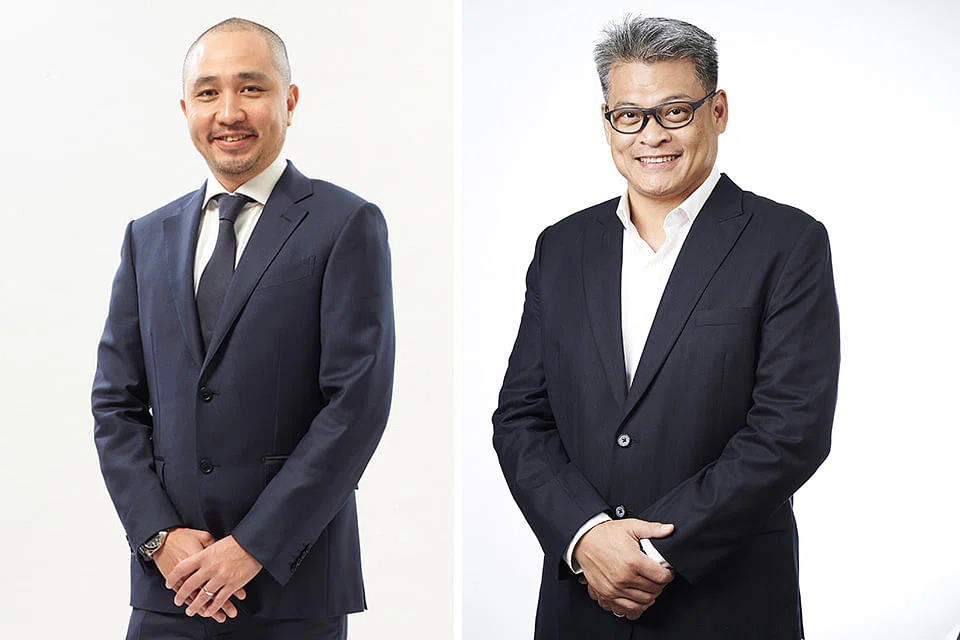
Taking such a firm stand, while admirable, is not without its challenges - especially in a world that often values profits over principles. But Wong Yu Wei, deputy chairman and executive director of Boustead Projects, explains to The Business Times why the company adopts such a resolute position in this regard.
"It has been well-documented that the built environment sector is not a 'clean' industry, and there have certainly been cases of bribery and corruption that the media has covered as well. It happens to be that the built environment sector in Singapore also has the highest number of fatalities and contributes to a substantial number of accidents due to unsafe work practices. All these issues have implications on reputation, lives at stake and in the longer term, the very sustainability of an organisation.
Navigate Asia in
a new global order
Get the insights delivered to your inbox.
"These are just some areas that we will not compromise on, no matter what the short-term gains may be, such as winning a contract award or lowering costs. We will never condone a breach of our Code of Conduct, which emphasises anti-bribery and anti-corruption.
"We will never condone unsafe work practices, where cutting corners and costs could result in a life lost, a team member or subcontractor's employee who is not going to return home to their family. These are part of our corporate DNA and values which if compromised, could easily destroy an organisation's reputation and be an existential threat," he said.
Within the company, this ethos is known as "the Boustead Way", Wong said, which acts as a "guiding light whenever a strategic and major business decision needs to be made, almost like a checklist before one embarks on an important journey":
- Does this decision align with the Boustead Way?
- Does it benefit shareholders or multiple key stakeholders?
- Does it create value other than economic value?
- Is it sustainable or focused only on the short-term?
- Is it being done with rational consideration about the current situation and a long-term view for the future or because we are sentimental about past glories?
"In this way, the Boustead Way has helped Boustead Projects to continually evolve our offerings to remain future-ready, from design-and-build to design-build-and-lease, and to the introduction of eco-sustainability, integrated digital delivery and transformative technology.
"If we had stayed as purely a design-and-build market leader in the logistics sector where we had our humble beginnings, we would likely find it difficult to survive today," Wong said.
These days, Boustead Projects boasts an impressive portfolio, having constructed and developed more than 3 million square metres of real estate for clients - including Fortune 500 companies - across diverse sectors like aerospace, business park, healthcare, high-tech and logistics.
Its engineering & construction subsidiary, Boustead Projects E&C, has become the "eco-sustainability leader in pioneering Green Mark Platinum-rated new private sector industrial developments under the Building & Construction Authority (BCA) Green Mark Programme", Boustead Projects' annual report said.
In fact, the company is responsible for one-fifth of all BCA Green Mark Platinum-rated new private sector industrial developments.
A sizeable number of its projects have earned the distinction of being the first Green Mark Platinum-rated buildings in their respective sectors, such as the Rolls-Royce Wide Chord Fan Blade Manufacturing Facility and the Seletar Test-Bed Facility.
New levels
Thomas Chu, managing director of Boustead Projects, said, "These projects took eco-sustainability to new levels when they were delivered and began to integrate smarter processes and ways of delivery, both in the clients' operations and within our E&C (engineering and construction) capabilities."
Others, such as the Edward Boustead Centre (also its headquarters), demonstrate how high levels of eco-sustainability can be designed into small or large-scale industrial developments, while its ALICE@Mediapolis became Singapore's first truly smart business park development.
ALICE@Mediapolis also marked the occasion of Boustead's first green loan, under the UOB Real Estate Sustainable Finance Framework. Chu said: "Green financing provides a competitive edge because more eco-sustainable activities become directly associated with lower financing costs, since climate resilience risk is mitigated in such projects."
Leong Yung Chee, UOB's head of group corporate banking, said: "This is an important step towards showcasing how environmentally-friendly designs can contribute to a better built environment. Our sustainability financing frameworks simplify the process of obtaining sustainable financing for like-minded partners, such as Boustead Projects, as we forge a sustainable future together."
But, as alluded to earlier, getting to this point has not been without its challenges; the company has had to put in the effort to convince sceptics along the way.
Wong said: "Some stakeholders - examples being shareholders outside of our parent, Boustead Singapore - may not always agree with our more risk-managed approach, given that it comes with more managed growth rather than explosive growth that some find exciting.
"Our investor relations team has actively worked towards explaining our long-term strategies to shareholders, hopefully attracting only those shareholders which have both a long-term view and ability to hold on for the long-term, thereby (appreciating that) what we plant today (will) bear fruit only years later."
One such fruit was Boustead Industrial Fund, which unified all parts of its business park and industrial real estate value chain, but took many years to reach the necessary scale because the company took the "more difficult and longer route" to ensure that the launch would be sustainable, that it would be a reputable and strong sponsor, and enabled it to strengthen its entire business model and deliver better value to shareholders over the long-term.
Another challenge has been convincing potential clients to pay more - because Boustead's solutions are not always the lowest-priced in the market - for high-quality experiences and outcomes.
"This has been a challenge," Chu said, "which client would not like a lower price?"
Long-term impacts
He continued: "Because of the custom-built nature of a facility, many times with high specifications that are really designed around the client's teams, operations and work processes, it means that we may not be offering the same solution as a competitor, even if the outer building aesthetics and structure look the same.
"Quality, specifications and other standards including smart and eco-sustainable features may be significantly higher in our solution when compared with competitors' solutions, which results in the higher price.
"Being the market leader of Green Mark Platinum-rated new private sector developments, we try to persuade clients of the long-term impacts of the built environment versus short-term considerations such as the original cost of the development."
The issue of cost has presented a considerable challenge in the push to get more companies and businesses in Singapore - especially smaller organisations - to adopt eco-sustainability features in their buildings and operations. But Boustead Projects, drawing on its expertise and experience, has words of wisdom to share.
Chu acknowledged that "technology has to come down in cost, particularly green technology and applications of green energy".
"When clients can see eco-sustainability features as reducing operational costs and delivering a much quicker payback, they will be more likely to consider such features in the first place. Green energy also needs to be cost-competitive with conventional energy, without a reliance on government subsidies."
He believes that the regulatory environment also plays a part: "Once the government mandates certain minimum standards, then SME (small and medium-sized enterprise) clients may have no choice but to at least have their new facilities designed to meet these minimum standards.
"Ultimately, if SME clients see smart and eco-sustainable features as essential to their existence or improving their survival in a tough business environment, these are likely to spur investment in such features.
"Based on our experience, the benefits that arise from adopting eco-sustainability features in their buildings more often than not, can have longer term intangible benefits for the company."
- This is the third in a 20-part Green Business series, in collaboration with UOB, exploring sustainability trends across businesses and industries.
Decoding Asia newsletter: your guide to navigating Asia in a new global order. Sign up here to get Decoding Asia newsletter. Delivered to your inbox. Free.
Copyright SPH Media. All rights reserved.
TRENDING NOW
Air India asks Tata, Singapore Airlines for funds after US$2.4 billion loss

Beijing’s calculated silence on the Iran war

China pips the US if Asean is forced to choose, but analysts warn against reading it like a sports result

Richard Eu on how core values, customers keep Singapore’s TCM chain Eu Yan Sang relevant

