

Asean gaming market sheds light on Macau debates
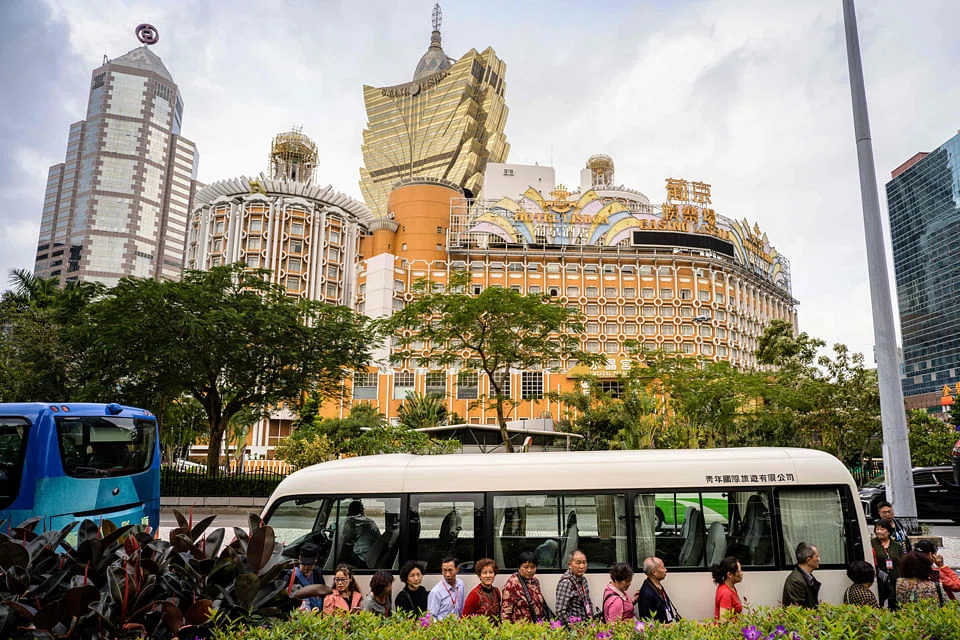
TWO key debates in Macau - who is stealing Macau's VIP business; and how much do the concessionaires have to pay for the licence - can be connected to the Asean gaming market. We explain how.
Understanding VIP cannibalisation in Macau
Macau registered gross gaming revenue of US$19 billion and US$8 billion in 2H18 and 1Q19, up 9.5 per cent and down 0.5 per cent year-on-year, respectively. The slowdown is mainly driven by the VIP segment that was up by only 4.3 per cent and down 13.4 per cent year-on-year, respectively, during the same period.
There are two main reasons for VIP slowdown in Macau. The first one is the liquidity crunch in 2H18 as China's M1 growth decelerated from 11.9 per cent in 1Q18 and 1.7 per cent in 1Q19. A similar slowdown was apparent in M2 and TSF growth too. M1 and M2 are measures of money supply. TSF is total social financing, also a measure of liquidity in China.
The second reason is the apparent cannibalisation of VIP business by emerging and improving Asean gaming markets.
On the first point, some of the liquidity indicators have started turning around recently, with the China M1 reading for March being 4.6 per cent, better than the reading in January of 0.4 per cent. Based on our analysis, China liquidity indicators lead Macau VIP revenue growth by around six months, and thus we expect VIP recovery to be visible by 3Q19. But, what if VIP business has structurally shifted to other regions and the correlation breaks from here onwards? This is worth investigating.
There are many reasons why VIP revenue in Asean countries is growing faster than that of Macau. First is lower tax. VIP gaming tax in Asean (Singapore at roughly 12 per cent of revenue including GST, Philippines at 15 per cent, and Cambodia at about 2 per cent) is much lower than that of Macau (39 per cent of gross gaming revenue), which helps in casinos' ability to pay higher commissions to junkets.
Second, the quality of these casinos has improved significantly over the last few years resulting in higher-end VIP customers moving abroad. VIP revenue at the largest casino in Cambodia was 6.1 per cent of total Macau revenue and similar to that of Venetian, Macau, in 2018. This percentage was merely 1.5 per cent in 2015.
SunCity, the largest junket operator in Macau, has up to 30 per cent of its rolling chip volume coming from outside Macau and growing. Sun City acquired more than 25 per cent stake in Summit Ascent, operator of the sole casino in Vladivostok, in April 2019, that made VIP revenue of US$62.5 million in 2018. SunCity is also building a casino in Hoi An, Vietnam, which should open in 3Q19. All of these could mean continued leakage of VIP gaming revenue away from Macau.
Cambodia and the Philippines' VIP businesses have grown significantly in the last two years and might give an impression that they are taking share from Macau. However, if we add Singapore, Australia and Saipan, we realise that the percentage of VIP revenue from regions other than Macau has remained fairly stable at around 30 per cent of the total VIP revenue in Macau. Thus, one cannot blame overseas leakage for recent Macau VIP revenue growth slowdown.
On top of this, the majority of VIP gaming revenue in the Philippines is proxy betting, which is not allowed in Macau and, thus it is not a result of cannibalisation. We conclude that Macau VIP revenue should remain resilient, despite leakage to Asean countries, and should recover in 2H19.
Macau gaming licence renewal - lessons from Asean
Macau's gaming licences are set to expire by June 2022, and without any precedence, investors are unable to quantify the impact. We look overseas to understand possible scenarios.
First up is Singapore, where the government asked for an additional S$9 billion investment (65 per cent of the initial investment 10 years ago) from two of the existing operators. They raised tax by 3 per cent (from the existing 5 and 15 per cent for VIP and mass segment, respectively) and increased the entry levy by 50 per cent (from a daily S$100 to S$150). While they extended the exclusivity, they did not extend the licence beyond the initial 30 years.
The second case in point is Australia, where Crown Melbourne paid A$500 million (S$479.4 million), equivalent of 85 per cent of the property's FY17 ebitda of A$589 million, to extend the licence for another 17 years.
The Macau government could ask anything from the current concessionaires, due to the high ROIC (return on invested capital) these casinos have generated, but consensus is much more sanguine, and there is some downside risk to this.
The first risk is that these concessions will not be automatically renewed; they will need to be rebid.
The second risk is the legislation that needs to change from currently three concessions to six before the rebidding process could even start.
The third risk is monetary. Although Macau's gaming tax of 39 per cent is one of the highest in the world, the government could easily increase it by 3 per cent or so. Alternatively, it could introduce complementary income tax of 12 per cent, which has been effectively waived in the past 20 years. This could reduce casinos' earnings by 8 per cent, although the market might compensate for this by rewarding stocks with higher multiples.
The government could also ask for investments worth billions of dollars in non-gaming amenities in Macau or China, which could increase interest expense and reduce dividend growth expectations.
TRENDING NOW

Grab CEO’s wife Chloe Tong on life with Anthony Tan and finding her purpose

US trade chief to consider trade deal tariff caps in excess capacity probe
Bee Cheng Hiang customers’ e-mail addresses exposed in Singapore’s first case of AI-related data breach
DFI Retail to take over Starbucks business in Asia from Maxim’s Caterers

