
Making waves in sustainable travel
Royal Caribbean Group is riding an innovative streak towards achieving its ESG goals
 Add BT as a preferred source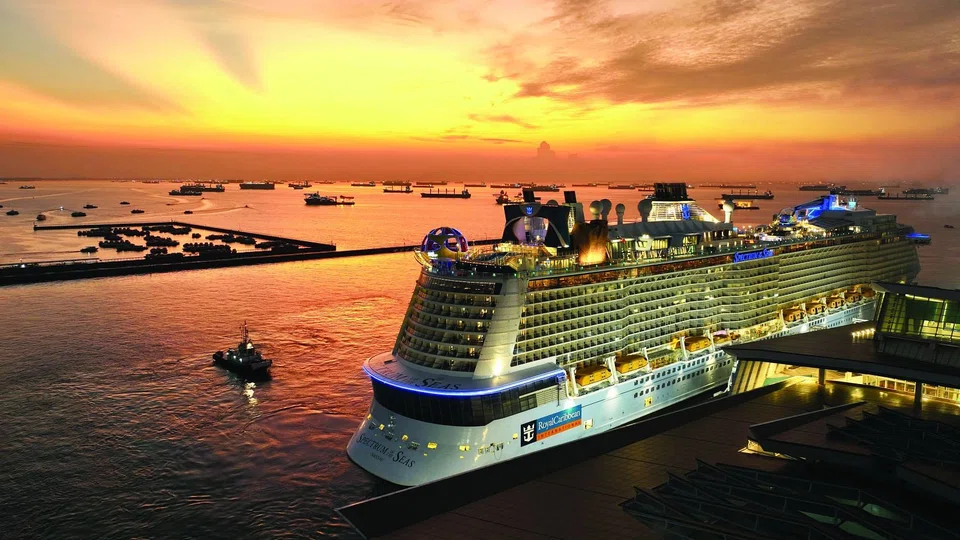
AS ONE of the world's leading cruise companies, Royal Caribbean Group is committed to promoting the health and vibrancy of the oceans and the environment, as well as contributing to a healthy and thriving workplace, society and environment.
"Sustainability is core to our business strategy. Our foundational values of integrity and continuous improvement fuel our commitment for the long-term success of our company, the countries where we operate and the communities we visit, as well as the health, safety and well-being of our employees and our guests," says Angie Stephen, Vice President and Managing Director, AsiaPacific, Royal Caribbean International.
Royal Caribbean strives to achieve its environmental, social and governance (ESG) goals by leveraging its culture of innovation to develop a sustainable business model. For instance, one of the key aspects of the group's sustainability strategy can be seen in its efforts to reduce energy use among its fleet of 63 ships, which travel to around 1,000 destinations globally.
To this end, Royal Caribbean leads the industry in the use of new technologies to build and design ships that are more energy efficient. Its ships are continuously built and retrofitted to improve energy efficiency and minimise their environmental footprint.
Some of its efforts in this area include implementing innovative hull configurations to cut energy use by 20%, and employing heat waste recovery technology that allow its ships to capture heat from machinery and repurpose it for other uses, such as heating water. Meanwhile, the group utilises artificial intelligence and data analytics solutions to optimise fleet deployment and speeds to improve fuel efficiency and reduce overall energy consumption.
Other initiatives are aimed at reducing emissions from its ships. By using advanced emission purification systems, for instance, Royal Caribbean vessels are able to remove around 98% of sulfur dioxide emissions (Sox), 60-80% of particulate matter (PM), and, as a byproduct, some Nitrogen Oxides (Nox).
Navigate Asia in
a new global order
Get the insights delivered to your inbox.
The group's success in promoting sustainability has been recognised by the industry, as reflected by the numerous accolades it has received in recent years. Among other honours, Royal Caribbean Group was named in the World's Most Ethical Companies listing for the seventh time by Ethisphere.
Making a meaningful impact
Despite the havoc wreaked on the travel industry by the pandemic, Royal Caribbean Group has continued to address key sustainability-related issues important to its stakeholders. In the area of emissions reduction, where the group has achieved its carbon reduction target of 35% and committed to achieving net zero emissions by 2050, it has unveiled a number of key initiatives.
In 2021, Royal Caribbean's wind farm project in Kansas in the United States, developed in partnership with Southern Power, began operations and generated approximately 242,000 tons of CO2 offsets. The wind farm is expected to offset up to 12% of the company's global emissions each year. Meanwhile, the group's next class of ships, IconClass, will use cleaner-burning liquefied natural gas and fuel cell technology, resultingin lower ship emissions when it launches in 2023.
Royal Caribbean has also removed 60% of single-use plastics from its supply chain in an effort to achieve zero waste across its fleet. Furthermore, 100% of the company's fleet is equipped to be landfill-free, with only 0.50 pounds of waste being sent to landfill per passenger each day - 80% less than the U.S. average on shore. The group also works to ensure fresh water on their ships is used efficiently; some 90% of fresh water is produced on board its ships in order to not deplete local resources.
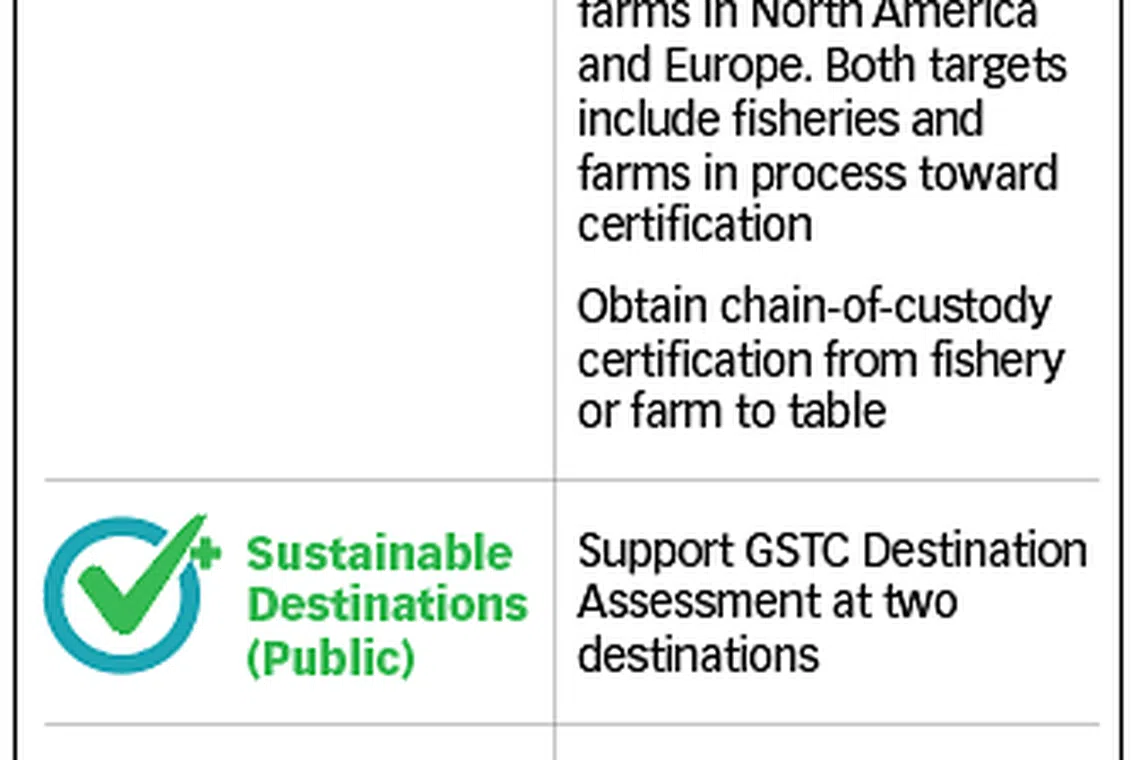
And in a first for the cruise industry, Royal Caribbean has committed to source 90% of wild-caught seafood and 75% of farmed seafood served on its ships from certified sustainable sources.
An ongoing journey
Looking ahead, Royal Caribbean Group is already working to develop a new set of targets around the reduction of carbon emissions, the sustainable growth and development of its business, sustainable commodity sourcing and tourism, the elimination of single-use plastics, and waste management.
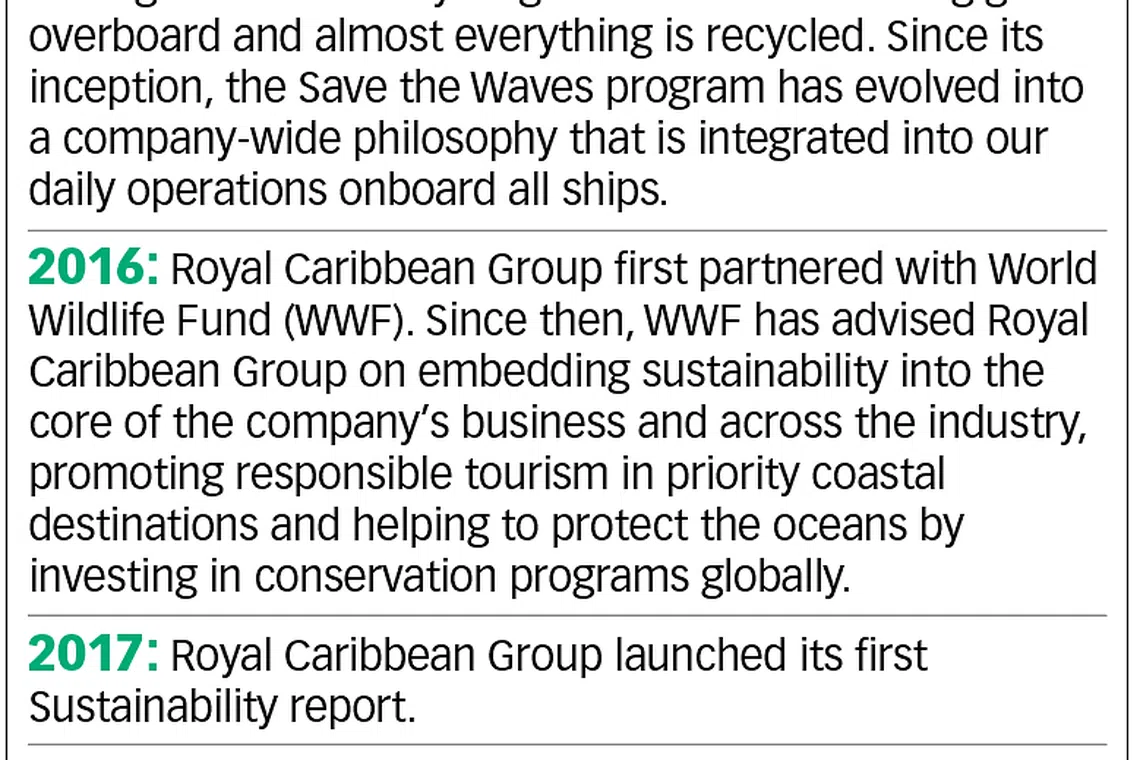
Most recently, the company also announced its commitment to the next phase of its ongoing partnership with World Wildlife Fund (WWF) for guidance and counsel in establishing bold environmental goals and sustainable business practices.
Says Ms Stephen: "The next five years of the partnership will focus on setting ambitious, measurable sustainability targets."
Decoding Asia newsletter: your guide to navigating Asia in a new global order. Sign up here to get Decoding Asia newsletter. Delivered to your inbox. Free.
Copyright SPH Media. All rights reserved.

