5 questions with Indonesia’s cross-economy veteran Pandu Sjahrir
Benjamin Cher
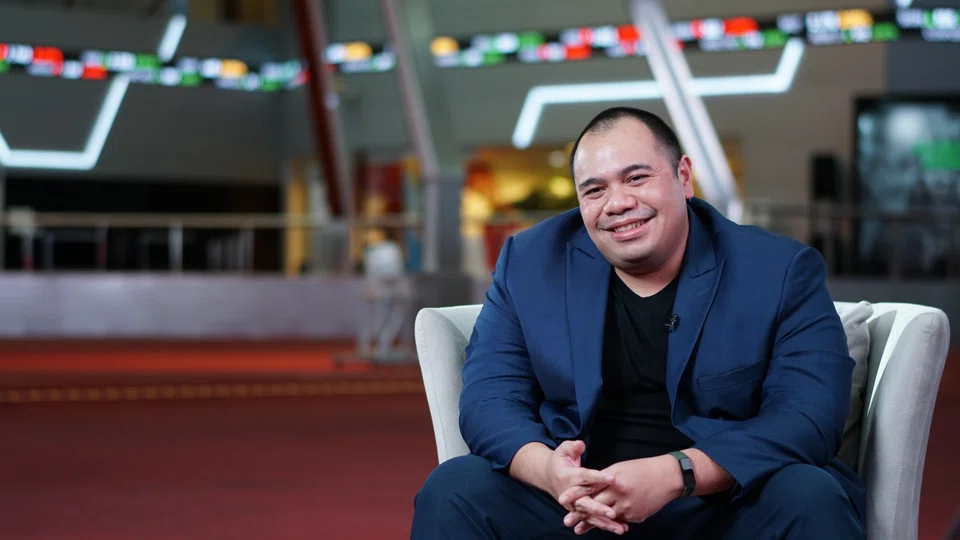
NAVIGATING the crossovers between old- and new-economy businesses in Indonesia can be tricky, but Pandu Sjahrir manages it nimbly. He is not only the managing partner at investment firm Indies Capital Partners, but also a founding partner at venture capital firm, AC Ventures.
He also holds a number of board positions, notably on the Indonesia Stock Exchange; he is also on Gojek’s board and is chairman of Sea’s Indonesian entity. His old-economy credentials include bringing his family’s coal company TBS Energi Utama public on the Indonesian stock exchange.
In this edition of 5 Questions, Sjahrir tells The Business Times how he got here and his “no asshole” rule.
1. How did you begin your career and what brought you to where you are now?
I started my career as an investment banker, and then I went into private equity. I was always in finance for my first decade of work. Then I moved back to Jakarta, where I was asked to take the family business TBS Energi Utama public, which I did within two-and-a-half years.
I started investing in technology companies back in 2014, just when they were first getting started, using whatever bonus or savings I had. At that time, you didn’t need big numbers to invest. I started to institutionalise the business in 2017, when I started taking third-party capital with a firm called Indies Capital Partners. I started with US$30-40 million of managed capital, and now that’s grown to over US$1 billion.
Then I started AC Ventures, focusing on the early- and seed-stage, all the way to Series B. The firm started with just friends, family and personal capital. AC Ventures started taking on external money from the third fund and merged with Convergence Ventures.
So I’ve been very fortunate among all these businesses; that’s 11 years of my career in 2 minutes.
2. What are your efforts focused on currently?
I was kind of overwhelmed right before and during Covid-19, because it seemed as though there were so many things I’m doing. I wanted to make it more focused. So that’s what I have done in the last 2 years — refocus all the effort into something concrete. Before, I was sitting on so many boards. I think when we counted, there were more than 30 board seats. So I was thinking: ‘What am I doing?’ So let’s refocus right — what are we trying to achieve for the next 10 years, I think, will have significant impact.
One is in energy transition and the second is in digital. So we kind of shaped TBS from doing a coal business into being more renewable energy and electric vehicles. We just announced a joint venture with GoTo, in which we are going to do all the 2-wheelers, and it doesn’t just have to be with Gojek; it can be for everyday consumers.
In the digital space, I'm focusing all our efforts on the fund to focus on digital localisation, digital infrastructure, and how to promote more digital adoption among Indonesians.
It was kind of by luck, when I was doing my private equity, I was actually looking at carbon credits and renewable energy. When I moved back to Indonesia, it was still kind of early, so I was looking at coal and coal-power plants. Now, I see that that game is declining, so even though with all the commodities prices at an all-time high, we have to reallocate our capital. If you look at a big-growth market like data centres, most of the players there want to use renewable energy. With this paradigm shift, we have to adjust. We're reinvesting all the cash flow from coal, essentially, into these new businesses, but it takes time.
As for digitalisation, in 2014, I was very fortunate that I could meet some of these tech companies when they were still really, really young. They were willing to take small cheques. So that’s what I did, I just said let’s try and let’s roll with it. I made some, I’ve also lost capital from some bad investments, I learned from those too. But I’m glad I learned that at an early age, in that sense.
3. What’s one thing you would tell your younger self?
One thing I learned a lot about is don’t invest too much in single founders, no matter how amazing they are… especially in our part of the world, where a lot of things are very inefficient. Talent is inefficient, business issues are inefficient, sometimes regulations are still behind developed markets.
So what I want to tell my younger self is that when you are investing in founders, focus not just on their background, but on the team of co-founders, how they work well together. Be there to support them, you want to become their human resource chief, because they are always looking for people. Be their business development, because they are also looking for business connections. Outside of capital, they ask for people and for business development to build their capital.
I wish I knew that earlier. I would have been laser-focused. I was all over the place, then I realised that I’ve got to be structural about it.
4. What’s the best advice you’ve received? And what’s the context behind it?
This probably applies to everyone regardless where they are. I think you’ve always got to have a high degree of humility, especially as an investor. Because you can screw up many times, make sure your winners outweigh the losers, but you’ll always lose some, so have a high degree of humility.
And I’ve told this to everyone, always be kind, especially in the investment business. Try to learn to be kind. We have a “no asshole” rule – always be kind, be thoughtful and respectful to each other first, then you can be respectful to others as well. A high degree of humility and kindness will always be helpful.
I’ve worked for an asshole before, so that’s one thing I’ve learnt in the first decade of my life working for other people. So I said when I ever have the privilege or have the guts to build a business on my own, I want to do it my way and I want to be nice. Don’t mistake kindness for weakness. We’re going to be firm, we’re going to be exact, but we also want to be kind to people.
When I worked for a nasty boss, it was not nice, and I also became not nice and it actually affected my relationships personally with my friends and family. I just became an unpleasant person to work with. I remember this when I was working in finance for a couple years. When I went back to Jakarta, I decided I didn’t want to be an asshole, let me do it my own way.
5. What’s your biggest and worst setback?
I got fired from my job back in 2002, it was at that time part of the downturn of the market, and I had to look for a job for 6 months. I was lucky, someone took a shot with me and I realised I was good at sourcing deals, at convincing people and at numbers.
My first setback was early on, and my second setback was after we took TBS public. There were a couple of instances where the company didn’t go anywhere, and I thought, well, what are we doing? What is our purpose? We didn’t have a compass. Then we decided to go downstream, but that took me a year-and-a-half to figure out, because I was in a rut.
At the same time, can I just build an investment firm? Of course not, who are you? You don’t even have a track record. It took me from going public at the end of 2012 to 2017 to build my own investment firm, and for our company to start building power plants. In between, there were a lot of mini failures. If you haven’t failed, you haven’t tried.
6. And a bonus question: Why should unicorns list on their domestic exchanges?
I think it’s a good thing, the GoTo IPO was very good. It was super positive, and we were able to raise S$1.5 billion. I think it will set a trend for more local tech companies to list on their local bourses. That should be helpful, either on the Indonesian Stock Exchange, the Singapore Exchange or other local boards.
A lot of the local investors are users of the tech companies’ services. A lot of times they want to be shareholders of it. That’s a good trend, especially given what’s going on in the world today. If you’re listing in the US, sometimes US investors won’t know where you are. They’ll just value you as any company out of Asia. They can’t differentiate, for example, between Indonesia and Singapore. They see it as all one place. We take living in South-East Asia for granted, but in the US, most investors are very US-focused, which makes sense because that’s where they live.
No matter how deep the capital market is, there’s always that bias.