Amplitude CEO advocates direct listing to avoid 'huge' mispricing

Singapore
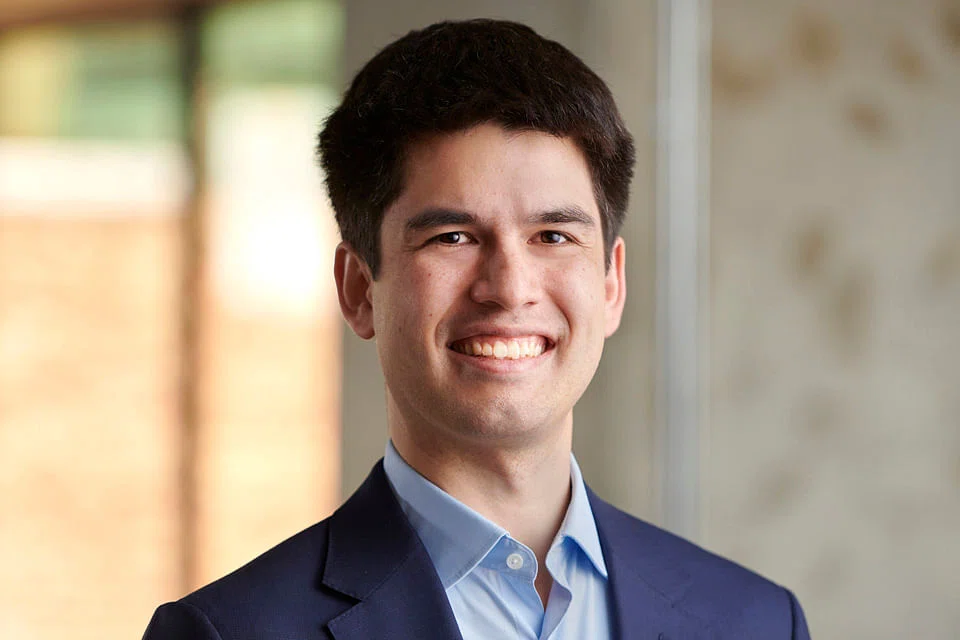
SPENSER Skates, chief executive of Amplitude, is a big believer in direct listings. And he is even encouraging more chief executive officers (CEOs) to consider this route over a traditional initial public offering.
On Tuesday, the GIC-backed data analytics company made its debut on the Nasdaq via a direct listing, joining a slew of other hot tech names to have done the same, such as Coinbase, Roblox and Palantir Technologies.
Amplitude was given a reference price of US$35 by Nasdaq before trading, but the company far surpassed this, opening at US$50 per share. It closed at US$54.34 on Thursday, giving the company a market cap of US$5.6 billion. On a fully diluted basis, Amplitude's valuation stands at US$7 billion. This valuation is "aggressive", but one that speaks to the growth potential of the company, said Mr Skates. And it also validates direct listings as an alternative to traditional initial public offerings (IPOs), he reckons. "It's a great endorsement of the direct listing ... From my standpoint, if we had done a traditional IPO, we would have underpriced the company by 50 per cent. That's a massive amount," he told The Business Times.
Direct listings began to gain traction from 2018, when Spotify tapped this route, allowing shareholders to sell existing stock to the public at a market-determined price, without underwriters involved. In contrast, a typical initial public offering (IPO) involves the issuance of new shares at an offer price, which are underwritten before being sold to the public. Direct listings can be cheaper, but also more volatile, due to the lack of underwriting and a lock-up period.
Speaking to BT over a video call from New York, Mr Skates cited a finding in a study by a University of Florida professor: In 2020, traditional IPOs in the US underpriced companies' stock by close to 50 per cent on average, leaving about US$30 billion worth of capital on the table. "This huge, huge market mispricing as a result of the traditional IPO process, honestly in today's day and age really doesn't make sense," he said.
For instance, Airbnb's share price popped by more than 100 per cent when it went public last year. This means that it could have raised twice as much with the same amount of stock, said Mr Skates. Likewise, DoorDash also saw its share price near-double on its first trading day.
"So they basically have this massive wealth giveaway to public funds. As a CEO, you have a fiduciary responsibility to get the best deal you can for your current shareholders. I heard one public company CFO call traditional IPOs the biggest arbitrage opportunity in all of finance. That's crazy, why would I ever want to be on the other side of that arbitrage opportunity? That makes no sense at all," said Mr Skates, who previously worked as an algorithmic trader.
While acknowledging that direct listings lack safeguards such as underwriting and a lock-up period, he reckons that these are now less important, as public market investors are better informed and understand companies like Amplitude well enough.
Another popular route for tech companies to go public is to merge with a Special Purpose Acquisition Company (SPAC). He does not have a strong view on SPACs, but believes they are more suited to companies whose business models are innovative and less familiar to investors.
"With Amplitude, because we're a SaaS (software-as-a-service) business, that's very well understood. We felt that we didn't need to change our public listing process. So it was really a choice between a traditional IPO and a direct listing," he said.
Founded in 2012, San Francisco-based Amplitude specialises in digital optimisation software. Its core product, Amplitude Analytics, provides companies with digital consumer behaviour insights, such as which end-user actions lead to specific outcomes during the customer journey, as well as forecasting key metrics.
Asia-Pacific is an increasingly important segment, he said. Its customers in this region include Indonesia's Traveloka, Singapore-based startups ShopBack, Glints and Burpple, and Australia's Canva. The company has big growth plans. "We hired twice as many people in the first half of this year than we did in all of 2020, and so we're being very aggressive about growing the company."
Amplitude wants to double its Singapore headcount to 40 over the next year, adding people in functions such as sales, marketing and customer success. The company is also building up a team in Japan.
It currently does not have an office in China, but serves some clients there in industries such as security. There are no plans for now to set up an office in China, but "long term, we for sure will", he added, describing the market as a great opportunity for Amplitude.
The company has thus been fuelled by growth capital from blue-chip investors. Besides GIC, its backers include Sequoia Capital, Benchmark Capital, Institutional Venture Partners and Battery Ventures. As of end-June, Amplitude had US$291 million in cash, according to its S-1 filing.
Post-listing, Amplitude expects to step up R&D. This year, it launched two new products: Amplitude Recommend, a personalisation tool that adapts digital products to every user based on their behaviour, and Amplitude Experiment, that helps with testing features.
"We're going to be launching more (products) next year and every year thereafter. Our internal goal is to launch one to two a year indefinitely," said Mr Skates.
- Garage is BT's startup vertical. Read more news, analyses and opinions at bt.sg/garage.