

Asean moving up the startup menu for global investors
Observers expect a near-term hit to deal flow from the Covid-19 outbreak, but overall interest remains robust

Singapore
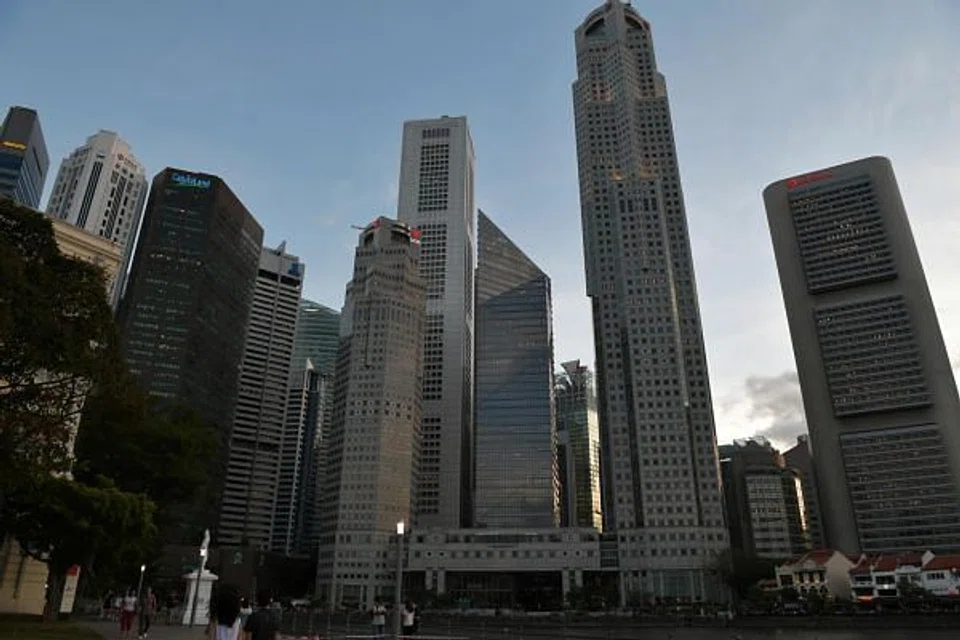
SOUTH-EAST Asia may have long been overshadowed by China and India on the global Venture Capital (VC) stage, but more investors are now looking to deploy their dry powder in the region - drawn by valuations that have yet to peak.
South-east Asia drew 315 VC deals that raised US$5.8 billion from investors outside of the region last year, according to data from market intelligence firm Preqin. The figures take into account deals where at least one investor is based outside of South-east Asia.
The capital raised peaked in 2018, with non-South-east Asian investors participating in US$9.9 billion worth of fundraises. The spike was due to outsized deals, namely Grab raising US$2 billion from the likes of Toyota and Mirae Asset Venture, and Alibaba pumping US$2 billion into Lazada.
Although capital inflow fell in 2019, the number of deals that these global investors partook in went up 18.4 per cent year-on-year, suggesting that more of these investors are taking part in smaller deals.
And market watchers like Lim Li Li, head of global investors and family offices at the Bank of Singapore, expect global investors to continue to pump venture money into South-east Asia, despite the immediate hit from the Covid-19 outbreak.
"The outbreak is likely to have a near-term impact on capital inflows from investors based in the Greater China area. Otherwise, we expect to see continued interest from other investors in VC deals in South-east Asia... generally centred on the technology sector, which is seen to be unaffected," she said.
Amit Anand, managing partner at VC firm Jungle Ventures, similarly expects capital inflow to hold steady over the mid- to long term. His firm raised US$240 million for its latest fund, of which close to two-thirds came from investors outside Asia, with strong interest from Europe and the Middle East.
"South-east Asia is leading all emerging markets in terms of sheer capital waiting to be deployed... What investors are getting behind are the strong fundamentals of South-east Asia: 650 million people, fast-growing GDP, young demographics and the most connected and an engaged Internet population," he explained.
Another key appeal of South-east Asia is the relatively cheaper startup valuations here, due to the region's tech scene being younger than that of China and India, said Chris Tran, head of Asia at North Ridge Partners.
"They're definitely on the lookout for new technology and new markets... One of the biggest targets is of course Indonesia, but what we're also seeing in particular, is that there's actually been an increase in Chinese and Korean corporate money into Vietnam... Not being able to access Indonesian investments early has meant that some of the valuations have become a little bit harder to stomach (for them)," he said.
In a November 2019 report, North Ridge noted that Chinese corporations are making their presence felt among South-east Asian unicorns, even resulting in proxy battles between tech giants. For instance, Didi has backed Grab, while Tencent and JD.com are invested in Gojek.
Beyond corporates, family offices from outside South-east Asia are also pouring capital into the region's startups, noted Ms Lim from the Bank of Singapore, typically from China, India, the Middle East and Europe.
"Seeing that the business model works in their respective home countries, investors from outside South-east Asia are now more likely to place their bets on such startups... For instance, the size of e-commerce in Indonesia is roughly where China was in 2012 or 2013. The growth potential is tremendous," she added.
Interest from the other side of the globe is also growing. US-based VC firm Palm Drive Capital, for instance, is one of a growing number of North American investors studying South-east Asian startups.
While Covid-19 could make face-to-face meetings more difficult, certain startups in this region could also draw more interest, according to Seamon Chan, managing partner of Palm Drive.
"People have been staying indoors, which will benefit certain verticals such as online shopping, gaming, and entertainment, so capital may flow towards multiple new unicorns rising through the outbreak," he said.
Capital inflows from Central Asia and Russia remain limited at this point of time, mostly involving angel investments from expatriates who work in South-east Asia, noted Sergey Savchenko, chief executive of Sistema Asia, a unit of Russia-listed conglomerate Sistema.
But there are signs of growing activity, with more corporate and institutional players engaging in strategic collaborations, that could promote more cross-border investment. Sistema Asia runs Sales Jet, a business development programme that supports Russian startups in expanding to Asia, via Singapore.
"We are bringing the most advanced Russian deep tech startups to Singapore for internationalisation... through Singapore, the gateway to South-east Asia, India and China," said Jeremy Ang, who takes charge of tech investments at Sistema Asia.
The Covid-19 outbreak is but a "temporary exogenous shock" to cross-border capital flows and collaborations, he added.
Similarly, representatives from QazTech Ventures, the venture capital arm of Kazakhstan's Baiterek National, visited Singapore late last year to explore opportunities for strategic collaboration on the startups front, with the goal of building an economic corridor between both countries. Baiterak is solely owned by Kazakhstan's government.
"Kazakhstan historically has been West-oriented; it's easier for us to digest European history. But then, the sun is rising in the East, so we should be exploring some opportunities," said Adil Nurgozhin, the managing director for digitalisation and innovation at Baiterek.
"In many respects, Central Asia is similar to South-east Asia, both have young populations and a lot of tech talent to tap on," he added.
With more money coming in from all over the world, it remains to be seen how South-east Asian valuations shape up. Joel Shen, a partner at law firm DWF and venture principal at Vickers Venture Partners, reckons that valuations here may not stay cheap for long, relative to other geographies.
"Although South-east Asia is quite an attractive market in terms of macroeconomics and demographics, it is still a very challenging market that's quite fragmented... With all this money to deploy, and frankly, not as many good businesses, the common refrain in South-east Asia is, all the valuations are going up, none are going down," he said.
TRENDING NOW

Government to bring forward raising of retirement age, give employers more financial support to create flexi-load jobs
If Europe goes to war, the fallout will be felt in East Asia
Former minister Maliki Osman, Revolut chairman join Asia Gulf Holdings advisory board

Small nuclear reactors could boost the Asean Power Grid: GE Vernova executive

