

Debate over CPF for gig workers masks real problem of fair wages
Pushing for their independent contractor status to remain misses the bigger picture

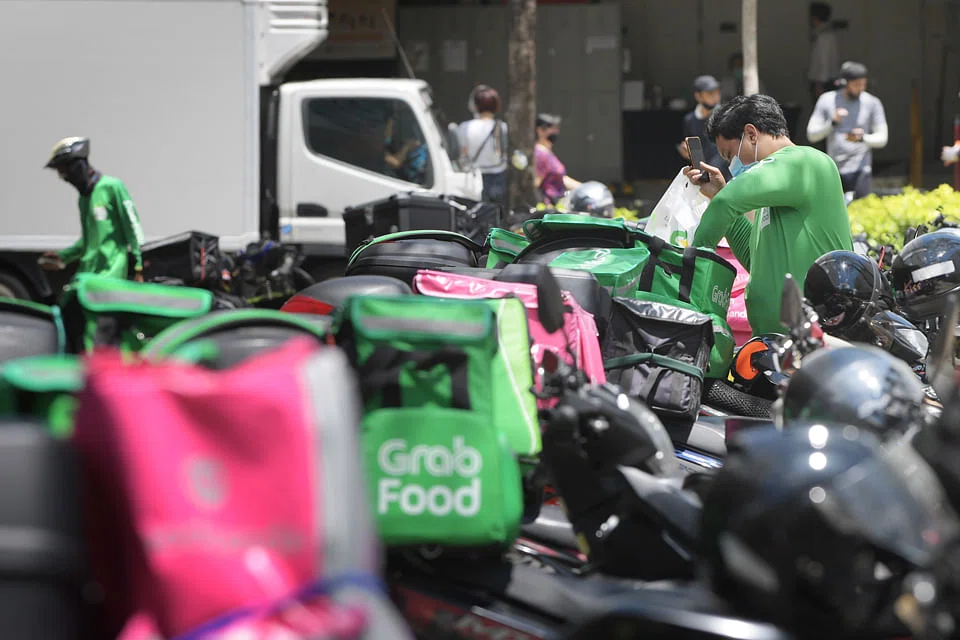
THE financial concerns of food delivery riders are very real - recent surveys show that many are anxious about contributing to the Central Provident Fund (CPF), Singapore's social security savings scheme, if they are reclassified as employees.
But arguing that riders should therefore be spared employee status and CPF is a red herring. The real question is about whether their wages are sufficient and fair to begin with.
On Tuesday (Mar 29), Grab, foodpanda and Deliveroo released a survey that polled some 4,200 riders. Over 60 per cent of them do not want CPF contributions to be deducted from their earnings. Some 21 per cent are open to deductions if it is less than a tenth of their income.
Conducted from Mar 4 to 17, the survey was distributed via the platforms' mobile apps. The findings echo an earlier study by Blackbox Research, where riders worried about tighter cash flow if CPF deductions eat into their take-home pay.
It is worrying that riders are in a position where mandatory CPF could derail their financial stability. Could this indicate that the riders' earnings from food delivery are insufficient? If that is the case, surely more - not less - safeguards are needed.
The platforms however assert that food delivery riders are not low-wage workers. In a footnote to the Tuesday press release, Grab, foodpanda and Deliveroo claim that such a notion is "a common misconception".
They cited how riders make median hourly earnings of between S$12 to S$18, higher than the S$7 to S$11 hourly wages advertised for food and beverage (F&B) roles, and the S$8 to S$9 hourly wages for cleaners and security guards.
Such a comparison is misleading. Food delivery riders' earnings can vary widely and are not fixed in the way that F&B workers' contracted hourly pay, for instance, would be. Unlike employees, riders are also not paid for waiting time, which can be substantial.
After the publication of this story, an advisory representing the 3 platforms told The Business Times that the S$12 to S$18 median range is based on online hours, which includes waiting time and excludes incentives.
Still, this does not negate the earnings uncertainty that riders face. If waiting times are particularly long on a given day, riders may not be able to complete the required number of jobs to hit the median range. In contrast, an F&B worker would be paid the same rate regardless of the crowd in a restaurant.
In addition, platforms' incentives are constantly changing and their methodology is not transparent to workers. Sustainable wages should not be volatile nor require too many supplements to base pay.
Riders also incur substantial costs undertaking this job, purchasing the uniform and delivery bag, a bicycle or motorcycle, and fuel if they ride the latter.
Furthermore, a lack of collective representation also means that it is difficult for these workers to seek recourse in the event of a dispute.
If left unresolved, these shortfalls could only create more gaps in the social safety net. Meanwhile, loss-making Grab, foodpanda and Deliveroo are spared the costs.
The recent Blackbox study raised an important point: Riders' concerns have been under-represented, giving rise to alienation. As Blackbox's chief noted, they are "often aghast at what is written and said about them".
More needs to be done to understand the varying demographics, engage them on their aspirations and design pathways for more to upgrade themselves.
If platforms are serious about their social impact, they should play their part - starting with the most basic recognition of employee status and the labour rights that this accords.
"Unmet needs of workers today could potentially impose costs on future generations of Singaporeans," said a spokesperson for the Advisory Committee on Platform Workers, which is leading Singapore's review of platform-based gig worker protections.
She noted that although these workers have more flexibility, they are subject to controls by platforms, which are not unlike the relationship employees have with their employers.
The committee will take feedback from the recent surveys into consideration and continue to engage stakeholders in the coming months.
TRENDING NOW

Knight Frank’s Tan Tee Khoon leaves firm, Nicholas Keong takes over auction business
Keppel Energy, Sembcorp Utilities and Tuas Power to supply biomethane in pilot project

GovTech retrenches another 38 staff in second round of layoffs
Take-up of new private homes dives 45% in Q3 as prices accelerate with 1.4% rise

