

Downturn strikes swift blow to startup employees
Database started on April 1 shows 800 jobseekers from the startup scene, but just 344 listed openings


Singapore
THE startup scene is feeling the heat of the economic downturn as companies cut staff in an urgent bid to reduce cash burn.
A layoffs database started by venture capital (VC) firms in South-east Asia has swelled to about 800 people seeking new jobs over the span of just two and a half weeks.
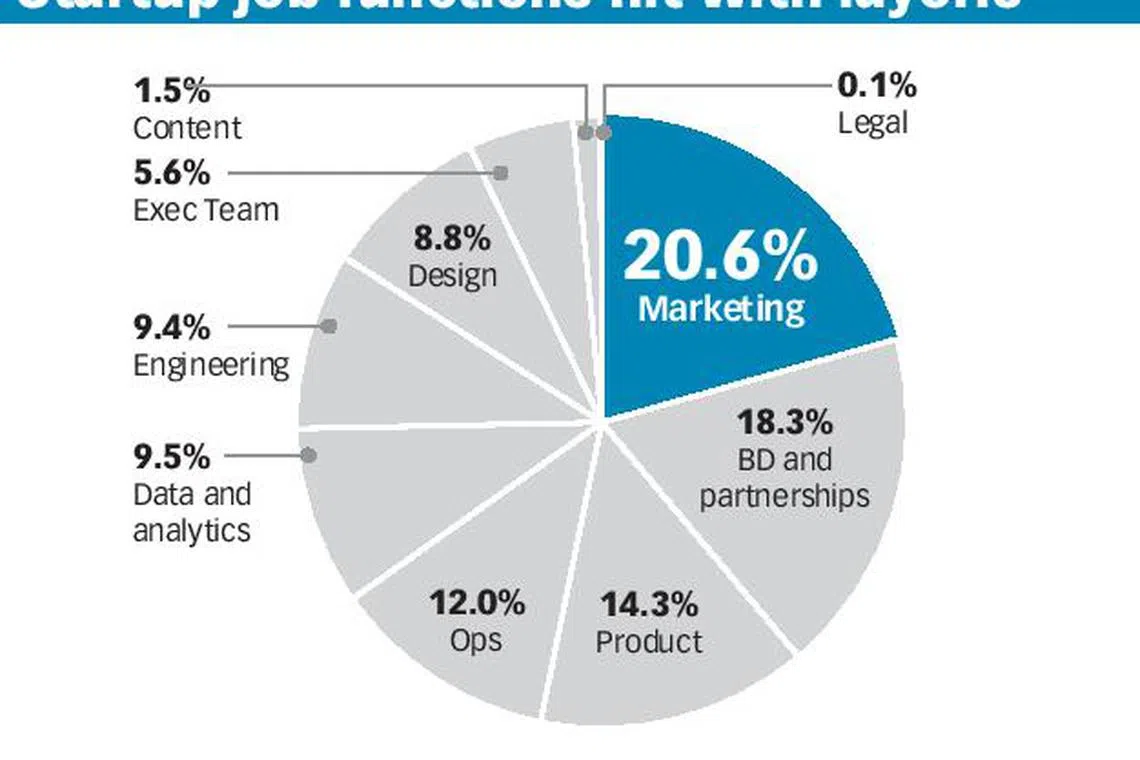
According to SEAcosystem.com, the database put together by VC firms, the roles most affected by layoffs were in marketing (20.6 per cent), business development and partnerships (18.3 per cent), product development (14.3 per cent) and operations (12 per cent).
The number of jobseekers outpaces that of openings available, with companies mainly looking to fill specialised engineering roles. A total of 99 companies have listed 344 job openings on the startup layoffs database, as at 2pm on April 19.
This comes as demand from consumers and businesses have "basically frozen", said Chia Jeng Yang, principal at Saison Capital, the corporate VC arm of Japanese consumer credit firm Credit Saison.
"This means that now there's less of a need to fulfil demand via operation roles, nor to attract demand via business development and marketing roles. Product teams will also be impacted as companies will be stretching cash out and aren't likely to roll out more features," said Mr Chia, who was part of the team that spearheaded the initiative to help laid-off startup talent find new jobs.
The database also includes people who were laid off before Covid-19 and who now have to secure a job amid the challenging environment.
In recent weeks, startups that were on the path of rapid growth have found themselves blindsided by the virus outbreak. Indonesian unicorn Traveloka, for instance, has been gunning for a public listing after spending years establishing itself as a leading online travel startup in the region.
But the company in April was forced to cut about 100 people, or 10 per cent of staff, after travel cancellations and demands for refunds pummelled the firm, reported Nikkei Asian Review.
The Business Times understands that some staff were laid off only days after starting their new role at the company, and that the Singapore office was affected as well. A current employee in the Vietnam office told BT that he is now sourcing for new job opportunities. "I think I will be affected," he said.
The axe earlier fell on employees at startups such as hospitality firm Reddoorz, healthtech group CXA, and telco Circles.Life, though reasons cited have gone beyond the virus outbreak. BT reported on Saturday that Temasek-backed fashion e-commerce startup Zilingo laid off a third of its Singapore workforce in a "planned company-wide restructuring" which Zilingo said was unrelated to the pandemic.
Adrian Goh, co-founder of tech career platform Nodeflair, said opportunities for tech talent have reduced overall. Some companies have closed, others are doing a re-forecast of their runway and slowing down or postponing their hiring, while some have stopped hiring altogether.
However, companies less affected by Covid-19, such as those in the payments and e-commerce industries, have not taken their foot off the gas pedal, said Mr Goh.
"We do see some companies doubling down on hiring."
Startups that have recently raised capital or are well-funded are seeing this time as an opportunity to invest in talent, despite the downturn.
"Unlike large publicly-listed corporates who are likely to see their market caps slashed, younger or smaller private companies in the technology sector may be in a better position to continue growing," Saison Capital's Mr Chia said.
As it is, Chinese tech giant ByteDance, which owns the popular video app TikTok, is on a global hiring spree to fill about 40,000 new jobs this year.
The company, which is reportedly worth US$75 billion, is hiring for close to 80 positions in Singapore in roles such as software development and operations.
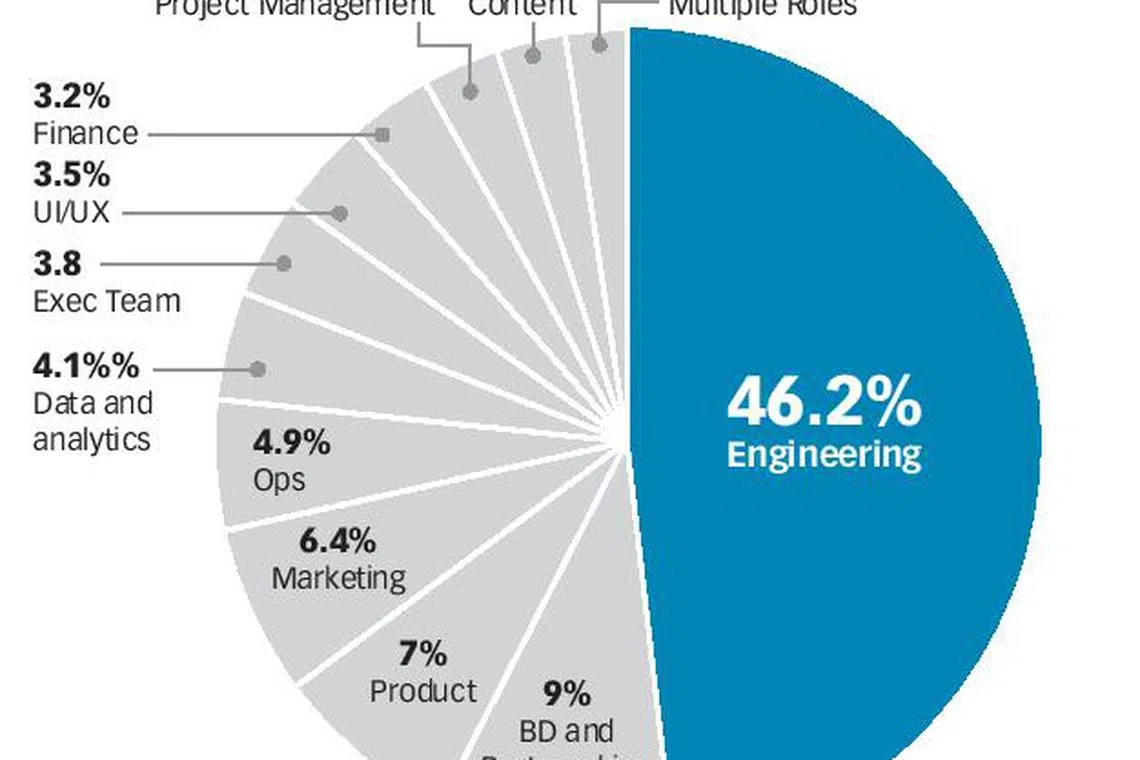
The bulk of the roles that firms are hiring for are related to the specialised field of engineering, the database showed. E-commerce player Shopee, for instance, is aggressively hiring for backend engineers.
Singapore-based Sesto Robotics, which has 30 staff, is looking to fill six positions that are mostly engineering roles. The company is a provider of autonomous mobile robot (AMR) technology that automates material handling processes in manufacturing and in healthcare facilities.
Chief executive Ang Chor-Chen said technologies that help improve efficiency, productivity and cost savings are especially in demand during challenging times.
"Our advanced AMR solutions that are already deployed in manufacturers around Asia are being fully utilised because they support worker safety and help to alleviate worker shortages. And so, we are optimistic about the continued market demand for our solutions throughout 2020."
It's a tough and uncertain time for the economy, but Mr Ang said the firm has already budgeted for the new hires and will fill the positions.
While the turbulence in the job market brings back painful memories of the 2008 global financial crisis, one difference now is that there is greater collective effort in helping people who are laid off, said Adrian Tan, a practice leader at a HR solutions and technology company PeopleStrong.
One reason is that people are more willing to share their experience with being laid off, leading others to come forward to offer help.
Another is that cloud-based sharing has made it much easier to create a document with talent details to circulate and collaborate.
SEAcosystem.com, for instance, kicked off with the support of nine VC firms, but this has since grown to 25 organisations including venture investor B Capital and the Action Community for Entrepreneurship, an entrepreneurial group.
While the database does not actively track successful job matches made, it has been helpful as a starting point for individuals hunting down jobs, said Rachael De Foe, a communications consultant for tech firms who was part of the project.
Such a ground-up initiative comes as looming layoffs and unwieldy job prospects now may turn future employees away from the startup scene.
"Getting these people back into a startup might be challenging as they had been burned before and may want to play it safer to get better job security," said PeopleStrong's Mr Tan.
The tumultuous period will also be a test of how delicately startups handle the layoff process.
A spate of badly-handled layoffs could have a long-term impact on the company's reputation.
"Both surviving staff and future potential hires will ponder whether a company that has demonstrated a willingness to throw its people under the bus (when faced with troubled times) is worthy of their loyalty or consideration," said Andrew Tan, Singapore country manager of Tokyo-listed recruiting platform Wantedly.
He added that when implementing cost-cutting measures, firms should try to involve staff in the decision-making process and be both reassuring and transparent. "Companies need to demonstrate that they are an attractive employer, during both good times and bad."
TRENDING NOW

Once staunchly pro-China, Malaysian Chinese businesses are now distancing themselves from Beijing

Looking beyond looming CEO succession, should UOB potentially pursue a transformative merger?

Could stablecoins be the future of money?

Grab CEO’s wife Chloe Tong on life with Anthony Tan and finding her purpose

