E-commerce giants bulk up on logistics, but it's not endgame for 3rd-party players
S-E Asia logistics firms betting on value-add, efficiency, cost control to stay in game; but may face disruption and consolidation in longer term

Singapore
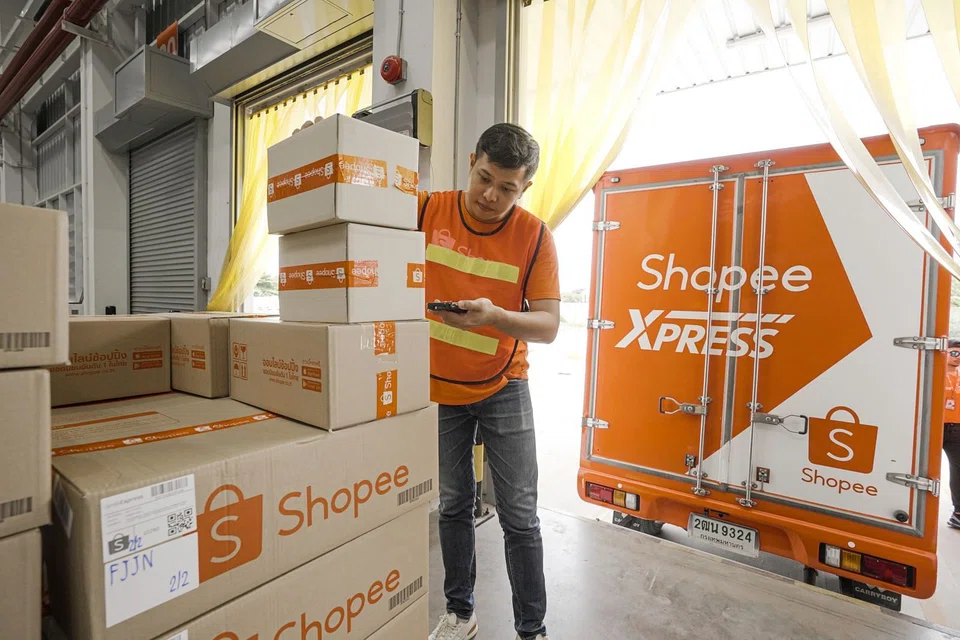
BRIGHT orange vans, with "Shopee Xpress" emblazoned across in white font, have become a common sight on Singapore's roads. This reflects a growing trend across South-east Asia: e-commerce marketplaces bulking up on in-house logistics.
Third-party logistics (3PL) startups The Business Times (BT) spoke to are aware of the trend, but they say they will complement, rather than compete with, their e-commerce clients.
But there are mid-to-long term implications, as this could heat up competition for 3PLs and spur consolidation, some observers say. As marketplaces gain more control over the supply chain, this may also give them more pricing power, squeezing the already-tight margins of 3PLs.
E-commerce giants in South-east Asia have been building up on their warehouses and logistics fleet.
For instance, BT understands that Shopee Xpress, the logistics unit of Sea's Shopee, plans to double the number of its sorting facilities across the region. This comes after Shopee Xpress added about 10 new warehouses in 2020, and three times more items were shipped from Shopee's warehouses by brand partners, compared to the previous year.
Shopee Xpress is understood to have been rolled out in most of Shopee's markets from 2019.
Asked about the growth of Shopee Xpress, a spokesperson declined to share specifics, but said that the in-house fleet complements the 3PLs it works with, "in providing additional capacity and affordable delivery options where they are most needed".
Likewise, fellow e-commerce marketplace Lazada is "continuously investing" in logistics infrastructure, said its chief fulfillment network officer Tom Damek. "Generally, we see a doubling of demand every year, so we are always working ahead of the curve to have sufficient capacity for our assets," he said.
Lazada has over 400 logistics facilities across South-east Asia, including warehouses, fulfillment centres and sorting centres. In Singapore, it has five such facilities, mainly for grocery delivery service RedMart.
Lazada works with 3PLs, but delivers the majority of its parcels itself, Mr Damek said. It has its own logistics fleet regionally, except in Singapore.
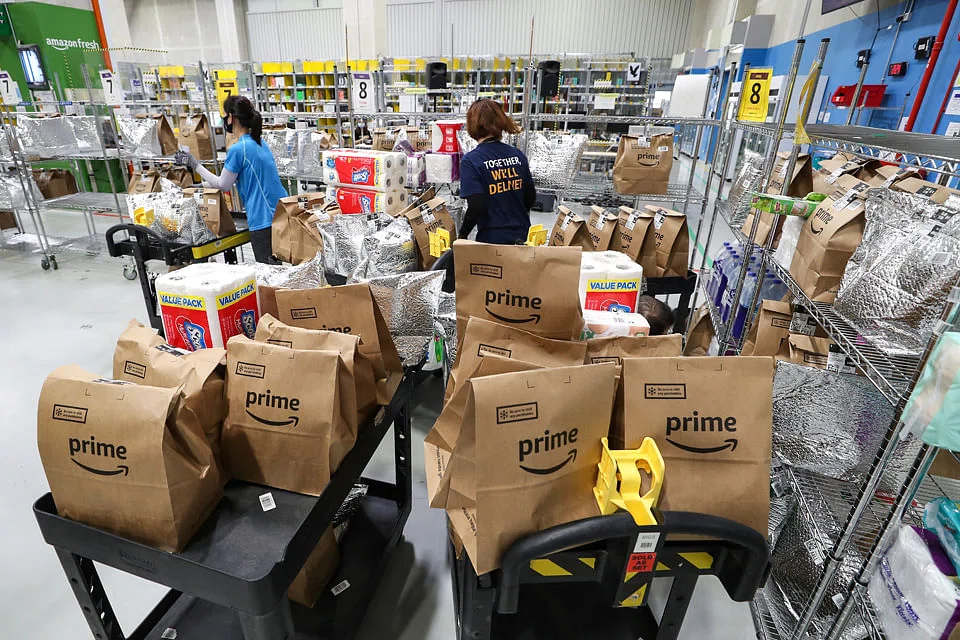
Amazon, famous for its aggressive logistics strategy, has also built up its warehouse capabilities here. The 75,000 square foot Amazon Fresh fulfilment centre in Toh Guan Road, for instance, recently added a new walk-in freezer and chiller that can fit up to 550 refrigerators, in response to rising demand for frozen goods.
The warehouse's sorting area, called the "Magic Library", has also become more densely packed and optimised since the surge in online orders amid the Covid-19 outbreak, said Henry Low, country manager at Amazon Singapore.
"Demand has continued to hike since the circuit breaker eased. Many have tried and liked the online grocery shopping experience; habits have changed," he said. Amazon Fresh also taps independent drivers for last-mile delivery under its Amazon Flex programme.
Over in Indonesia, local player Tokopedia does not have its own delivery fleet. But the company in 2019 launched a smart warehouse service, TokoCabang, which allows sellers to leave stock in warehouses in high-demand areas. The service is in six cities including Jakarta, and "will continue to grow to reach all corners of Indonesia", said Edwin Mailoa, Tokopedia's assistant vice president for logistics.
Meanwhile, Qxpress, the logistics unit of Qoo10, has invested in a million-dollar parcel-sorting conveyor system for its Singapore and Korea warehouses, which can scan 8,000 parcels per hour, said Sam Too, director at Qoo10.
In Singapore, Qxpress has two warehouses, one for fulfilment and another as its central distribution centre. Its in-house fleet comprises about 90 lorry drivers and over 250 drivers with vans and cars. Qxpress also serves merchants outside of the Qoo10 ecosystem.
"Logistics is a mission-critical piece of the puzzle. It's good that you own proprietary capability in-house," Mr Too said, adding that it gives "better control of logistics costs (and) removes price volatility when using external parties".
The in-housing trend may strengthen. South Korea's Coupang, well-known for its in-house logistics muscle, is now said to be expanding to Singapore.
E-commerce marketplaces' expansion of in-house logistics mitigates their long-term risks, said Vaibhav Dabhade, chief executive of Anchanto, a software provider for backend e-commerce operations.
"When these players control logistics, they directly control the post-purchase experience with a very clear visibility over their operations. Right from communicating stock availability accurately to delivering the order, marketplaces are able to own the entire customer experience," he said.
But this may disrupt 3PLs, especially non-specialised ones, said Shaurya Ahuja, partner in digital value creation and e-commerce at Ernst & Young Solutions.
"Broad-based 3PLs are likely to face some consolidation, given the potential competition from e-commerce in-house logistics and the nature of investments needed to cater to Tier 2 or Tier 3 city consumers, or meet the increasingly demanding needs of Tier 1 city consumers," he said.
Sarabjit Singh, associate partner at McKinsey, adds that consolidation of 3PLs is likely in the mid-to-long term. "We can expect to see more interest not only from e-commerce marketplaces but also "super apps" in acquiring a stake in, if not fully acquiring, 3PLs," he said.
3PLs BT spoke to agree that there is a rising trend of in-house logistics, but are sanguine. Lee Chee Meng, co-chief operating officer of Pickupp, agrees that there could be more pricing pressure on 3PLs, but thinks that efficiency gains will keep pace.
"If you are in this industry, it's essentially a race to the bottom, in terms of pricing. But what's important here is that it's not just a senseless race to the bottom. We are confident that whatever prices we put out there on the market will be competitive... we have the tools and systems to continually drive our delivery costs down."
Robin Lo, chief executive of J&T Express Indonesia, believes pure-plays still have an edge over insourced options in pricing and tech know-how.
"Nonetheless, to stay ahead of the curve, there is a greater need for us as a logistics provider to demonstrate the value we can provide for e-commerce players, that would allow them to focus on their core competencies."
Lai Chang Wen, chief executive of Ninja Van, said that his company will still complement the marketplaces' capabilities, as more businesses of all sizes are engaging in e-commerce.
"There will be different types of deliveries or services that they may not want to take on with their in-house fleet or cannot provide, which Ninja Van may be able to offer," he said.
Mr Singh of McKinsey said: "As new business models like social commerce become more popular and big brands make a push towards direct-to-consumer e-commerce, they too would need (logistics) support."
But ultimately, 3PLs will need to strategise to stay ahead. As Mr Ahuja of EY noted: "While there is space for everyone to grow in the near term, strategic e-commerce platform partnerships or category niches in logistics, such as groceries or pharmaceuticals, can be some ways to safeguard the future."
- Garage is BT's startup vertical. Read more news, analyses and opinions at bt.sg/garage
READ MORE: By plane or raft: Parcel delivery startups go all-out in S-E Asia