ESOP platforms gain ground amid S-E Asia's tech talent war

Singapore
AS THE war for tech talent in South-east Asia intensifies, startups are starting to implement employee stock ownership plans (ESOPs) at earlier stages as a way of retaining staff. The phenomenon has spurred the emergence of a new pocket industry in corporate services - including the management of such equity plans - for startups.
Several ESOP management platforms, including Svested and Qapita, have sprouted up to cater to rising demand. Bigger players such as Carta and MyStartupEquity from the US and India are expanding their operations to the region. Even traditional players like corporate services firm Boardroom want in on the action.
For a space that has a relatively low barrier to entry, the upside for growth can be significant. The need for liquidity solutions often grows in tandem with an ecosystem, observers reckon.
There has been a flurry of fundraising and dealmaking activity in South-east Asia. The Covid-19 pandemic has spurred the adoption of digital platforms, and investors are scouting for Internet companies that can capture this boom in a region of 650 million people.
This year, the total value of venture capital transactions hit a record US$10 billion in the first half, already eclipsing the US$8.2 billion raised in 2020, data from Preqin showed.
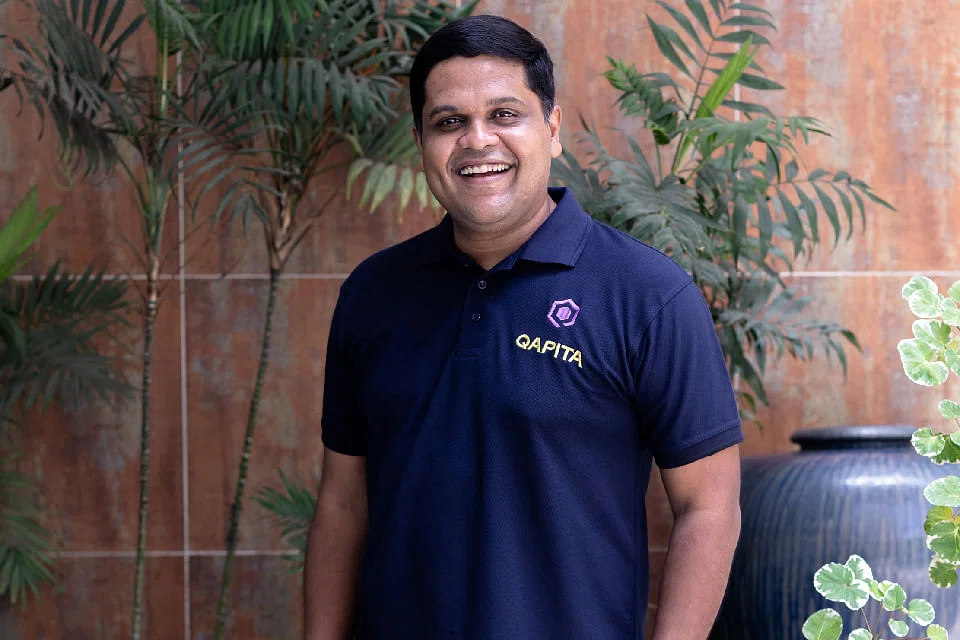
With rapid growth of the startup ecosystem, the "size, breadth and value of ESOPs has become significant", Ravi Ravulaparthi, chief executive and co-founder of Qapita, told The Business Times.
A Carta spokesperson added that it is "extremely bullish" on the region.
San Francisco-based Carta, last valued at about US$7.4 billion, in April opened a Singapore office to get its foot in South-east Asia. The company's customers already include Indonesian decacorn Gojek, online travel platform Traveloka and coffee chain Kopi Kenangan, according to its website.
But for these platforms, differentiating themselves in an increasingly crowded and homogeneous space can be tricky. To get ahead of the curve, players are looking to sign startups on to their platform right from the get go.
India-headquartered MyStartupEquity, for instance, partners exclusively with Sequoia Capital India's Surge accelerator programme. This allows it to bring interested founders and day-old startups across India and South-east Asia onto the platform.
It is also common for platforms to offer basic features for free to small outfits. They then charge more for the service as a startup's needs grow.
Arguably, there's no real need for such platforms until a startup has a sizable number of employees. But players do this because catching startups early in their life cycle improves the odds that they'll use these platforms for longer.
Apart from ESOP management, many of these platforms also help companies and investors oversee cap tables and valuations. Observers reckon that fierce price wars in this space are par for the course.
Most platforms offer advisory services for earlier stage firms to help them get started on crafting an ESOP plan. This includes connecting them with legal partners.
Some firms further offer features to automate share buybacks, connect startups with potential investors for liquidity events and generate valuation certificates.
But established player Boardroom raised concerns that newer entrants might struggle to cater to the demands of fast-growing startups, once they shoot for the public markets.
The corporate services firm has been honing in on this space as a growth vertical, partnering with venture capital and private equity firms in the region to build up a pipeline of startup clients.
Once a startup goes public, other more complex needs such as compliance requirements and navigation of different global tax laws kick in, said Jason U, head of Boardroom Asia's employee plan services division.
The rise of players in this vertical bodes well for startup employees and new founders too, who will now have a benchmark for share option contracts since the bar is raised and as more startups seek professional advice.
"There is beauty in standardisation because it means that an employee will not have to navigate through differing and complex terms," said Marcus Wong, co-founder and chief commercial officer of ESOP management platform Svested.
Beyond ESOP management, players hope that their platforms will evolve into a secondary marketplace to allow investors to buy and sell shares in high-growth private firms in South-east Asia, taking heed from how such platforms grew in more mature markets like the US.
Carta, for instance, moved into the secondary marketplace space in December last year when it launched private stock market CartaX. MyStartupEquity has started facilitating share buyback events, where they connect potential investors with startups looking for liquidity.
Building a database of private startups' cap table and financial information has helped these startups to capture a picture of company financials more accurately. This in turn could help them to parlay that position in a private exchange, since transparency was something that traditionally limited demand in secondary markets.
Such private exchanges have not quite caught on in South-east Asia, but appear to be gathering steam in the US.
Tensions between ageing startups there and employees who hold large chunks of their wealth in stock has fuelled private secondary markets, where an estimated US$30 billion in shares change hands annually, according to US private market research firm Sacra.
Mr Wong is still hopeful that private exchanges could pick up here in a few years. "I think players here are gearing up for this, but as to how it will actually play out or who will be the final winner, that might be too much crystal ball gazing."
- Garage is BT's startup vertical. Read more news, analyses and opinions at bt.sg/garage
READ MORE:
- Esop fables: A cautionary tale for those joining startups
- Bait or boon: The good, the bad and the ugly of startup employee stock option schemes
- Encouraging greater activity on private exchanges may help liven up Singapore's capital markets
- South-east Asian startups explore early stock option cash-out to retain talent