

Global tech giants' moves in Singapore a boon to talent ecosystem
Zoom, iQiyi among latest names drawn to Republic as regional springboard because of its tech efforts, governance, neutral geopolitical stance


Singapore
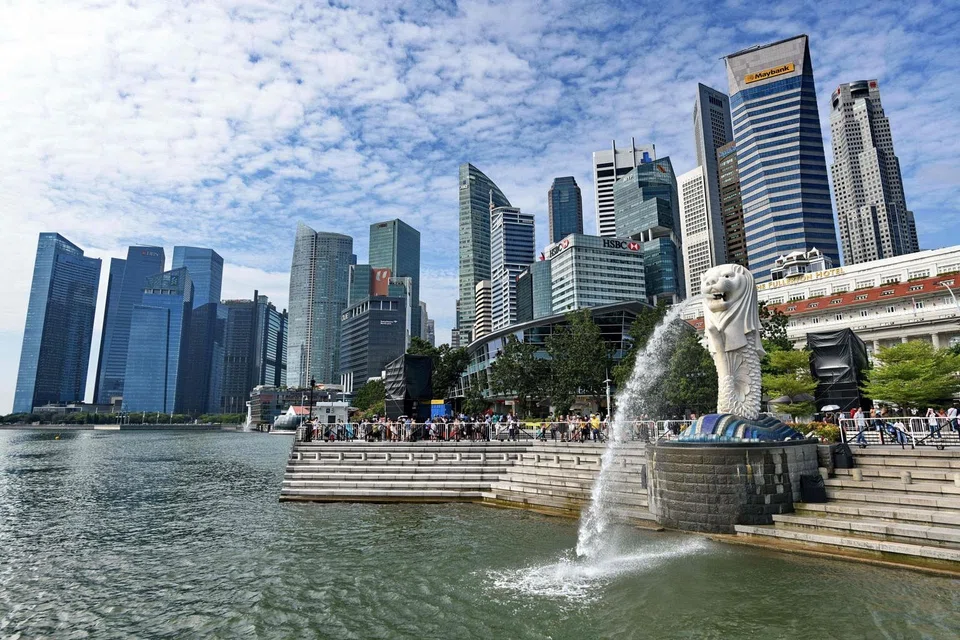
SINGAPORE'S continued ability to attract foreign tech giants to set up here - even amid the pandemic - bodes well for the local tech ecosystem, industry observers told The Business Times.
However, development of the local tech talent ecosystem will need to keep pace with the entry of these players to maximise benefits, they said. This goes beyond just engineering, to developing skilled talent in fields such as public policy and legal functions.
Several US and China tech giants have unveiled expansion plans in Singapore (see table). The latest being US-based Zoom Video Communications, which announced on Wednesday it is opening a new research and development centre in the Republic, where it will hire "hundreds" of key engineering staff. It is also expanding its data centre capabilities here. A day earlier, China streaming giant iQiyi launched its international headquarters in Singapore, with plans to hire over 200 staff in the next few years.
Beyond Singapore's business-friendly environment, what draws tech companies specifically is the presence of infrastructure players here, such as cloud services and data centres, said Christopher Gee, a senior research fellow at the Institute of Policy Studies (IPS).
"The rolling stone will gather more moss... (With) the strength of the underlying infrastructure, now we are gathering more of these tech companies, because of that cluster that has already been built up here," he said.
Singapore's handling of the Covid-19 outbreak is another advantage, said Andrew How, market leader for Singapore at human resources advisory Kincentric.
"Singapore has proven its ability to effectively manage the pandemic. This has given companies from a variety of industries confidence and enticed them to expand in Singapore. Amid the Covid-19 gloom, organisational agility is key," he said.
The city-state's efforts to allow some international mobility while maintaining safety standards is a big plus for Singapore, said associate professor Lawrence Loh of the National University of Singapore (NUS) Business School.
Then, there are broader geopolitical factors. "Given that regulatory concerns have become the predominant issue worldwide affecting global tech - ranging from the brewing tech cold war between the US and China, to privacy and data protection concerns in many jurisdictions - I think Singapore offers regulatory assurance," said associate professor Walter Theseira of the Singapore University of Social Sciences.
Prof Loh echoed this sentiment: "Geopolitically, we stand an advantage because our neutrality is attractive to investors from both sides."
With the entry of more foreign tech giants into Singapore, demand for tech talent will increase, said Christopher Quek, managing partner at venture firm Trive. This creates spillover benefits for the local tech talent pool.
"On the quality side, with the minimum requirement to hire locals, foreign companies will be willing to internally train more local talent in order to meet its workforce demands. This will spur and increase the quality of the local talent pool, as they are given more opportunities to learn on the job and be proteges to higher-quality imported tech talent," he said.
However, this is a process that takes time, and in the interim, companies may still face a shortage of high-skilled talent. In this regard, the development of the local talent pool will need to keep up with the entry of the foreign tech companies.
"For example, technology professionals with highly specialised technical skillsets, such as in emerging areas like AI and data science, will remain in short supply. Continuous learning to acquire these skillsets will help better position our talent to the world," said Elijah Underhill, a senior consultant at Robert Walters Singapore
Some may be sceptical about how much job creation the tech firms can drive, given that the pandemic has demonstrated that remote working is possible for many jobs, meaning that they could be offshored to cheaper locations.
However, Mr Underhill reckons that Singaporeans should not be too concerned about this. "The converse can also be applied... I am currently working with Silicon Valley startups on hiring Singaporean talent to join their companies and work remotely from Singapore as well," he said.
Assoc Prof Theseira notes that realistically, not all the jobs created by the foreign tech majors will go to locals. But what is important is that locals get a fair chance to develop skills.
On this point, Mr Gee notes that beyond offering engineering talent, Singapore can also stand out in providing talent specialised in critical non-tech fields such as compliance, government relations and legal functions.
"Singapore as a hub is not where you do the basic coding, necessarily. Coding can be done anywhere else... If you think about Singapore's strength, people trust the brand because they know that there is integrity, stability and security; the governance is strong," he said.
Looking ahead, observers generally agree that Singapore appears poised to attract more global tech companies looking to springboard into South-east Asia. But more can be done.
Assoc Prof Theseira suggested: "We should pay some attention to tying a local job presence for firms to benefit from their legal presence in Singapore. For example, I think any tax incentives or profit allocation to local business units need to require a tangible local job presence so that the work done can be said to be done in Singapore."
Prof Loh of NUS believes that Singapore could also target startups in jurisdictions such as Indonesia and India to set up operations here. With more players, there could be a more than proportionate impact on quantity and quality of job opportunities.
As he puts it: "When talent comes together, there is a lot of synergy; one plus one equals to three."
Read more:
TRENDING NOW
DBS, OCBC, UOB rout lops billions off STI as inflation, rate concerns spook investors

Grab CEO’s wife Chloe Tong on life with Anthony Tan and finding her purpose
OCBC sheds S$8 billion in value as shares close nearly 6% down; analysts cautious on banks

Deal between tycoon friends sparks scrutiny of Philippine power sector

