

Grab faces tough digital bank fight as tech rivals muscle up

Singapore
DESPITE fresh firepower valuing it at US$3 billion, Grab's fintech arm faces a tough fight in South-east Asia. This is particularly so since its tech rivals, Sea and Gojek, have scooped up stakes in Indonesian banks amid the consolidation of the country's financial services sector.
On Thursday, Grab announced that its fintech unit, Grab Financial Group (GFG), has raised US$300 million in Series A funds led by Korea's Hanwha Asset Management, confirming earlier media reports.
The round valued GFG at US$3 billion, according to the Financial Times, with other investors including K3 Ventures, GGV Capital, Arbor Ventures and Flourish Ventures.
While the stellar valuation reflects Grab's regional fintech ambitions, it also belies the challenge ahead. Its fintech rivals Sea and Gojek recently gained direct exposure to Indonesia's banking sector.
Sea, the parent of gaming giant Garena and e-commerce platform Shopee, has acquired Indonesia's Bank Kesejahteraan Ekonomi (Bank BKE), DealStreetAsia reported on Wednesday. This comes weeks after Gojek spent about US$160 million to raise its stake in Bandung-based Bank Jago to 22 per cent.
Some reckon that this buying activity may be a result of new regulations. In early 2020, Indonesia's financial services regulator, the OJK, announced that it would raise the core capital requirement for banks to US$220 million, which triggered a race to consolidate among the country's numerous small banks.
Grab has not unveiled direct Indonesian banking investments to date.
Su Lian Jye, principal analyst at global tech market advisory firm ABI research, said: "Given that both (Sea and Gojek) are now directly involved in banking, Grab is becoming an outsider looking in."
Grab's notable Indonesian fintech investments include dominant e-wallet operator Ovo, as well as LinkAja, a smaller payments player which also counts Telkomsel, BRI Ventures, the venture arm of state bank BRI, as investors.
Could the current buzz spur Grab or Ovo to make a play for an Indonesian bank? Observers reckon it might.
"I won't be surprised if Grab is holding its powder dry for a deal with a much larger bank. After all, it is still early days," said Mr Su.
He added: "Not owning a banking licence in Indonesia means Grab will need to look for a local partner to offer banking services, whereas Sea and Gojek will be able to exert direct control over their domestic banks to align with their products and services."
Even smaller tech players are also collaborating more with banks. On Thursday, e-commerce firm Bukalapak announced a partnership with Standard Chartered, reportedly its strategic investor, to provide digital financial services. Bukalapak has over 100 million users.
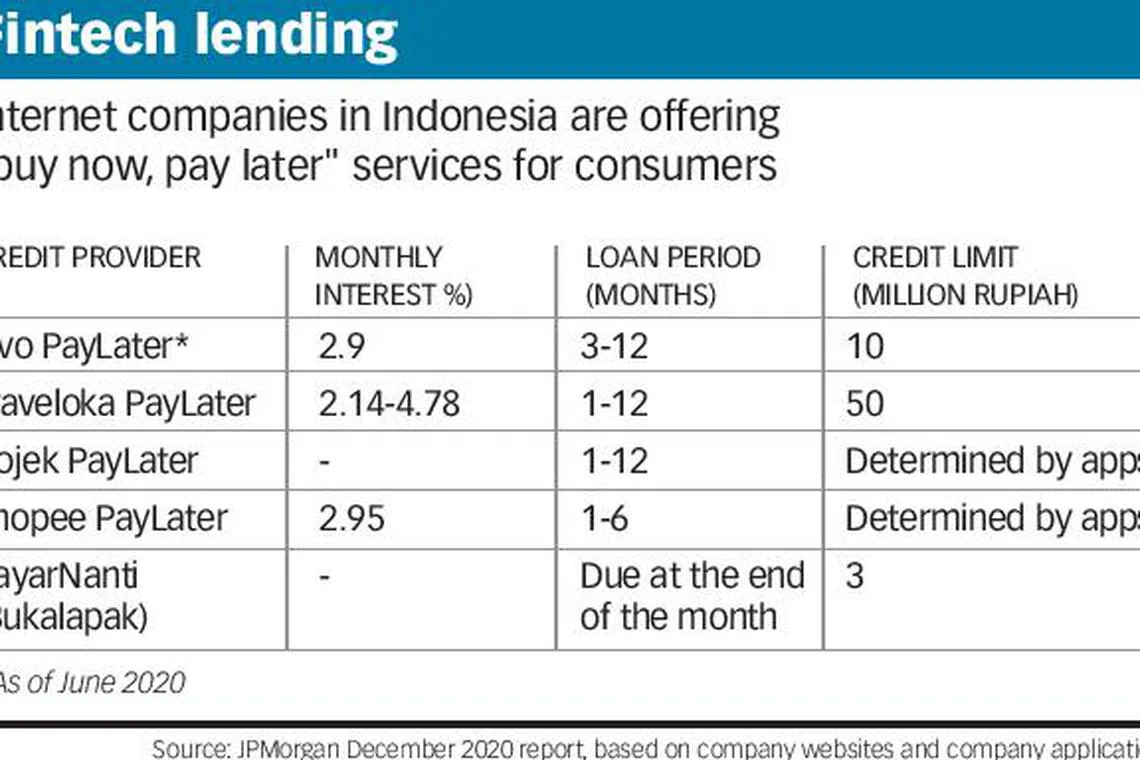
With all the hype, the Grab-Gojek-Sea trinity have also been expanding fiercely into new consumer digital financial services, such as in the buy now, pay later arena.
Some are sceptical about whether Grab can catch up with better-capitalised rival Sea. Another threat comes from the potential merger of Gojek with Indonesian e-commerce giant Tokopedia, which could empower Gojek's fintech business with valuable e-commerce data.
"For Indonesia, Grab can always buy a bank, but they are still at an exceptional disadvantage due to the potential of a Gojek-Tokopedia merger," said a capital markets banker who specialises in South-east Asian technology, media and telecommunications.
"In addition, even with GFG's raise, Grab still doesn't have the money needed to compete as does Sea, nor does Grab have Sea's public market liquidity. The question now is, can Ovo successfully compete against Sea and a merged Gojek-Tokopedia in Indonesia?" The banker is sceptical that Grab's Singapore digital banking licence will be sufficient to help it win in Indonesia. He reckons that the firm may need to raise more money or fashion its own "big merger" to gain an edge.
Nevertheless, it remains to be seen what opportunities may arise for Grab, as Indonesia's banking sector consolidates under new regulations.
Markus Rahardja, vice-president of investment and business development at BRI Ventures, said: "At the end of the day, the key is not in licences alone, but more on how (these fintechs) can serve their customers according to their needs."
Cracking the digital banking puzzle in Indonesia all boils down to market responsiveness and competitive rates, he added.
- With additional reporting by Claudia Chong
READ MORE: Bank Indonesia's new rules for digital payment not expected to deter foreign investors
TRENDING NOW

KKR founders among investors buying 42% of Peter Lim’s Valencia; club valued at US$1.4 billion

Singapore’s central gas buyer affirms Indonesia’s role as ‘important partner’ amid export review warning

Why the biggest business decision about AI isn’t which model to choose

NEA issues notices to 10 Singapore-based companies, including Wilmar and APP, over haze

