

GrabFood may be secret sauce for tasty margins
With the integration of GrabFood into the main Grab app, favourable unit economics offers a sweet prospect, but competition may take a bite of earnings

Sharanya Pillai
Singapore
GRAB'S rapidly-growing food delivery vertical could present juicier margins than its ride-hailing business, although competitive risks remain, industry watchers told The Business Times.
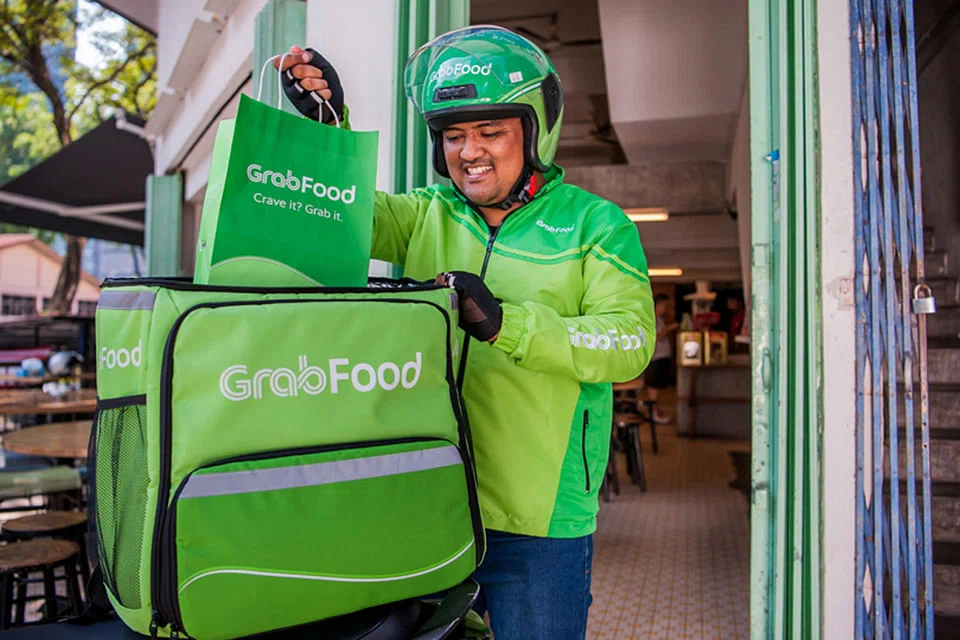
On Tuesday, Grab announced that GrabFood, presently a standalone app in Singapore, will be moved onto the main Grab app. An islandwide beta trial will begin in May. BT had first reported on the planned integration in February.
Separately, GrabFood is also looking at the possibility of setting up a central kitchen in Singapore, said Lim Kell Jay, head of GrabFood Singapore, at a media briefing. BT had also reported this in February.
Making food delivery a core offering of the "super app" is an easy decision, Mr Lim said. After all, one in three individuals who use Grab for transport also use GrabFood to order meals on-demand, he revealed. "What we've seen is that when customers use more products and services on our platform, they have higher lifetime value to us."
He cited GrabFood as the "fastest-growing" vertical within Grab, with gross merchandise value doubling in the latest quarter, on a quarter-on-quarter basis. Meanwhile, from May 2018 to March this year, orders on GrabFood grew 25 per cent month-on-month, on average.
The potential for topline growth is clear, but when it comes to the bottomline, could food delivery also reward Grab with stronger profit margins than its ride-hailing unit?
In response to follow-up questions from BT, Grab declined to comment on the margins of either unit, or on which unit enjoys better margins,
It is difficult to make a call without Grab's financial results, but generally speaking, there is a good chance that food delivery boasts better margins than ride-hailing, said Associate Professor Nitin Pangarkar of the National University of Singapore Business School.
Ride-hailing would require handing out substantial incentives to drivers to incentivise them to join the platform. In contrast, the pool of delivery riders is easier to scale up, noted Assoc Prof Pangarkar. GrabFood has 13,000 riders who have made at least one delivery.
"The pool of cars in Singapore is limited, while the pool of riders on motorcycles and e-scooters is much larger... Unlike a car, an e-scooter is a small investment. You don't have to provide a strong incentive to (riders)," he said.
Food delivery also easily lends itself to a subscription model, which would enable "steady recurring income", he added.
Margins for on-demand food delivery are likely "way much higher" than those for ride-hailing, reckons Christopher Quek, managing partner of venture firm Trive.
In food delivery, players can build a symbiotic relationship with restaurants that lets them take a substantial cut of the restaurants' earnings. "I understand that F&B outlets are expected to give a range of 15 to 30 per cent cut of the revenue (to food delivery players)... For F&B outlets suffering from high rents, food delivery apps assist them in supplementing revenues and surviving," Mr Quek explained.
"Food outlet gross margins can range from 50 per cent to 90 per cent, which is why they are willing to work with food delivery apps."
Tan Yinglan, founding managing partner of Insignia Ventures, added that the food delivery business has higher "velocity", since it takes less resources to deliver 20 lunchboxes than completing 20 ride-hailing trips. "This is frequently overlooked but food delivery is a larger segment than most people imagine," he said.
But some believe that ride-hailing will still be Grab's golden goose. Jamus Lim, Associate Professor of economics at ESSEC Business School Asia-Pacific, thinks that per-unit margins for a given ride are likely to be higher for ride-hailing than food delivery, even though Singapore has "concentrated delivery destinations".
"With such varied tastes and so many low-cost, easily accessible alternatives, I struggle to see how the small transactional efficiencies offered by an Internet-based system can overcome the many challenges," he said.
Nevertheless, Grab is set on its ambition "to make the super app more super" by putting more resources into enhancing the GrabFood experience, according to Mr Lim.
But moving forward, the key risk to building a strong bottomline in food delivery will be the intense competition against the likes of Deliveroo and Foodpanda.
Beyond the consumer-facing promo code war, there could also be a hidden battle among players to offer restaurants the most attractive revenue-sharing model, acknowledged Assoc Prof Pangarkar of NUS.
For instance, a competitor could offer to take just a 20 per cent cut from a restaurant instead of 30 per cent. GrabFood may then have to decide whether to match the offer and stomach the lower earnings.
But there isn't much room to assess how this would play out for GrabFood, given the lack of visibility on revenue-sharing arrangements, he added.
Grab declined to comment on specifics about its arrangements with restaurants. It currently has over 5,000 merchants on its platform.
The small consumer market in Singapore and low barriers to entry present another challenge to earnings, said Reshmi Khurana, managing director and head of South-east Asia at risk consultancy Kroll.
"The entry of new players will mean that the existing players have to boost their marketing and promotion spend. That obviously eats into profitability.
All things considered, the likes of Grab still appear to be more focused on growth rather than financial fundamentals. "It's more about customer acquisition... It's not margins for the moment," Ms Khurana added.
It is still more of a "market share game than a unit economics game" for Grab with food delivery, agreed Raja Hamzah, managing partner at venture firm RHL Ventures. "With their US$4.5 billion of fresh funds, (Grab) definitely is in prime position to kill off its competitors, but it is still early in the game," he said.
TRENDING NOW

World’s largest offshore wind platform by Seatrium consortium on track to be completed by 2028

Is stamp collecting enjoying an analogue revival or are its best days over?

GovTech retrenches another 38 staff in second round of layoffs

MBS adjusted property Ebitda falls 20.6% in Q3 with fewer high-roller visits, weaker hold

