

Investors frozen out of crypto exchange CMBDEX for almost 3 years
Exchange also not regulated by Payment Services Act which came into force in January 2020; tie-up with Kopitiam stopped in May 2020

Singapore
MORE THAN 2,000 investors have been left out in the cold after a local company, which launched an initial coin offering at the height of 2018's crypto boom, appeared to have evaded time and again requests to cash out.
For nearly three years, investors were told they could not sell their tokens because of "technical difficulties". But sources The Business Times spoke to alleged that this was a deliberate attempt by the digital token exchange to lock in their money.
The company, PLMP Fintech, had launched its Creatanium ICO at US$0.20 per token in May 2018, marketing to a public eager to ride on cryptocurrency after Bitcoin soared above US$26,000 in December 2017. The Creatinium coin was sold as a utility token that users can trade and use to buy goods.
PLMP then built its own crypto exchange CMBDEX in December 2018, allowing users to buy and sell its Creatanium token and other cryptocurrencies like Bitcoin and Ethereum. Unlike its competition, CMBDEX also had an over-the-counter service for customers to physically go to their office building in Serangoon North to buy and sell cryptocurrency.
But investors would eventually find out that not all crypto is Bitcoin, and now risk being left out in the cold with their Creatanium tokens frozen in an exchange that appears to be illiquid.
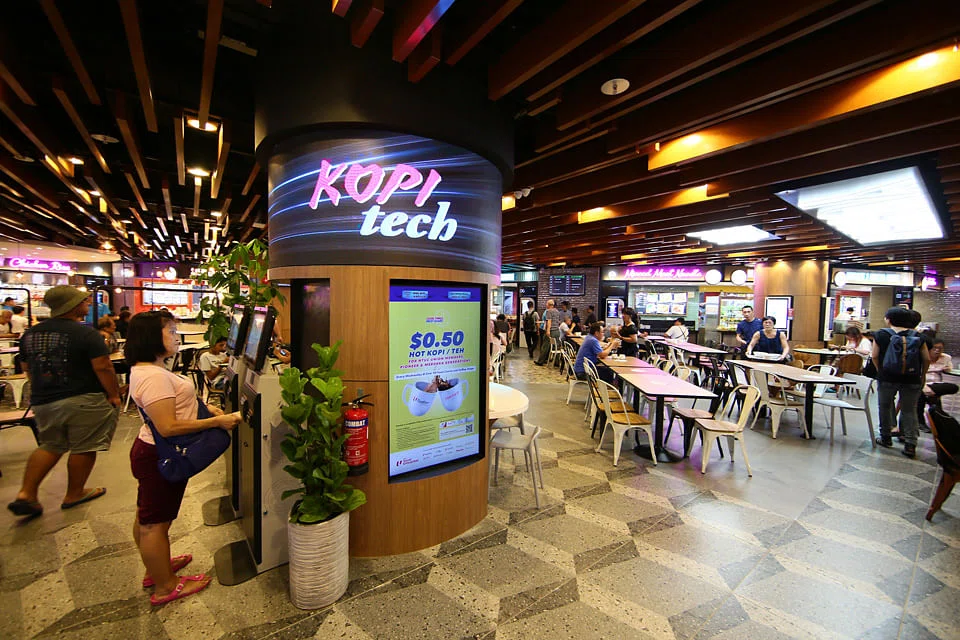
PLMP Fintech managed to ride the crypto hype to a tie-up with food court operator, Kopitiam. As their payment gateway provider, it paved the way for crypto currency to be used as payment at KopiTech in Funan mall. Then came a potential reverse takeover of Singapore mainboard-listed JES International in August 2019.
PLMP's token also seemed to rise in tandem, hitting US$2 in July 2019.
But since 2019, investors have been unable to sell their tokens, with the exchange claiming technical difficulties. PLMP's tone in its communications has ranged from cajoling investors to sit tight, to almost scolding them for not wanting to grow their Creatanium tokens.
Investors have left comments on their Facebook page demanding their withdrawals to no avail. The OTC service was also withdrawn as the company moved out of its premises to a small office unit in Serangoon and most recently in November 2021, maintained their business address with a corporate services company.
The mine
PLMP's business direction was in the incubation of ICOs, having taken under its wing six projects ranging from a dairy business to a fishery to take to ICO.
The company was founded by Peter Lim, who made made his fortune in trading and teaching others how to trade forex. He is a different person from the billionaire remisier.
His other company, P2000, has been flagged on the Monetary Authority of Singapore's Investor Alert List. He did not respond to BT's questions by press time.
Besides ICOs, the company took on blockchain projects like a memorandum of understanding to develop a blockchain-based logistics platform in Batam, Indonesia.
This direction would switch from blockchain projects to property development, with proposals to build blockchain and fintech hubs in countries like Thailand, Indonesia and Cambodia.
In Cambodia, PLMP Fintech is invested in Creatanium Blockchain Smart City, a plot of land three hours outside of capital Phnom Penh. This development would include residential and commercial properties, and would involve blockchain technology to ensure transparency and equitable distribution of resources.
Vapourware
Sources familiar with the company workings have alleged that the exchange isn't as fair and equitable as investors think it should be. The technical issues that have been plaguing the exchange remain unresolved, which has resulted in the money of over 2,000 investors locked up, they said.
The CMBDEX was built to look like an exchange where users could buy and sell their tokens, but to cash out any tokens, approval had to be given by chief executive Lim.
Sources alleged that demand for the token was artificially generated with buy and sell orders to push up the token price. User-generated sell orders would not be matched with any buy orders as there were none, the sources said.
Creatanium, being a utility token, would have risen in value as more blockchain projects are built and used, with the token powering their usage. But PLMP has not delivered on any of these projects, which means these tokens don't have an ecosystem to generate demand outside of the alleged artificially generated orders or investor orders.
This was due to the focus of PLMP constantly changing, from incubating ICOs to building blockchain projects to now property development in Cambodia. The only visible project is the payment integration at the Kopitiam outlet at Funan, which also accepted the more popular crypto currencies like Bitcoin and Ethereum other than the Creatanium token.
All of PLMP's incubated ICOs also failed, with either their tokens being listed as dead on crypto currency tracking sites with dead websites or failed to reach the ICO stage. The tie-up with Kopitiam at Funan also appears to be inactive, as the kiosks that would accept the cryptocurrency payments were not turned on or were inactive.
According to a Kopitiam spokesperson, the crypto tie-up was stopped back in May 2020 based on business considerations.
What's left is a dwindling cash pile that investors are unable to access.
Legal recourse
Being set up in 2018 means that PLMP's CMBDEX is not regulated by the Payment Services Act which came into force in January 2020. The exemption to the act has also expired, leaving the exchange in a quandary where it legally can no longer operate in Singapore.
Lawyers BT spoke to said that such institutions can get exemptions if within 30 days of starting operations they inform the Monetary Authority of Singapore (MAS) or within six months of applying for a payment services licence until it is approved or rejected. It appears that PLMP's licence application was either rejected or had their exemptions lapse.
If an exchange is not regulated by the MAS there appears to be little the authority can do, with investors needing to seek other legal recourse to get their monies back. Being unregulated means the exchange is not required to keep safeguarding requirements.
"If funds are not safeguarded, this means that investors are not given statutory protection over their funds and funds in transit are at risk of loss. This also means there is no guarantee that investors' cryptocurrencies held with the crypto exchanges is secure," said Peiying Chua, financial regulation partner, Singapore, Linklaters.
Investors can file a police report if an exchange refuses to let them cash out their holdings, and there are some other routes of legal recourse they can consider.
"For example, investors can consider pursuing causes of action via a debt claim, or claims in breach of the user agreement, tort of conversion or unjust enrichment for failure of consideration," said Shaun Leong, international arbitration and litigation, partner at Withers KhattarWong
The exchange might want to keep the dispute out of the public eye and look towards private arbitration and settlement. Should the investor agreement not have an arbitration clause, investors could look to mediation for recourse.
However, if an exchange existed prior to MAS' new regulations, it could plead an "illegality" defence, in other words, that investors knowingly entered a contract not permitted under Singapore law. "If this is the case, the investment agreement may be void and unenforceable where monies paid by the investor may not be recovered," said Leong.
TRENDING NOW
Malaysian king buys stake in Singapore-listed mining firm expanding into rare earths

Grab CEO’s wife Chloe Tong on life with Anthony Tan and finding her purpose

Once staunchly pro-China, Malaysian Chinese businesses are now distancing themselves from Beijing
Longer wait times expected as S’pore healthcare institutions report system disruptions

