

Investors may adjust China risk appetite after Didi crackdown


Singapore
IF INVESTORS were still sceptical about Chinese regulators' ability to challenge Big Tech, Sunday's crackdown on ride-hailing company Didi likely doused those doubts. The increasing scrutiny from regulators could prompt investors to relook China tech and factor in a higher level of risk, industry players say.
Since last year, regulators have made a series of shock moves that observers believe signal the watchdog's intention to strengthen supervision of the tech sector. It pulled the plug on Ant Group's mega initial public offering (IPO) and fined Alibaba, Tencent and Baidu for violations of anti-monopoly laws.
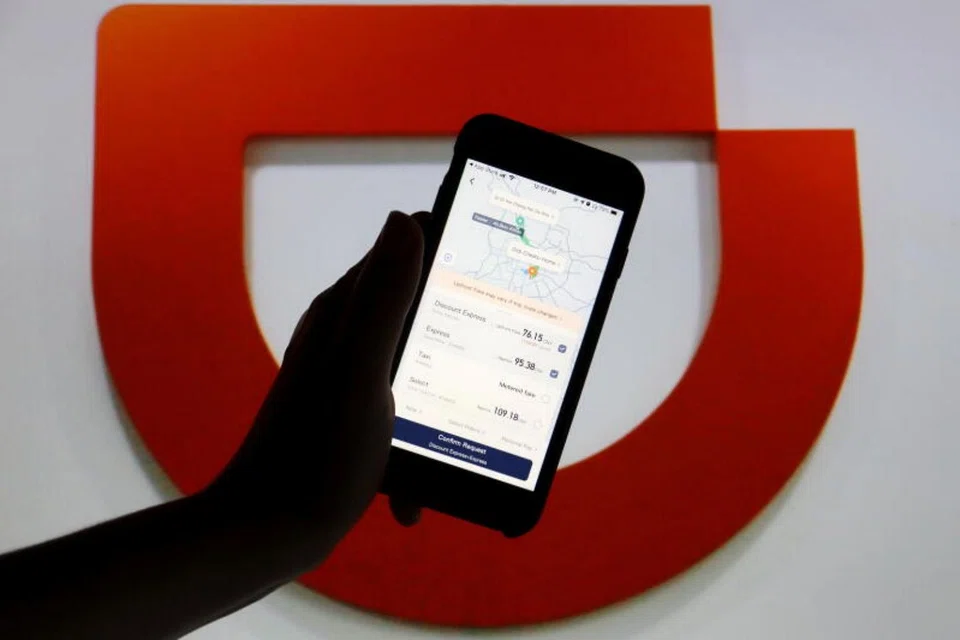
Just days after Didi's US$4.4 billion New York IPO, app stores in China were ordered on Sunday to remove the Didi Chuxing app over concerns that the company had illegally collected and used personal data. China's cyber security probe has now been extended to recruitment platform Boss Zhipin and freight platform Full Truck Alliance, both listed in the United States.
"What this latest development will do is remove any lingering doubts that Chinese regulators do not have the appetite or stamina to take on giants. This will also change the way investors evaluate China tech in the future; regulatory risks will need to be assessed just as rigorously as financial numbers," said Moses Chan, team leader for company intelligence at data intelligence firm Preqin.
Venture capital firms might also face a tougher challenge in convincing institutional investors to park money with them, said a China-based venture capitalist who declined to be named.
The fact that a Chinese company can have its product banned on app stores will make a lot of US investors re-assess their risk appetite for the country's tech players, he said.
Already, the latest move has sent shares of Softbank Group - whose Vision Fund owns about 20 per cent of Didi - falling 5.39 per cent in Tokyo on Monday. Shares of Tencent, Alibaba and Baidu on the Hong Kong Stock Exchange closed down 3.57 per cent, 2.83 per cent and 4.14 per cent respectively.
Howard Yu, Lego professor of management and innovation at the IMD Business School in Switzerland and Singapore, thinks that the impact of the China government's unpredictability is "big but not universal".
"If you look at Chinese regulation, it hits the hardest on those who are 'monopolistic' and 'domestic'. These are disruptors having huge market share without the proportional success in the international market," he said, citing Ant, Alibaba and Tencent as examples.
In contrast, other Chinese consumer tech players - such as Lenovo, Haier and Huawei - have managed to go international successfully for a long time, he added.
In this vein, Chinese electric vehicle (EV) maker Xpeng, which is set to list in Hong Kong this week, is likely to be unaffected, Prof Yu reckons. Xpeng listed in New York last year, and is now pursuing a second primary listing.
"To begin with, it's far from being a monopoly. It's one of the many EV startups; chief among them are Nio and Li Auto. But then adding on top is Tesla and a host of foreign car brands competing fiercely in the Chinese market," he said. However, he believes that whoever emerges as the dominant EV maker must build up their export business.
Daphne Lui, an accounting associate professor at ESSEC Business School Asia-Pacific, noted the issue of national security that pervaded the series of regulatory crackdowns on tech.
Although Chinese authorities cited different reasons for their actions against Didi and against Ant, Tencent and Meituan, these reasons are ultimately centred on the size of the companies and their data-driven business model.
"China wants to control the 'too big to fail' risk that many tech giants are posing to the country; they are also wary of the amount and security of sensitive data collected by these mega tech firms, especially if they have significant connections with the West, such as an overseas stock exchange listing," said Prof Lui.
Despite mounting risks, observers believe that the prospect of China tech has not dimmed. With a large domestic market and significant growth potential from the rapid digitalisation of the economy, investors are likely to be hard-pressed to find a viable alternative in the near term.
Preqin's Mr Chan said: "The outcome that China is looking for is strong self-regulation on the part of private enterprises, while the regulator steps in now and then to make sure the machinery is working fine. It's a good thing for investors."
- Garage is BT's startup vertical. Read more news, analyses and opinion at bt.sg/garage
READ MORE: China widens tech probe beyond Didi to Full Truck Alliance, Kanzhun
Decoding Asia newsletter: your guide to navigating Asia in a new global order. Sign up here to get Decoding Asia newsletter. Delivered to your inbox. Free.
Copyright SPH Media. All rights reserved.
TRENDING NOW

Once staunchly pro-China, Malaysian Chinese businesses are now distancing themselves from Beijing

Looking beyond looming CEO succession, should UOB potentially pursue a transformative merger?

Could stablecoins be the future of money?

Grab CEO’s wife Chloe Tong on life with Anthony Tan and finding her purpose

