Lab-grown meat that's simply Shiok
Foodtech startup Shiok Meats addresses the long-term viability of meat production by growing different types of meat in a lab from stem cells.
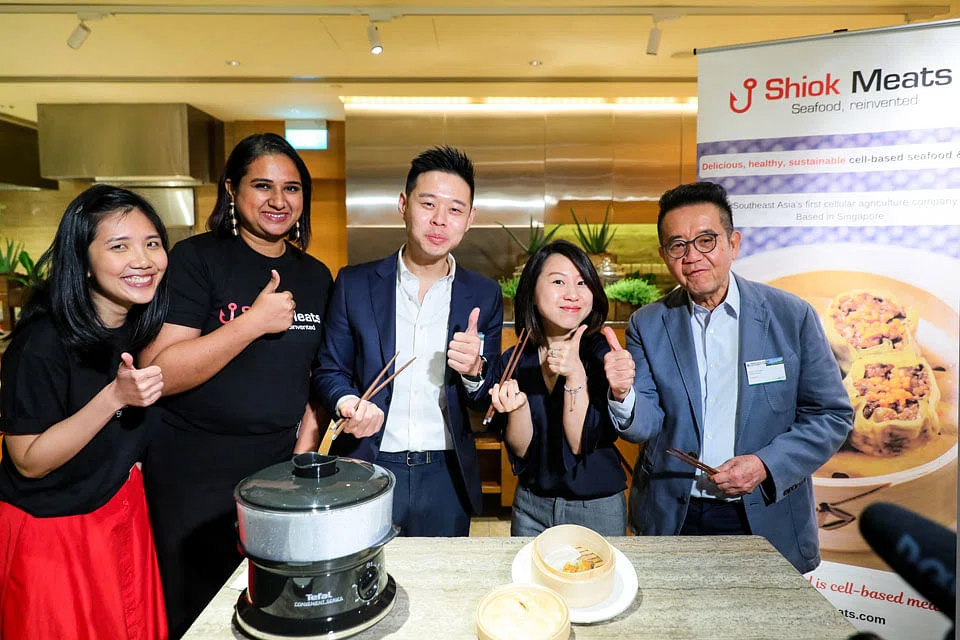
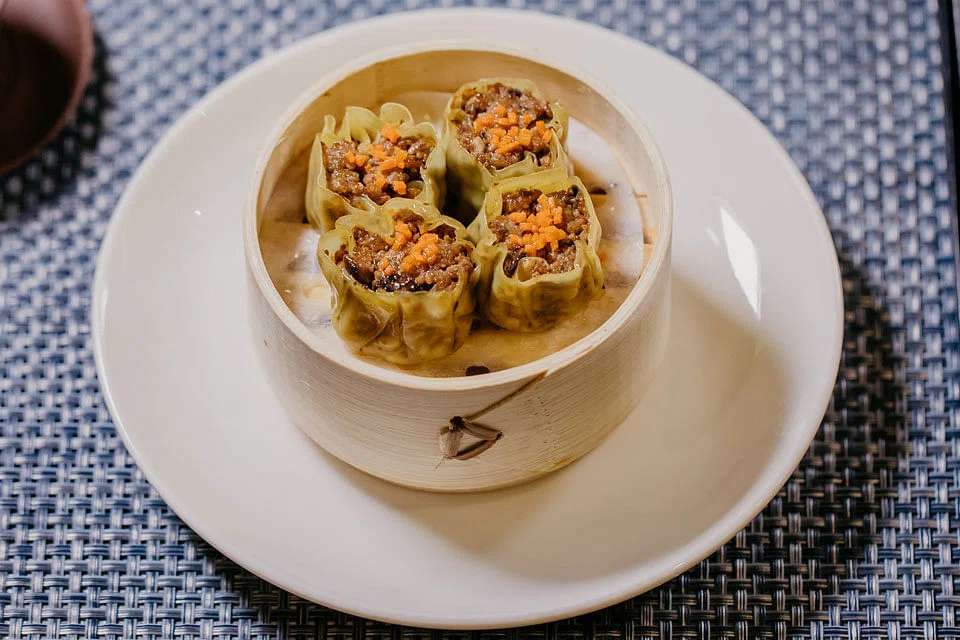
THE future of food may lie in lab-grown cell-based meat. And it's not just plant-based "meat" patties in burgers that are taking the world by storm. On March 29, Shiok Meats unveiled its first ever cell-based shrimp dumpling at The Disruption in Food and Sustainability Summit (DFSS).
As Dr Sandhya Sriram lifted the lid of the bamboo steamer alongside co-founder Dr Ka Yi Ling, everyone in the room collectively exclaimed in amazement at the five shrimp dumplings resting inside.
Elaine Siu, managing director of Good Food Institute APAC, Henry Soesanto, CEO of Monde Nissin, and John Cheng, director of food manufacturing incubator Innovate360 and director of Cheng Yew Heng Candy Factory, were given the honour of tasting the dumplings.
The final verdict was that the dumplings tasted like the real thing. Dr Sriram shared that 1kg of shrimp meat costs US$5,000 to produce.
Dr Sriram and Dr Ling both have a background in studying stem cell biology. When they heard that scientists in the Netherlands managed to grow meat in the laboratory with cells from a live pig in 2009 and the reveal of the first lab-grown burger that was cooked and eaten in London in 2013, they were intrigued and interested to learn that stem cell research could be used to create "clean meats" for food.
After toying with the possibility of lab-grown food in her head for some time, Dr Sriram finally decided to quit her job in 2018 to start Shiok Meats with Dr Ling.
Food sustainability
Dr Sriram reveals that she is a vegetarian by choice and so she does not eat meat or seafood because she does not like the idea of killing animals for food. On the other hand, Dr Ling eats meat, but she is constantly questioning where her food comes from.
"In Singapore we import 90 per cent of our food, so we don't know what the source is, how it is made, or how it is grown," said Dr Sriram.
In order to tackle the issues of animal cruelty and food sustainability, as well as health issues that arise from traditionally farmed food, the two decided to start Shiok Meats.
Being the only two members of staff in the company at its inception, they started with their first US$10,000 investment from an angel investor in the US, Ryan Bethencourt.
Dr Sriram said: "That's all we had, but what we had in our minds was that we wanted to do this for sure and we gave ourselves a timeline of up to a year to do a prototype."
In fact, they successfully managed to create a prototype in less than seven months. As the first clean meats company in Singapore and Southeast-Asia, investors were at first hesitant about putting down the first cheque as the idea of clean meats is still new, and that as an independent company, Shiok Meats is very different compared to other startups that are spinoffs from universities or research institutes.
Most of Shiok Meats' initial funding was from the US but Dr Sriram notes that Asian investors are slowly waking up to the idea of clean meats and investing in them.
By the end of 2018, they managed to raise a little more than half a million from investors, three months into running the business.
Another challenge was finding lab space in Singapore and luckily for them, they managed to find space for rent that suited their needs. Now Shiok Meats is upgrading from a shared lab to a 1,500 square foot lab facility and they are moving away from growing the cells in the labs to actual bioreactors.
The team has also grown from just two co-founders to a team of six now.
When asked about the process of creating the meat, Dr Sriram explained that the base technology is that they isolate stem cells from the animal. To give an example, in a steak there is muscle and fat, so they take muscle and fat stem cells from the animal and grow it in the lab and they "feed" the cells different nutrients such as carbohydrates, protein and fats so that they form into the cells that they want.
This process of removing the stem cells involves doing a biopsy on the animal. Dr Sriram admits that the animal may temporarily experience a little bit of pain, but she assures that it is "better than killing the animal".
However, when it comes to seafood, some creatures such as shrimps and smaller fish have to be killed in the process as they are smaller in size, but Dr Sriram feels that the number killed in order to harvest stem cells is significantly less compared to the quantity killed for consumption.
Dr Sriram is positive that Singapore will move on to clean meats because of the recent goal set by the Singapore government of maintaining 30 per cent homegrown food by 2030.
She feels that the plan will help push Shiok Meats even further. She thinks that with more food being produced in Singapore, it will give more control over where our food comes from. This makes it easier to track the conditions in which the food is grown and maintain high standards in hygiene and ethical treatment of animals.
Testbed for clean meats
Dr Sriram sees Singapore as a very good testbed for clean meats because it is a small country and she observes that the idea is gaining traction with companies that are looking to making sustainable food. An added bonus is that the Singapore government is supporting the industry by putting more money into foodtech research. Once the technology has been incorporated in Singapore, the same can be done for other cities.
Currently, Shiok Meats is still producing its meat in a lab, but Dr Sriram hopes to eventually move to "something like a brewery, with vats and all" so that they can significantly reduce the cost of producing the meat, to commercialise their product to be packaged and sold to the public.
She aims to be able to make their meat available in restaurants by 2020.
"We want to be in one or two restaurants in Singapore by the end of 2020, and then from there we start growing. In five to seven years time, what we foresee is that if you enter a supermarket, there is a bag of Shiok Shrimp Dumplings in the frozen section that people will be buying."