

Lazada doubling down on logistics
With over 30 fulfilment centres across 17 cities in South-east Asia, its in-house last-mile deliveries can now reach 70% of region's population

Claudia Chong
Singapore
LAZADA appears to be following in the footsteps of e-commerce giants such as Amazon as it doubles down on its ambition to build South-east Asia's largest logistics network.
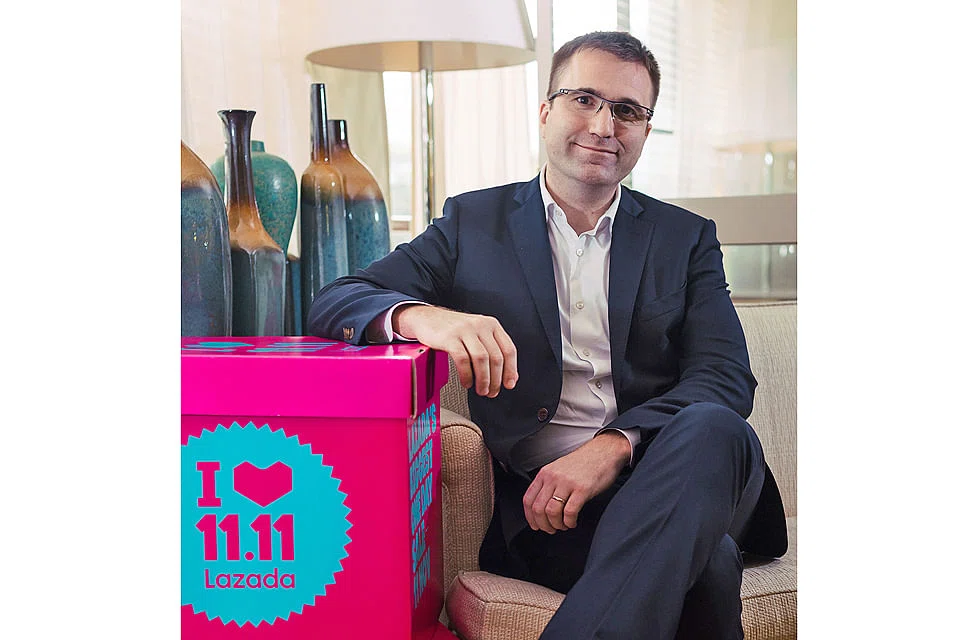
The Alibaba-owned player has over 30 fulfilment centres across 17 cities in South-east Asia, with its in-house last-mile deliveries now able to reach 70 per cent of the region's population, said group chief executive Pierre Poignant at a press event. Over 75 per cent of Lazada parcels in July 2019 were sorted in-house.
Asked about the benefits of doing logistics in-house, Mr Poignant was quick to emphasise that Lazada is building an "open logistics network" that also includes third party providers. "It's not about one versus the other," he said.
Over in the US, tech giant Amazon has recently invested heavily in its own logistics hubs, aircraft and vehicles in a bid to support its Prime fast-shipping programme. The e-commerce firm has historically relied on partners such as FedEx and UPS. FedEx ended its ground delivery and air freight contracts with Amazon this year, an outcome some observers attributed to the low margins from the partnership and Amazon's emergence as a potential competitor.
Mr Poignant said Lazada is focusing on logistics because it wants to deliver a consistent experience for consumers and sellers in order to build trust. South-east Asia's physical infrastructure remains very fragmented, hence there is plenty of room to improve logistics capabilities and grow e-commerce.
"We want to build a logistics network around us and we want to control the supply chain of logistics and strategy," he said.
Currently, the group leverages Alibaba's tech and logistics infrastructure to get purchases to customers within seven days of an order being placed. Lazada plans to introduce more package collection points across the region. In Malaysia, it has launched sea freight services and in Thailand, it is gearing up to open a warehouse in the country's Eastern Economic Corridor for "the next generation of warehousing", said Mr Poignant.
Meanwhile, regional rival Shopee appears to have devoted most of its focus on user and seller engagement. The Sea Group unit had the most monthly active app users and heaviest Web traffic in the region in Q2, according to product comparison website iPrice. But Lazada led the pack for monthly active app users in four out of six markets surveyed.
In his business update, Mr Poignant said Lazada has more than 50 million annual active users across six markets as of Aug 31, 2019. The number of orders on the platform more than doubled year on year in the past three quarters ended June 2019.
The group has also seen a steady growth in the volume of merchants. The number of daily active stores - online stores with sales within the day - increased 142 per cent from March 2018 to August 2019.
The number of stores with more than US$10,000 in monthly gross merchandise value almost doubled in the same period.
Giving a breakdown of order volume for the first time, Mr Poignant said 29 per cent of orders in July were in the fashion and accessories category; 28 per cent were from fast moving consumer goods, 22 per cent from general merchandise, 17 per cent from consumer electronics, and the rest from digital goods.
The group's flagship shopping festival 11.11, also known as Singles' Day, remains a key growth driver. This year's upcoming event will feature livestreaming, in-app games and offline-to-online campaigns.
Other core areas Lazada is focusing on include technology and payments. Lazada plans to increase adoption of its e-wallet, which operates in five markets and is powered by technology from Alibaba-affiliate Ant Financial.
TRENDING NOW

‘Not trying to solve world hunger’: GoTo takes pragmatic approach to AI

He built the Vingroup empire. Now South-east Asia’s richest man is handing some key roles to his sons
Malaysian developer Eco World tops bids for Sin Ming area housing plot with S$1,612 psf ppr offer
Singapore’s new data centres must use renewables. Can they overcome the hurdles?

