

Locofy.ai joins low-code movement with backing from Accel and startup founders

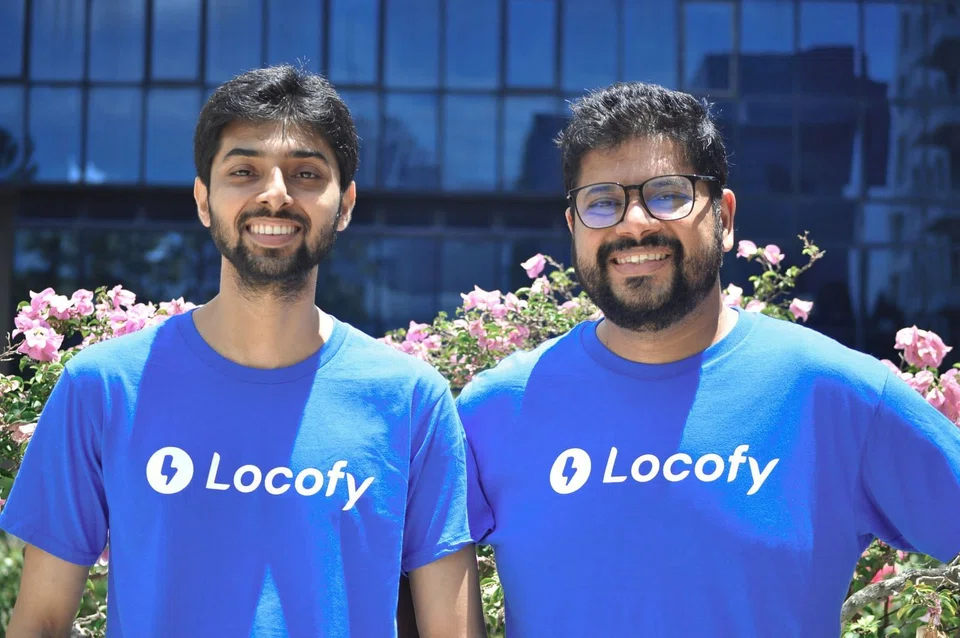
THE global shortage of software developers is sending the tech industry into a tailspin, with average salaries ballooning and companies resorting to poaching tech talent from one another.
Amid the lack of resources, a "low code/no code" movement is gaining ground. At its core, is the idea is that people should have the means to build websites, apps and chatbots with little to no coding involved.
Singapore's Locofy.ai is among startups building such platforms. The company, founded last year, raised US$3 million from Accel and other investors to work on a product that converts designs to production-ready code and live prototypes.
"We believe the answer (to the talent shortage) is not to build another marketplace to find engineers, because it's a net-zero game right? Take one engineer from Grab and put them in Gojek - it's still one open job. We believe that the answer to this problem is in automating the work of engineers," said co-founder and CEO Honey Mittal.
Some no-code platforms have been around since the 2000s. Website-builders Blogger and Wix, for instance, turned anyone into a tech whiz by providing them with standard templates and drag-and-drop tools.
Platforms such as Locofy.ai, however, are low-code environments that still require some professional coding skills. Designs are translated into code by Locofy.ai by adapting to existing design software tools and technology stacks.
Not all of the front-end coding can be automated, but Locofy.ai said its aim is to remove the menial work of engineers and allow them to focus on more complex tasks. Part of the funding will be used to build collaboration modules for teamwork between developers and designers.
Global investor interest in the low code/no code space is mounting. Last December, US-based collaboration software startup Airtable raised US$735 million to hit a valuation of US$11.7 billion, bringing it into the exclusive club of decacorns - startups worth over US$10 billion.
Earlier that year, low-code app development service OutSystems raised US$150 million at a US$9.5 billion valuation. And in January 2020, Google announced its acquisition of AppSheet to allow companies to build mobile apps without writing a line of code.
The flurry of interest is underscored by an urgency among companies to manage the strain on their tech resources. In the US, the Bureau of Labor Statistics is predicting that the shortage of engineers will exceed 1.2 million by 2026.
Countries in Asia are facing the strain too. Software developer hubs such as India and Vietnam are no longer easy-fixes for offshore hiring - wages are climbing and competition intensifying amid an explosion of tech unicorns.
In Singapore, over 78 per cent of job listings last year for software engineers sought experienced hires, according to a report by talent platform NodeFlair and tech investor Quest Ventures. Those in lead roles commanded as much as S$15,950 monthly.
Startup founders are competing against the likes of tech giants ByteDance and Shopee, with some perceiving these players as having skewed the market with outsized compensation packages.
It could explain why startup operators back emerging solutions such as Locofy.ai. The company's first US$900,000 of funding was raised from angel investors, including the founders of Wego, Ola, Gajigesa and OhMyHome; Canva's former head of growth; and an executive at Stripe focusing on growth.
Locofy.ai's founding team, comprising Mittal and chief technology officer Sohaib Muhammad, experienced the pain felt by developer teams when they built several tech products at their previous startups. Mittal was chief product officer at Homage, FinAccel and Wego, while Muhammad was engineering lead at Homage, Wego and Gumi.
The remaining US$2.1 million raised in the pre-seed round came from funds including January Capital, Golden Gate Ventures and enterprise tech investor BoldCap. These investors could vet Locofy.ai's product after it launched in a free-to-use beta mode, now with over 650 users.
Despite the hot interest in low-code platforms, the technology is still at its early stages and challenges remain.
The current state of low-code solutions might serve as starting points rather than long-term solutions, said Ryan Leong, who has been a software developer for nearly 7 years.
"As a company grows, most would require more complex solutions that require engineers to build and maintain. So while the cost for starting might be less with a low-code service, it could cost a lot to transition away from it later on."
Platforms that stand out in the end are likely to be those that provide an all-in-one service so engineers won't need to juggle several low-code tools, said PlayTours founder Mohamed Afiq, whose startup builds software for team-building activities and events engagement.
Still, investors are counting on the success of such technology to realise the next global software unicorn dream.
Golden Gate partner Justin Hall said: "It's always rare to find engineering teams that can create products that scale globally, but Honey and Sohaib have given me every indication that Locofy.ai will be one of the leading low-code platforms used by engineering teams across the world."
READ MORE:
TRENDING NOW

He built the Vingroup empire. Now South-east Asia’s richest man is handing some key roles to his sons

‘Our bread and butter’: Family-run Loo’s Hainanese Curry Rice hands reins to third generation

Grab CEO’s wife Chloe Tong on life with Anthony Tan and finding her purpose

US says China to buy 10 million tonnes of coal in 2027 and 2028

