Lucence launches new cancer detection blood test, plans separate clinical trial
Ng Ren Jye
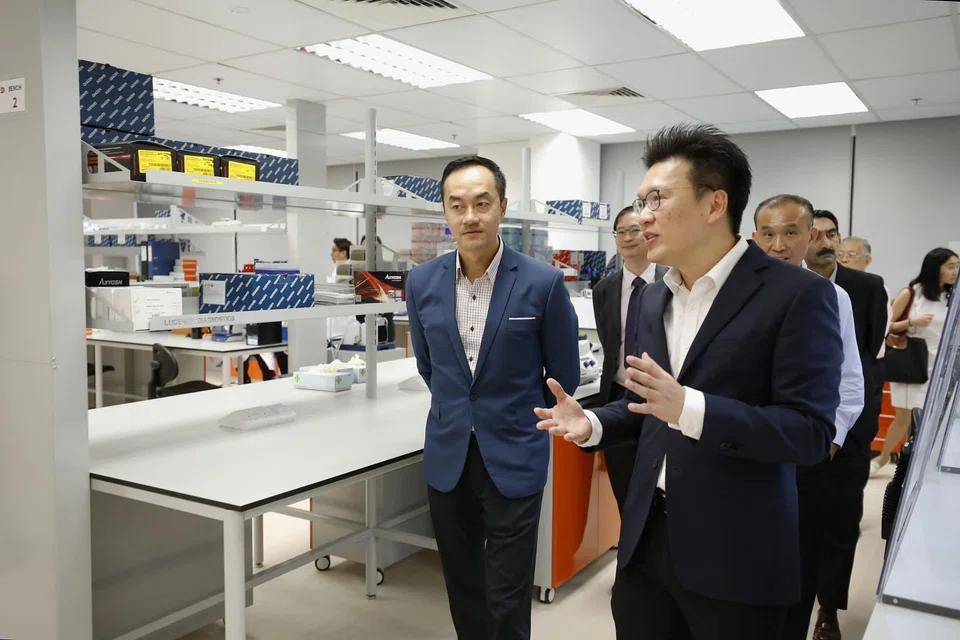
GENOMIC medicine company Lucence Diagnostics unveiled a new blood test to detect cancer and plans to launch a clinical study for a different blood test that can detect multiple cancers early.
The announcements were made at the opening of its new 10,000 sq ft laboratory in Singapore on Wednesday.
The new blood test, LiquidHALLMARK, detects 14 types of cancers, 50 genetic mutations and two viruses. Lucence said that it is the world's first blood test that simultaneously detects both cancer-causing genetic mutations and viruses with 99.9 per cent accuracy.
Separately, the medtech company will launch a clinical study with 100,000 participants across Asia to validate its early cancer detection test this year.
The opening was officiated by Koh Poh Koon, Senior Minister of State for Trade and Industry.
Dr Koh said that medtech manufacturing has generated S$11.3 billion in manufacturing output for Singapore in 2016, an increase of more than sixfold from 2000.
The medtech manufacturing workforce also grew three times over the same period, to 13,900 in 2016.
Tan Min-Han, founder and CEO, Lucence Diagnostics, said that the company wants to "achieve zero avoidable cancer deaths through early detection and better treatment selection".
Founded in 2016, Lucence - a spin-off from the Agency for Science, Technology and Research (A*Star) - had last raised S$12.9 million in seed funding from private investors in 2017.
Its blood tests are currently available in eight countries across Asia, including Singapore.
Share with us your feedback on BT's products and services