Maritime data startup Greywing works with industry bodies to aid crew changes
Startup's platform uses proprietary algorithms to show optimised data on flight availability and ideal ports of call

Sharanya Pillai
Singapore
THOUSANDS of seafarers have been stranded on board vessels globally amid Covid-19, even as some of their contracts run out. This is because performing crew changes has been one of the biggest hurdles for shipping firms amid Covid-19 port restrictions and limited flight availability.
Seeing how its own clients were struggling with crew changes, Greywing, a Singapore-based maritime intelligence startup, is offering a risk assessment tool for free to vessel owners who are conducting crew changes in Singapore, in collaboration with the Singapore Shipping Association (SSA) and the Singapore Maritime Officers' Union (SMOU).
Called Landfall, the tool was launched by Greywing in April to aid the industry in planning the mass rotation of crew members. Under the collaboration with SSA and SMOU, Greywing is offering the basic features of Landfall for free, until normal operations can resume.
Landfall uses proprietary algorithms to automatically match crew members who need to fly home with their replacements who need to fly in and get on the vessel. The platform then shows the available flights along the vessel's route, as well as immigration data, to assist vessel managers in planning which ports to conduct their crew changes at.
There are currently seven vessel operators in Singapore and 66 globally using Landfall.
Facilitating crew changes was not the initial focus of Greywing, which was founded in 2019. Instead, the startup had mainly specialised in helping firms assess maritime risks, such as piracy threats along a sea route.
Its chief executive, Nick Clarke, was the founder of maritime security firm Citadel, which protected commercial vessels and offshore oil and gas projects from piracy in the Indian Ocean and West Africa. Prior to that, he spent four years in the UK's Royal Marines.
With Covid-19, Greywing found that crew changes had become a more pressing concern than piracy for many clients, Mr Clarke told BT.
"When we got to March this year, our clients were telling us about this impending, growing crisis offshore with crew trapped on vessels because of Covid-19. Their contracts were nearing their end, and it was only getting worse," he said.
"Crew managers are in a desperate situation and it's such a serious problem that seafarers are committing suicide. That's the level that this is at; some have been on ships for 15 months, when they would normally sign off at the twelfth month."
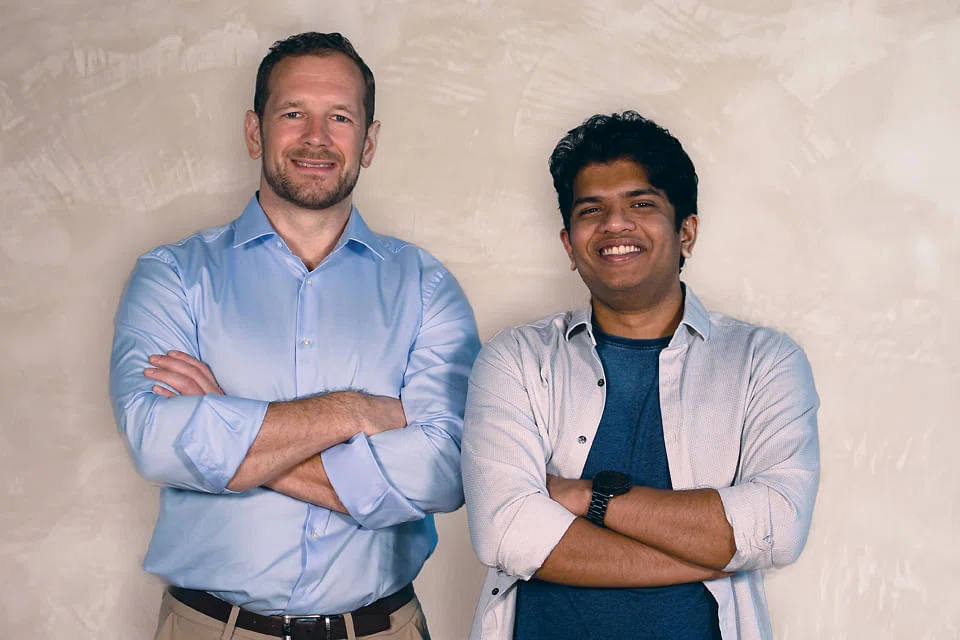
After brainstorming for potential solutions, Mr Clarke and chief technology officer Hrishi Olickel came up with Landfall, which builds on the existing tech know-how of the startup. The duo had founded Greywing after meeting through Entrepreneur First's Singapore programme.
Mr Olickel said: "Covid-19 has really forced the industry to digitalise, and crew managers are now coming online. A lot of our clients are discovering that there are benefits, and they expect to keep using our platform for the foreseeable future... to optimise and coordinate fleet management. This is overall making the industry more resilient."
According to a mid-July AFP report, over 200,000 seafarers have been in limbo on board vessels. Singapore itself facilitated about 300 crew change cases per day on average in July, the Maritime and Port Authority of Singapore said in a July 24 statement.
Michael Phoon, executive director of the SSA, reckons that through the collaboration with Greywing, the industry could explore data-sharing initiatives. "With a centralised area to key in a company's plans for air travel to the various destinations, there could be synergies realised in data sharing," he said.
"We see potential future collaboration when more and more companies get onboard with their data on the platform. The SSA continues to seek out companies who are now developing solutions for the maritime sector."
The startup's data could also increase flight availability, said the SMOU's assistant general secretary Gwee Guo Duan. Through the platform, the union was able to obtain comprehensive data on the flights required to conduct crew changes, which it was then able to bring to airlines to encourage them to make more flights available.
"Using the findings from the data, SMOU, together with the SSA, was better able to hold discussions with airline companies using this new set of data, as compared to (our previous) static survey. This further encourages airlines to open flights to countries with higher demand for repatriation requests, to get seafarers home," he said.
Looking ahead, the SMOU is working with Greywing to explore chartering flights to countries where repatriation requests are high.
Mr Gwee said: "If it all goes well, we hope this can be used as an ideal model for other countries to adopt... as we tackle the facilitation of crew change in the maritime industry together during Covid-19."