

Neuron Mobility unveils e-scooter built in-house; eyes Series A funding

Sharanya Pillai
Singapore
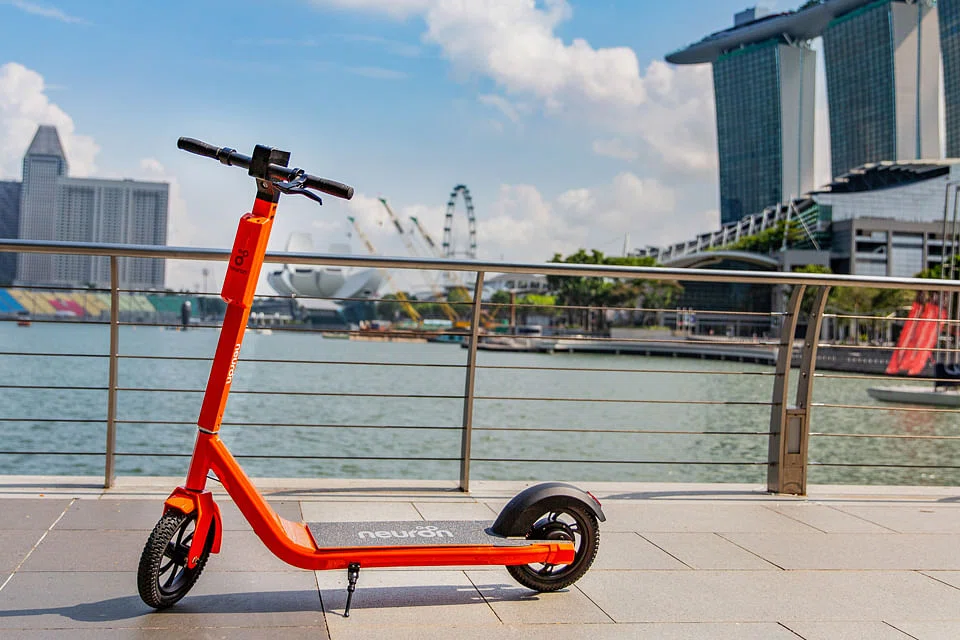
E-SCOOTER sharing startup Neuron Mobility hopes to whizz past its competition with a new e-scooter designed and built in-house.
The bright orange e-scooter comes with a larger frame than Neuron's existing gold-and-black scooters, and 12-inch wheels, up from 8-inches, to provide more stability on uneven surfaces.
A broad 8.6-inch deck is designed to give users a better sense of balance, while a GPS-enabled parking indicator shows whether they can park in a certain spot.
Neuron spent nine months coming up with the new design and creating its own moulds for the over 150 components.
E-scooters bought off-the-shelf simply cannot withstand heavy usage in the shared industry, CEO Zachary Wang told The Business Times in an exclusive phone interview.
"We realised the need for user safety, operational efficiency and even being able to handle the weather... After operating for some time, we figured that the best way is actually to build an e-scooter from the ground up," he said.
Founded in 2016, Neuron operates in Singapore, Malaysia and Thailand and owns over 1,000 e-scooters.
Singapore will likely be the first market where it deploys the new scooter, with other markets following shortly after. The design complies with regulations set out by the Land Transport Authority, Mr Wang said.
The new e-scooter is going into mass production now, but will be deployed in Singapore only after the outcome of its application for an e-scooter sharing service licence with LTA. The number of e-scooters deployed will depend on the outcome as well.
Neuron is now in the midst of preparing its licence application. The deadline for submission is Feb 11.
Mr Wang declined to comment on Neuron's back-up plans if LTA does not approve its application.
It may seem unusual for a shared mobility service to move into the asset-heavy business of developing its own vehicles. But Mr Wang believes that it makes financial sense.
"The new model is 30 per cent cheaper than the existing scooters used by many sharing operators around the world, due to Neuron's in-house design and investment into the supply chain," he said.
In the long term, Neuron could also enjoy lower operational costs, he added. The new e-scooter only requires four to five hours to charge fully, while the existing ones take six to eight hours.
To mass produce its new e-scooters, Neuron will tap third-party manufacturers within Asia to build the components. It will then ship the components to a third-party contractor in China for assembly.
Neuron had purchased its existing e-scooters from a manufacturer and added some components.
Moving forward, the startup is eyeing Series A funding in the next few months, "given how well the business has been scaling", Mr Wang said. The company is looking to expand to other emerging markets within Southeast Asia, as well as Australia and New Zealand.
"For our new fundraising, we are very much looking to replicate some of the successes we already have in the markets we are operating in, to scale our operations in the larger Asia-Pacific region," he said. In December last year, Neuron raised S$5 million in seed funding from SeedPlus, 500 Startups, SEEDS Capital and ACE Capital, among other angel investors and family offices.
Considering its bold expansion plans, Neuron's move to build scooters in-house could mean hefty expenditures.
But Mr Wang thinks that this will be a worthy investment for Neuron's long-term sustainability.
"When we start to make a lot of scooters, there will be a lot of cost savings to justify the initial capex... For Neuron to be differentiated, it's important for us to own a commercial-grade scooter that's actually designed for sharing purposes," he said.
TRENDING NOW

If Europe goes to war, the fallout will be felt in East Asia

Government to bring forward raising of retirement age, give employers more financial support to create flexi-load jobs

Indonesia stocks suffer worst plunge in nearly 30 years as MSCI proposes standalone status

Mapletree Industrial Trust posts 6.6% drop in Q2 DPU to S$0.0297

