

Grab plans S$0.30 platform fee but timing draws flak; CCCS seeks feedback
Singapore
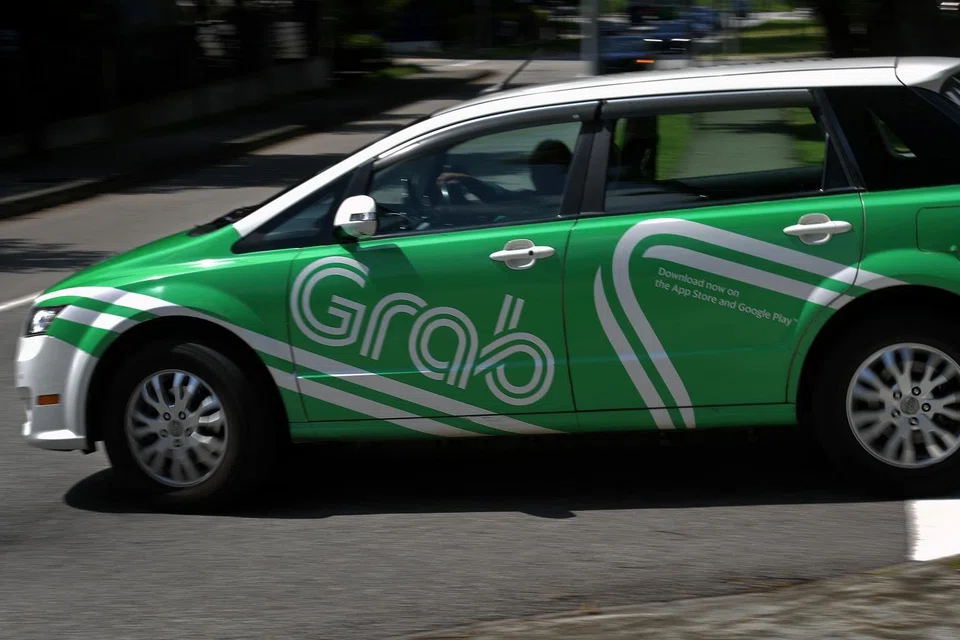
GRAB has applied to Singapore's competition watchdog to impose a platform fee - a move that will put it in line with other ride-hailing firms around the world, which are already charging fees of S$0.70 to over US$2 per ride. The proposal is undergoing public consultation, after having its hands tied by competition requirements following its merger with Uber in 2018.
The proposed fee amounts to S$0.30 for each ride, or S$0.32 with goods and services tax. In its submission to the Competition and Consumer Commission of Singapore (CCCS), Grab observed that this practice is in line with industry norms and "does not represent a disproportionate increase in fares".
For example, Gojek levies a S$0.70 platform fee, which it states goes into improving ride-hailing services. Lyft charges a service fee exceeding an estimated US$2 in various cities within the US and Canada, while Uber charges a booking fee upwards of about US$2 in countries including the US, Australia, Brazil and Hong Kong.
Walter Theseira, associate professor at the Singapore University of Social Sciences, told The Business Times (BT) on Tuesday: "The starting point is that this is just a price change and by itself it is not so remarkable. The only reason why CCCS is involved is because following the Grab-Uber merger, Grab had to agree to freeze prices until there was a greater degree of competition in the market."
He added that this is an attempt by Grab to experiment with extracting value directly from commuters, but is no different from, say, increasing fares and then increasing commission or rental markup.
"The move - when you also consider GoJek's decision - is a clear signal that ride hailing firms in Singapore are under a lot of pressure to be profitable... and that profitability is more important than growth. This is in contrast to a few years ago when it was the complete opposite and commuters and drivers were enjoying large subsidies and discounts," said Prof Theseira.
Lawrence Loh, associate professor of the National University of Singapore (NUS) Business School, noted that while there is a rationale from Grab's viewpoint, the interest of consumers should also be "of paramount importance".
Said Prof Loh: "Any fee increases that are built into the fixed fare structure must be backed by tangible benefits to consumers beyond the distance-based rides per se. For instance, the provider must demonstrate that there will be better ride accessibility, availability and flexibility."
In its application to CCCS, Grab said the fee will enable it to maintain and enhance various safety measures, as well as cover relevant operating costs.
A third of the funds collected will be committed towards providing benefits for driver welfare, according to Grab. Andrew Chan, managing director of transport at Grab Singapore, said in a statement on Tuesday that the firm will look at rolling out improvements for its drivers if the fee is approved. These include doubling the benefit coverage of personal accident insurance and providing training allowance for upskilling.
Mr Chan also said that Grab "invests millions annually" to build and maintain tech features on its passenger and driver apps, with over 80 tech improvements implemented in 2019. "Existing features such as number-masking, the emergency button and driver identity verification help to safeguard our users' safety and security, as well as prevent fraud," he noted.
That said, some market observers have reservations about ride-hailing firms charging platform fees to boost earnings.
Associate Professor Chu Junhong from the NUS Business School said: "I don't think it is a smart way to charge riders... it is not a good timing to do so, given that riders and drivers are hit by Covid-19, and the demand for ride hailing is low already."
Prof Chu added that research has found that an explicit price hike like the proposed fee, hurts demand more than an implicit price increase of the same amount. Depending on riders' price sensitivity, charging the fee may further reduce demand, she said.
Jonathan Chang, a Singapore-based entrepreneur, educator, and investor, noted that people might question whether there would be new charges in the coming months, and how the extra charge would affect a rider's experience.
CCCS is inviting public feedback on Grab's request to impose the platform fee on riders for its ride-hailing services in Singapore. Interested parties can email CCCS_Feedback@cccs.gov.sg by Aug 11, 5pm.
TRENDING NOW

Two Singapore-listed palm oil firms named in Greenpeace report on Indonesian plantation fires

Singapore Airlines flight returns to San Francisco after ‘unruly’ passenger incident

Singapore looking into which companies responsible for haze-causing fires: PM Wong

Deluge IPO 3.86 times subscribed ahead of SGX debut

