

Rotimatic maker doughs out losses, burns through its cash reserves

Claudia Chong
Singapore
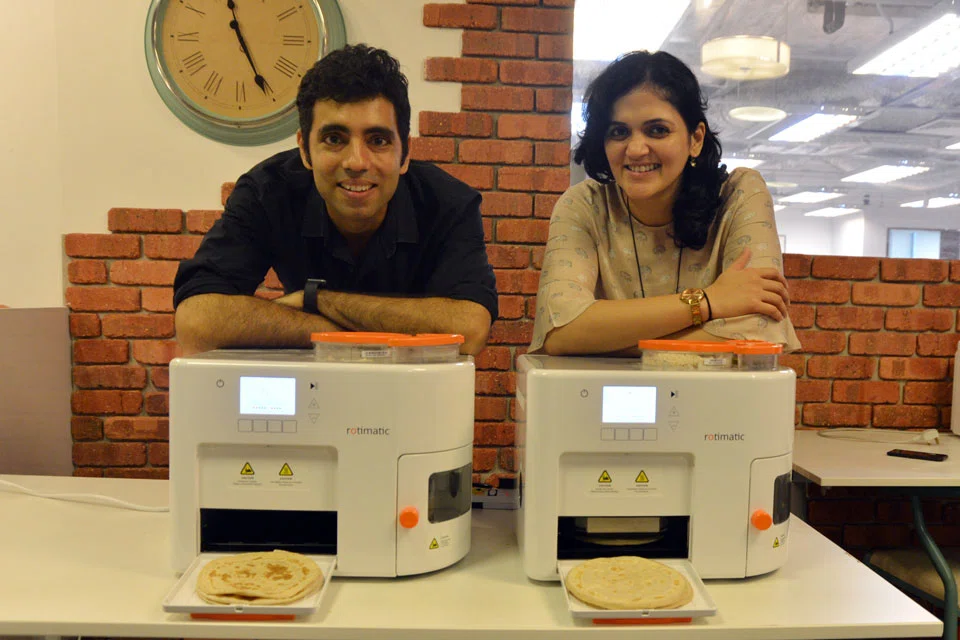
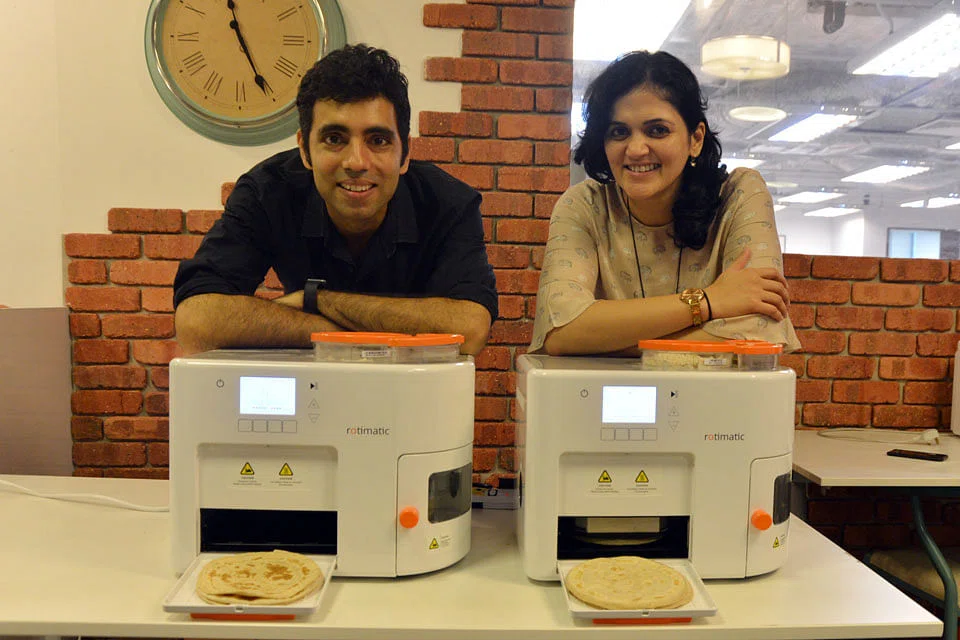
LOCAL startup Zimplistic made headlines in 2016 with its invention Rotimatic, an automated kitchen appliance that makes Indian flatbread or roti.
By the time the machine was shipped out to its first batch of customers that year, it had already spent the eight preceding years in development. But a decade after the company's founding, the buzz in 2016 has turned into a pressing question of how long it will be before the business can become sustainable.
Zimplistic suffered losses of US$23.6 million last year, despite revenue of US$21.2 million, going by regulatory filings obtained by The Business Times.
Revenue from the sale of its US$999 roti-making machine was mostly flat - an oddity for consumer products in their initial years of user adoption and market penetration, especially one that was launched to apparently pent-up market demand.
Zimplistic chief executive and co-founder Rishi Israni said in February 2017 that the company had received thousands of pre-orders in the run-up to the shipping of the first batch of units.
When orders for Rotimatic opened that month, the wait-list already had more than 300,000 people from across the world.
Mr Israni told BT that excluding the pre-orders, revenue in 2018 was almost twice that of 2017.
To use Rotimatic, users simply feed flour, water and oil into the machine, which churns out one roti every 90 seconds. The appliance, protected by 37 patents, lets the user customise flour type, thickness, roast level and oil content.
According to the 2018 financials, Zimplistic's biggest market is North America, which accounted for 71.6 per cent of its total revenue. Asia (including Australia and New Zealand) and EMEIA (Europe, the Middle East, India and Africa) each accounted for about 14 per cent.
Gross profit margin for 2018 was thin, dropping to 5.6 per cent from 18.8 per cent the year before. Mr Israni believes that the cost of manufacturing the product will fall as order volume increases.
But the company was burning through cash at a rate that almost outpaced its fundraising. Net cash used in operating activities soared more than five times to US$19.9 million, which works out to a burn rate of US$1.66 million a month.
Despite having raised US$30.5 million from investors including EDBI, private equity firm Credence Partners and venture capital firm Openspace Ventures, Zimplistic had cash and cash equivalents of US$6.8 million as of Dec 31, 2018.
It then raised US$7.7 million in July 2019 from the issuance of preference shares. The additional cash would have lasted the firm till November this year if no more funding was raised, based on 2018's burn rate.
Zimplistic's loss for the year widened by US$13.8 million as it sustained blows of US$17.4 million in other operating expenses and US$7.3 million in administrative expenses.
A bulk of administrative expenses went towards salaries, said Mr Israni. Zimplistic had put US$6.3 million into employee benefits, of which US$563,640 went to key management and US$292,800 to directors.
The company has 110 staff across offices in Singapore and India, including outsourced customer support agents. (see amendment note)
No clear breakdown was given for other operating expenses, but other parts of the financial statements point to what might have gone into that. The startup chalked up US$2 million in amortisation expense from the development of Rotimatic, US$2.2 million in professional fees, and US$1.2 million in inventory written off. Professional fees, which shot up seven times in 2018, were for customer service and other professional services such as audit, said Mr Israni.
The company increased its inventory by 2.3 times last year, but wrote off about a third of it down to US$2.8 million; Mr Israni attributed this to accounting adjustments for all the test units that the firm did not account for correctly.
Zimplistic also had to write off bad debts of US$488,312, ballooned from US$2,466 the year before.
Asked for the reason behind the jump, Mr Israni said: "Some guys from Canada had used a loophole in a payment system to buy Rotimatics using a hacked credit card database. So we delivered Rotimatics to these fraudsters, and eventually the credit card company had to settle the dispute in favour of the real credit card users, who had not ordered anything. Zimplistic had to take the hit. These Rotimatics were then sold on the black market."
The loophole has since been fixed and extra security measures have been put in place.
Market watchers that BT spoke to questioned the market demand for Rotimatic, which is priced at a premium.
Prof Lawrence Loh of the National University of Singapore (NUS) Business School said Zimplistic would have to determine whether its single-product offering model is sustainable. "This carries a great risk, because any big market player can offer a product with similar or better functionalities at more attractive price points, and the company will be severely affected."
Mr Israni said the price of Rotimatic will not change anytime soon. "You should see price in the context of value," he said, pointing out that the product has already built a fan base, with about a third of sales coming from referrals. One of the biggest challenges now is to raise awareness of the product, he added.
Ambar Machfoedy, founding partner at The POD, which helps startups grow and launch into new markets, is unconvinced that Rotimatic is that much of a game-changer for households.
"At US$1,000, it is an expensive alternative to making roti the traditional way, which most Indian homemakers are already very good at... There is also the simple alternative of heating up ready-made frozen roti, the taste and quality of which have improved tremendously."
Amendment note: The article has been edited to clarify that Zimplistic's headcount included its customer support agents.
TRENDING NOW

S$8 billion wiped off OCBC value as shares slide 5.8% in heavy trade

Grab CEO’s wife Chloe Tong on life with Anthony Tan and finding her purpose

Brookfield denies accusation it cut Soilbuild out of Mapletree deal

8 public officers referred to police over property buys near unannounced MRT stations: Chan Chun Sing

