

Startups ride wave of digital entertainment as more stay indoors
As user activity surges, firms are thinking up new ways to engage their consumers more


Singapore
USER activity is climbing higher and higher for digital entertainment startups in South-east Asia as more people stay indoors due to the Covid-19 pandemic. Companies ranging from an e-sports firm to a seller of portable home karaoke systems told The Business Times that more people are seeking ways to lift their spirits while stuck at home.
Viddsee, a streaming platform for videos and short films, saw a notable increase in viewership across its markets. In the Philippines, the number of unique users on the platform during the week of March 16 grew by over 50 per cent from the previous week.
Viddsee co-founder Ho Jia Jian said the jump in numbers in the Philippines is likely due to the lockdown order issued on March 16 that affected a third of the country.
Popsical, a startup that has created a home karaoke system that combines a compact palm-sized device with a mobile app, saw streaming numbers in March hit levels only seen during festive seasons such as Christmas and Chinese New Year.
While the company was affected by factory closures in China, where most of its hardware is manufactured, it has also seen a marked increase in demand for its product.
Two events that led to an uptick in sales were when Singapore authorities on Feb 7 raised the public risk assessment level to Dorscon orange, the second-highest level, and when Malaysia enforced a nationwide movement restriction on March 18, said Faruq Marican, co-founder and CEO of Popsical.
By then, the company's karaoke units were already out of stock and only pre-orders were available.
"Whenever we're in pre-order mode, we have always noticed a dip in sales of about half. This time, there was no dip," shared Mr Marican, adding that the units are close to being sold out till June.
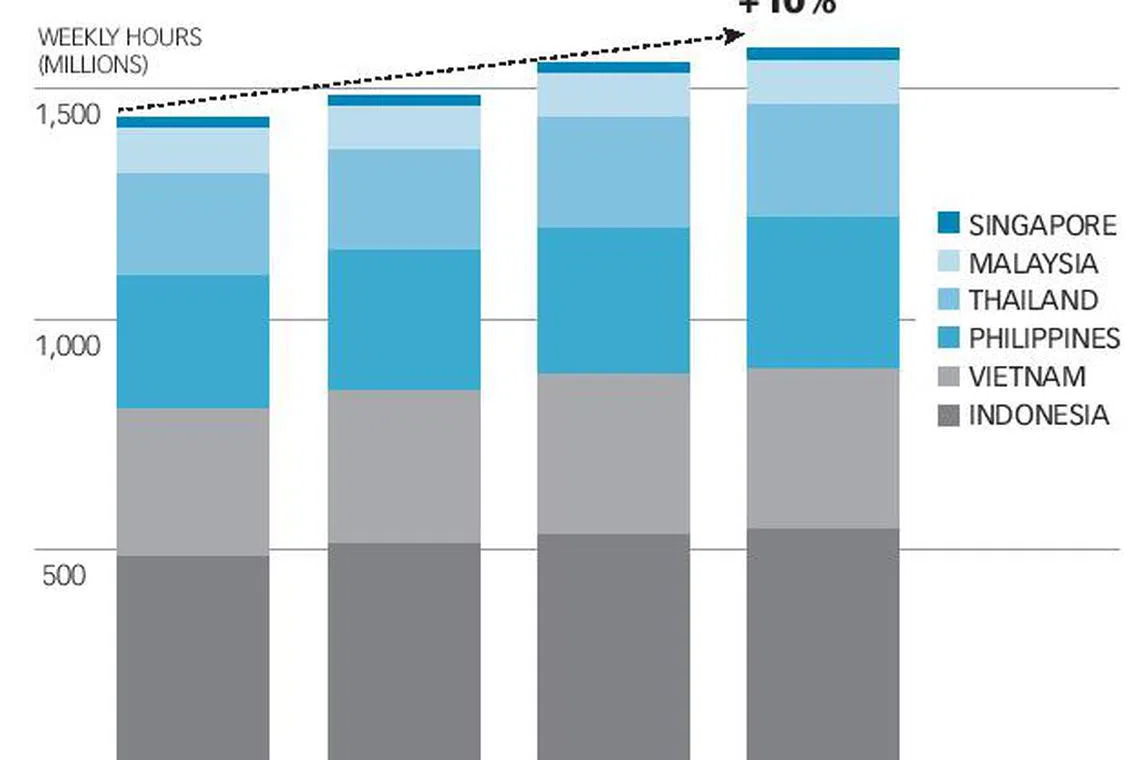
Across South-east Asia, apps in the digital entertainment and video categories have recorded a rise in user activity. The hours spent by Android users in those apps during the week of March 8 jumped 10 per cent from the weekly average in the fourth quarter of last year, according to app analytics firm App Annie. Usage metrics are only available for Android phones.
iflix, a Kuala Lumpur-based startup backed by Fidelity International, was among the top 10 video streaming apps in Indonesia, Malaysia and the Philippines for the period of March 1 to 14.
There has yet to be a meaningful increase in usage of gaming apps during this period, said App Annie, though this may change in the coming weeks if more countries in South-east Asia go into nation-wide lockdowns.
The surge in consumption of digital entertainment mirrors a worldwide trend as more countries began imposing stricter rules on movement to curb the global spread of the virus.
Last Tuesday, YouTube started to limit default video quality around the world to ease an Internet traffic boom caused by a hike in usage. The same day, US-based streaming giant Netflix said it will lower traffic on network providers by 25 per cent in India, after a similar decision in Europe to reduce the strain on networks.
Closer to home, the management of Singapore-based gaming hardware group Razer said in its latest earnings briefing that it expects to see "more opportunities and growth for the Razer gaming ecosystem in light of the 'stay-at-home' situation".
As more people turn to digital entertainment to cope with being indoors, companies are thinking up new ways to engage their users more.
Social media app TikTok on March 17 announced a content partnership with the World Health Organization (WHO) to provide information on staying safe during the virus outbreak, as well as dispel myths around Covid-19.
It also initiated a regional challenge in South-east Asia to get users to share snippets of their lives at home, which has since garnered over 977 million views as of Friday evening.
"Popular TikTok content creators have jumped on this challenge to put out entertainment content centred around working out from home, study or work from home, cooking, conducting Japanese lessons from home and more," said Doreen Tan, user and content operations manager at TikTok Singapore.
Meanwhile, Viddsee is planning several online initiatives to encourage viewers to connect through their love for short films. For instance, it has kick-started weekly themed "watch parties" where viewers get together online to watch short films and have a live chat session.
The impact of Covid-19 on events and services has also pushed some startups to turn their focus to expanding the online aspect of their business instead.
EVOS Esports, for instance, houses competitive e-sports teams in five countries across six major games. So when gaming tournaments started getting postponed or cancelled, the company's offline business took a huge blow.
It was therefore timely that a few months back, the company ventured into e-sports influencer management where livestreaming and content management take centre stage. "Our streaming concurrent users has increased by more than 30 per cent month on month since December and is still looking to grow further during this period," said chief strategic officer Ang Teng Jen.
EVOS' recent livestreaming campaign with e-commerce firm Lazada, where influencers help promote gaming products, reached a peak of 100,000 concurrent users - exceeding the 60,000 concurrent users during a livestream held last year as part of Lazada's mega 12.12 shopping event.
For event ticketing startup iGo, the Covid-19 situation accelerated the company's plans to market its livestreaming technology for events, which it had been planning on doing since late last year.
"This is a new platform which will allow our partners - initially launching with events and talent agency Collective Minds - to showcase music acts over our livestreaming service," said Adrian Oliveiro, iGo's tech director. "It will initially be over the Web, and later extend into our app and our partners' apps. This will be a low-cost pay-to-watch model during this Covid-19 situation."
iGo typically did ticketing for multiple events each week, sometimes as many as eight a weekend, said Warren Woon, a director at the company.
But with gatherings outside of school and work limited to 10 people, events in Singapore have significantly dwindled to almost nothing, hence cutting off one of iGo's main sources of revenue.
That said, the company sees plenty of potential in developing its livestreaming tech and complementary services. "Event organisers are wondering how to future-proof their business, and that's one of the main drivers accelerating the implementation of our livestreaming tech," added Mr Woon.
TRENDING NOW

Could stablecoins be the future of money?

Once staunchly pro-China, Malaysian Chinese businesses are now distancing themselves from Beijing

Global expertise and tailored solutions: How affluent S’poreans can grow and manage wealth across markets
GIC-backed Bank Jago sees wealth management as next growth engine as Indonesian investor base grows

