Sustenir plants seed in Hong Kong, eyes growth in the Asia-Pacific
Singapore
LOCAL hydroponics farm Sustenir Agriculture, in growing beyond Singapore, on Thursday announced its launch into Hong Kong as its first international foray.
This underscores the Temasek-backed agritech's ambition for expansion in the region, with further plans to open four more "smart farms" in the Asia-Pacific over the next 12 months.
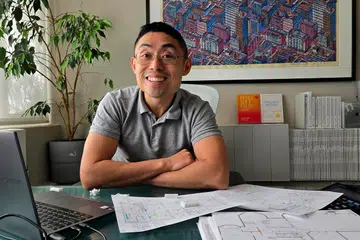
"Our aim is to be in all key cities in Asia," said Ben Swan, chief executive and co-founder of Sustenir. He added that Hong Kong was the farm's "natural first step", as the metropolitan city has the right business environment and infrastructure to host Sustenir's facilities.
The 50,000 sq ft farm in Hong Kong is located in the Tuen Mun district.
Using inhouse-designed LED lighting, climate-control mechanisms and patented pipe channel systems, the vertical farm can grow 127 times more produce per square unit of space than conventional farms. It can also produce crops that are non-native to the local climate.
The tech-based farm is looking into using robotic arms for seeding. Besides increasing efficiency, this move will ensure that the seeds are precisely placed for optimal growth, thus reducing wastage.
Founded in Singapore in 2013, Sustenir started by growing kale and arugula in its vertical farm; it successfully produced strawberries in 2017.
The aim of the hydroponics farm is to build local ecosystems that will enable sustainable food production, so that cities can rely less on imports and minimise the food waste that comes from distributing the produce.
Mr Swan said a third of produce is wasted in the logistics alone, and this is before it even gets to the merchants. "Then the merchants have wastage as well," he added.
Another way the hydroponics farm reduces its carbon footprint is by producing plants with a longer shelf life. The produce stays fresh for longer as a result of being cultivated in a controlled environment - that is, without exposure to soil, pesticides, air pollution and heavy metals.
Unlike traditional farms, Sustenir has zero waste - achieved by repurposing the stalks and "less presentable" produce to make juice and pesto for sale.
"Today, more than ever, the world needs a sustainable future and a commitment to build a circular economy by using fewer natural resources such as land and water, and maximising yield that is nutritious and harvested every day," said Mr Swan.