Series C funding sends Biofourmis to near-unicorn status
Singapore
HOMEGROWN startup Biofourmis has raised US$100 million in a Series C equity round led by Softbank Vision Fund 2, catapulting the healthcare company to near-unicorn status in a matter of months.
The latest funding, which sources said has quadrupled Biofourmis' valuation from about US$200 million previously, comes despite a slowdown in healthcare investments in the Asia-Pacific over the first half of the year.
However, venture investment database VentureCap Insights puts the valuation of Biofourmis Holdings Pte Ltd, based on regulatory filings as at Oct 1, at US$533.6 million. Biofourmis Holdings is the Singapore-based holding company of Biofourmis Singapore Pte Ltd.
Industry researcher Galen Growth noted that total funding for healthcare in Asia-Pacific closed at US$1.9 billion for the first half of 2020, a 46 per cent fall from the same period last year.
Biofourmis, which has bucked that trend, has now raised up to US$145 million from investors, with existing investors Openspace Ventures, MassMutual Ventures, Sequoia Capital and EDBI also taking part in its latest round.
The company, which was founded in Singapore but then moved its headquarters to Boston last year, pairs wearable technology with its artificial intelligence-based analytics software to personalise treatments.
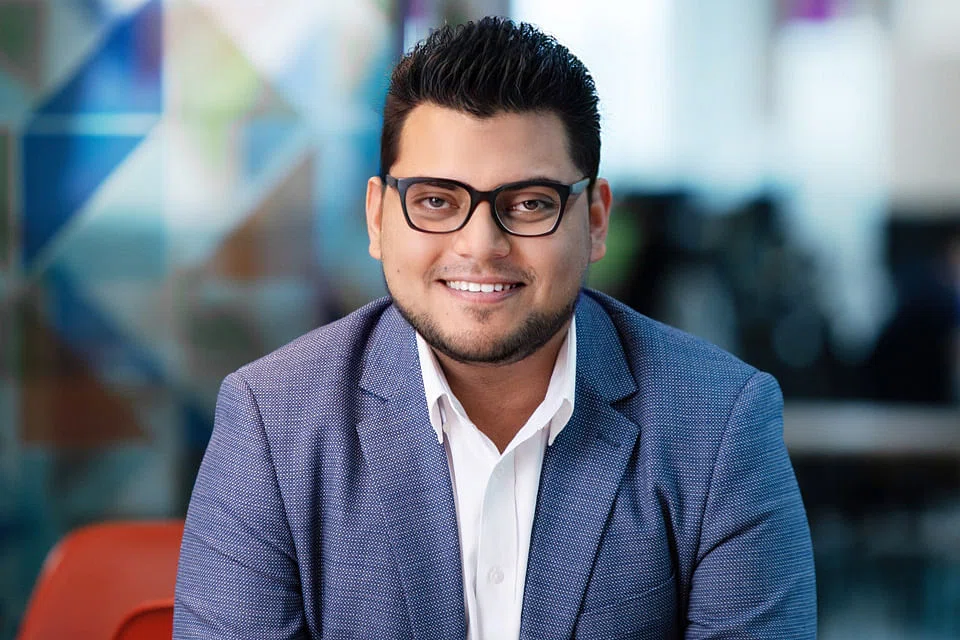
Chief executive and founder Kuldeep Singh Rajput told The Business Times that the company, which is cash-flow positive and Ebitda-positive, had not been actively seeking significant capital from new investors. But, after meetings with Softbank's Masayoshi Son, there was an "exciting opportunity" presented for the company to enter new markets such as Japan, China and the Middle East, and to rapidly scale up its operations in the US.
Already, Biofourmis has seen a significant ramp-up in demand for its platform during the pandemic. Mr Rajput told BT that the firm's revenue in the first half of the year alone was 10 times more than the whole of 2019.
On the back of a push for its digital healthcare solutions, he said that Biofourmis will be "laser focused on certain areas that are most profitable and most scalable".
It will thus split operations into two main divisions - Biofourmis Health and Biofourmis Therapeutics.
Biofourmis Health will focus on scaling its current platform, which continuously monitors a patient's heart rate, respiration rate and fluid in the blood (among 20 other metrics) through sensors in an armband.
This platform uses artificial intelligence (AI) and data-analytics software to predict whether a patient is at risk; if so, it alerts and sends personalised treatment plans to healthcare professionals to intervene before anything happens.
Patients and healthcare professionals are also able to view these statistics live through an app, or a dashboard.
Biofourmis Therapeutics, on the other hand, will focus on developing the software needed to independently treat patients with heart failure, cancer or coronary artery disease. The platform could also be used in tandem with other prescribed drugs.
Patients can simply follow personalised therapeutic recommendations, predicted by AI, in the form of notifications on their phone. This reduces the need for healthcare professionals to constantly intervene for treatment.
The software is undergoing pivotal trials to demonstrate its safety and efficacy, and is expected to receive clearance from the US Food and Drug Administration (FDA) in the next 12 months.
However, the road ahead is not guaranteed a success. Big drug-makers have reneged on deals with some therapeutics startups before, leaving them to fend for themselves
For example, Swiss pharma giant Novartis recently cut off a partnership with Pear Therapeutics, and French pharmaceutical company Sanofi last year walked away from a deal with Alphabet-backed Onduo.
Reliance on big pharmaceutical companies could then be a double-edged sword, since the "sheer reach of such partnerships will allow Biofourmis to scale quickly," said Mr Rajput.
Currently, Biofourmis' customer base is dominated by the likes of big pharma such as Novartis; the remaining 25 per cent is made up of healthcare systems across the world.
In July, its solutions were deployed by Singapore's Ministry of Health (MOH) to remotely monitor Covid-19 patients in the city-state.
EDBI, the corporate investment arm of Singapore's Economic Development Board, said it was encouraged by Biofourmis' contribution to the country's fight against Covid-19, and will look towards supporting the startup to strengthen healthcare ecosystems in Singapore and beyond.
Chu Swee Yeok, chief executive officer and president of EDBI, said: "The latest funding round is a significant milestone in (Biofourmis') growth journey as it develops AI-powered digital therapeutic solutions to augment conventional health services."
Biofourmis' five-year journey started in the National University of Singapore (NUS), where Mr Rajput was pursuing a PhD in neuroscience. It was here the Massachusets Institute of Technology (MIT) graduate met co-founder Niu Wendou, currently Biofourmis' chief privacy officer.
Mr Rajput, who had during his doctorate built bio-electronic implants in hopes of treating diseases, then decided to drop out of NUS to start the company, with an eye on using AI to predict and prevent serious medical conditions.
Now, at age 29, he heads a team of 150 employees - and growing - spread across the United States, Singapore, Switzerland and India.
Besides Biofourmis, other notable deals in the healthcare space this year include Cure.fit's US$110 million Series D2, Carmine Therapeutics US$900 million research agreement with Takeda Pharmaceuticals, and ZY Health's US$143.4 million Series D.
Galen Growth says that health-tech startups typically raise around US$15.3 million to US$70.2 million for Series C, with median valuation at US$174.6 million.