

Private investors eye S$300m additional ammo to fund startups

Singapore
THE S$300 million boost to the Startup SG Equity scheme could alleviate the pain that deep tech startups face in raising growth-stage capital, especially with dark clouds looming over the broader economy, industry players told The Business Times.
Separately, the startup industry is sanguine about the government's decision to allow the Angel Investors Tax Deduction (AITD) scheme to lapse on March 31, with players not expecting any sizeable hit to the angel investing scene.
In Tuesday's Budget speech, Finance Minister Heng Swee Keat announced that the government will set aside an additional S$300 million under its Startup SG Equity co-investment scheme. This is expected to spur over S$800 million in private funding over the next 10 years, giving deep-tech startups "better access to capital, expertise and industry networks", Mr Heng said.
Under the scheme, the government partners qualified third-party investors to make direct co-investments into eligible startups, or invests in funds via a fund-of-funds approach. Deep tech sectors include biopharma, medtech, advanced manufacturing and agri-food tech.
Over the past four years, co-investment schemes like Startup SG Equity have spurred over S$560 million in private sector funding, Mr Heng noted.
The shot in the arm for the Startup SG Equity scheme is timely, said Chik Wai Chiew, chief executive of Heritas Capital Management, which has tapped on the scheme previously to invest in biopharma and agri-foodtech startups.
Venture investing sentiment has turned cautious recently, and "inevitably, deep tech startups with longer gestation time to develop and deploy intellectual property also face a chill in investors' willingness to fund", he said.
"Notwithstanding the current concerns about Covid-19, the move to set aside more capital can be seen as a longer term strategic initiative to further strengthen Singapore as a deep tech startup hub," Mr Chik added.
Late-stage funding is hard to come by for deep tech players, said a spokesman for venture firm Quest Ventures. "The Series B gap is real and we expect this to grow... as the commercialisation value of these deep tech startups is difficult to ascertain," he said.
Howard Tang, co-founder of agri-foodtech startup SmartAHC, concurred that raising capital has been challenging for deep tech players because of the unfamiliar terrain."But the matching scheme can help investors lessen their risk exposure," he said.
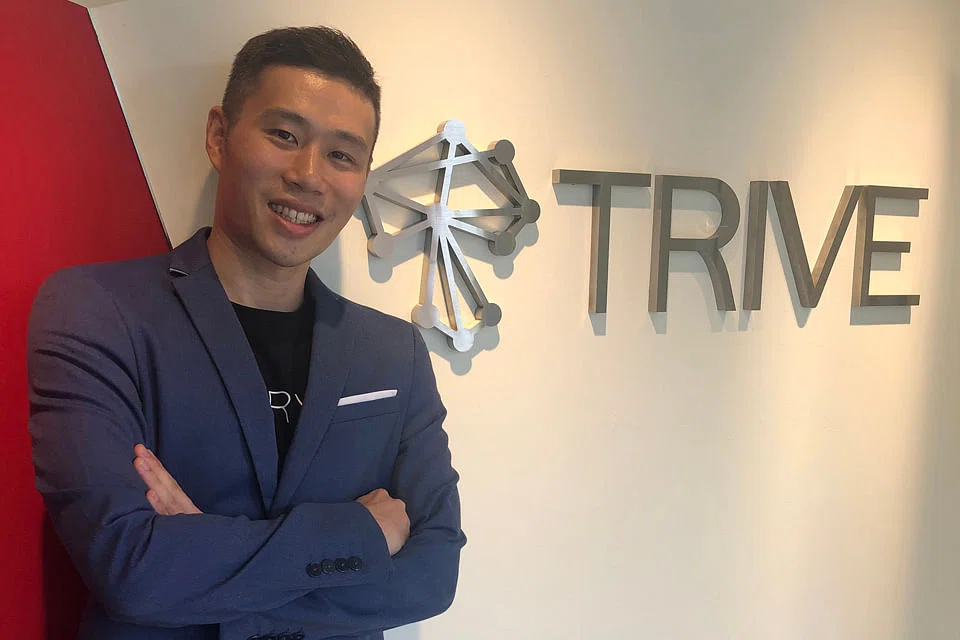
Case in point, having the government as a co-investor provided local venture firm TRIVE the push to invest in Sesto Robotics, a local startup developing autonomous robots, said the VC's managing partner Chistopher Quek. "Having S$300 million more in co-investment funding will mean 300 more potential deep tech innovations, which will positively impact the reputation of Singapore as a centre for tech innovation," he said.
Beyond the Startup SG Equity enhancement, this year's Budget also allows the AITD scheme, which was introduced in Budget 2010 to spur angel investments, to lapse. Under the scheme, an approved angel investor is granted a tax deduction of 50 per cent of the cost of investment, subject to conditions.
Mr Quek, who previously benefitted from the scheme as an angel investor, reckons that the ceasing of the scheme will only have "minimal impact" on the angel investing scene. "The minimum quantum to qualify was a S$100,000 investment per startup, but angels tend to invest around S$25,000," he noted.
The Quest Ventures spokesman similarly said that he has rarely seen the AITD scheme tapped on by angel investors. For instance, Quest's managing partner James Tan, who was an angel investor of startups Carousell and ShopBack, also did not tap the scheme, the spokesman noted.
Leslie Loh, founder of Red Dot Ventures, reckons that co-investing schemes like Startup SG Equity are instead more attractive for investors than tax rebates. "An angel investor's main concern would be on the startup's risk, and co-investments would help them directly mitigate that risk," he said.
KEY POINTS
TRENDING NOW
Unhealthy air quality in Singapore enough to trigger haze pollution law; NEA is monitoring situation

Once staunchly pro-China, Malaysian Chinese businesses are now distancing themselves from Beijing

Could stablecoins be the future of money?

Johor’s investment boom is real, but actual contribution from JS-SEZ unclear

