Singapore key to Shein’s South-east Asia ambition, says Shein’s Singapore head

Benjamin Cher
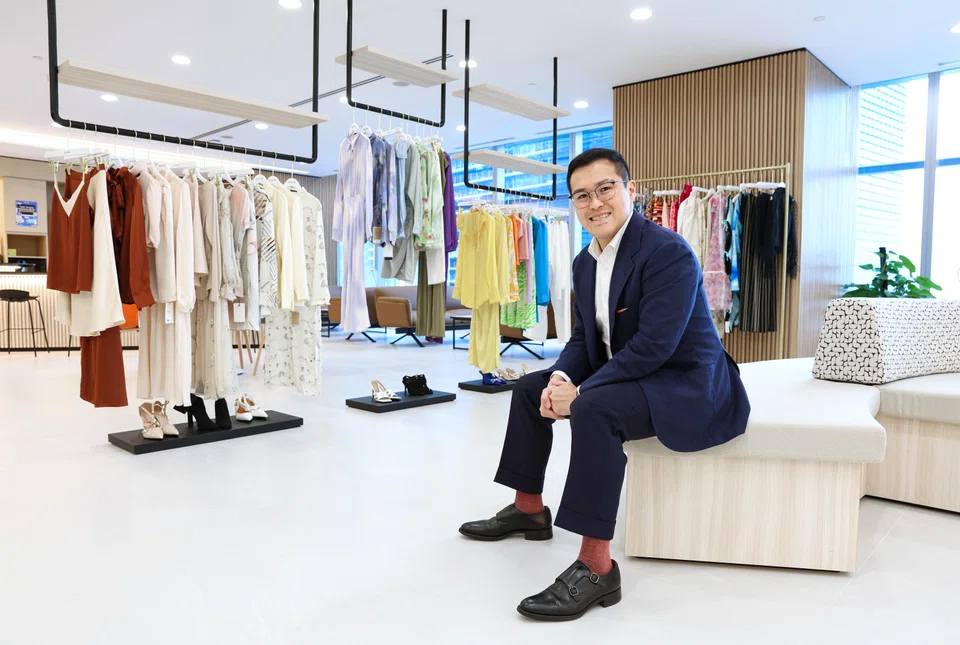
SINCE Leonard Lin moved into his new office at Marina Bay Financial Centre in August, the Singapore head of China-founded fashion retail juggernaut Shein has been busy building up operations here.
Hiring for key corporate functions has been a top priority for Shein in Singapore, where its office will be the group’s global headquarters and a base to tap South-east Asian markets.
Shein listed 29 openings on LinkedIn on Oct 26, for roles in Singapore ranging from tech to finance to government affairs.
“We consider South-east Asia an emerging region with good growth potential,” said Lin, who was named Shein’s general manager of Singapore in Feb 2022, joining the group after nine years in Temasek.
A presence in Singapore gives Shein a base in a robust economy with a business-friendly environment, good corporate governance and a strong talent pool. And from Singapore, Shein is looking for insights into South-east Asian markets, in particular, Singapore, Malaysia, Thailand and the Philippines.
While each market has cultural nuances that influence the kind of fashion consumers would wear, there is a common thread of high mobile penetration that Shein is looking to tap into.
“We have the platform, the agility and speed to market, unlike traditional retail models, to localise within each market,” said Lin.
To that end, Shein has tapped more than 2,000 social media influencers across South-east Asia, in its bid to reach its target market of women between the ages of 18 and 25. It also leans heavily on technology and data analytics to make the most of its proprietary supply chain management system, which aims to bring goods from factory to doorstep in the fastest possible time.
Working with influencers yields insights into social media and e-commerce trends to ride on, a tactic Shein employs in its markets everywhere.
An omni-channel approach, where customers can touch their products at pop-up stores while still ordering them online, is also key in the region. Shein has done pop-up stores in Singapore, Thailand and in the Philippines.
“This is how we work with influencers and local communities to increase brand presence, engagement and understand the needs of the community,” said Lin.
Data through market research and engagements at pop-up stores is analysed to promote items that customers might like.
Shein’s business model also cuts out overheads of a brick and mortar space and retail employee salaries, with the cost savings then passed on to customers. The production model is also on a real-time on-demand basis, unlike traditional fashion brands which produce a fixed number of pieces per design.
“For every design, we produce a small batch of 100 to 200 pieces and we gauge the response from consumers. If there is demand, we’ll produce more to meet the demand,” said Lin.
Compared to the fashion industry’s average unsold inventory levels of between 25 per cent and 40 per cent, Shein’s unsold inventory levels are in the single digits, according to Lin. If the industry adopts this model, textile production can be reduced by 20 per cent, he added.
But for all its tech efficiency, news of worker exploitation in China continues to haunt the fast fashion giant. The most recent exposé by UK’s Channel 4 showed workers clocking in 18-hour days at low salaries with female employees washing their hair during their lunch breaks.
Shein says that it is concerned about the points raised in the documentary and has asked for information on the factories from Channel 4.
“We are committed to the fair treatment of workers, we have developed a Shein responsible sourcing programme, in line with the United Nations Sustainable Development Goals, and aligned with International Labour Organisation’s conventions and local laws,” said Lin.
Shein also has a supplier code of conduct that covers issues of workers’ health and safety, the environment, labour and social welfare. The e-tailer conducts audits on suppliers on a regular basis, including unannounced audits by independent third-party agencies such as TUV.
There are expectations for immediate remedial action for non-compliance, and serious violations will result in the termination of any agreement with the supplier. Lin claims that over 2,600 audits have been done, and an independent wage audit shows that the hourly wage at Shein factories is double the local minimum wage.
That’s not all that plagues Shein, as media reports have emerged on the company slashing its valuation by a third, dropping from US$100 billion to between US$65 billion and US$85 billion. Coupled with growing macroeconomic headwinds and inflationary pressures, Shein is facing a different economic climate today that might not be as conducive for its growth.
“We are focused on building our business, trying to meet the demands of our customers, providing them with the best quality products and customer service experience that continues despite the broader macroeconomic conditions,” said Lin.