South-east Asian startups explore early stock option cash-out to retain talent
Secondary sales, buybacks of employee stock option plans expected to gain traction as liquidity options for those who joined startups in early stages

Singapore
SOUTH-EAST Asian startups are exploring ways to allow employees to partially cash out stock options earlier, even before a listing or trade sale, industry players told The Business Times.
This means that buybacks and secondary sales of Employee Stock Option Plans (ESOP) are likely to become more common, as the South-east Asian startup ecosystem matures and the pool of "soonicorns" - or private companies nearing a US$1 billion valuation - increases.
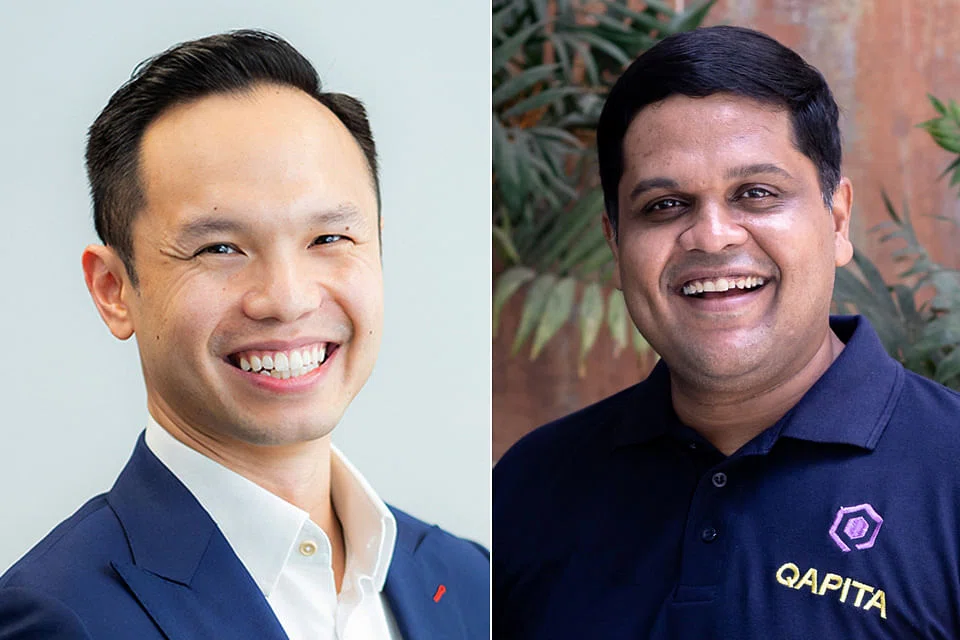
Kelvin Lee, chief executive of private investment platform Fundnel, sees growing interest among startups to help early employees with ESOP liquidity, especially after the vesting period, which is typically four years.
"While buy and sell interest has always been there, we observe that it has risen across the board in the past year. In 2020, we started having more conversations with forward-thinking regional names, who recognise that company-sponsored liquidity programmes are a secret weapon for talent attraction and retention," he said.
This is particularly so for startups that are choosing to stay private for now, instead of pursuing an exit.
Fundnel has helped to facilitate secondary sales of startup shares since 2018. Last year, it saw over 10 times more indicative offers for the sales of startups shares, as compared to 2019. Besides startups and their investors, the sellers included startup employees looking to cash out their ESOP.
"Liquidity for employee stock options is a nascent, but up-and-coming category of sell offers in the secondary market," said Mr Lee.
ESOP is a common feature of Singapore-based startups' salary packages, with many allocating about 10 to 15 per cent of the cap table to ESOP. The options' exercise price is typically at a discount to the valuation of the company at a specific round.
Figuring out the right exercise price is often the most challenging part of designing an ESOP scheme, said Julien Labruyere, chief executive of Sleek, a Singapore-based company offering digital incorporation, corporate secretary and accounting services.
Many startups may also face a long route to exit, which is what makes interim liquidity attractive. Secondary sales of ESOP to incoming investors is "also a great way for investors to get a sweetener on valuation", he said.
Beyond secondary sales, ESOP buybacks are another means of providing employees some liquidity. Such buybacks, which are common in Silicon Valley, are beginning to gain traction here.
For instance, two high-profile startups recently allocated freshly raised funds to buy back ESOP, said Casper Peh, chief executive of Singapore-based Svested, which seeks to be a one-stop shop for startup ESOP services in the region.
"In fact, we believe that this is important for the startup ecosystem as it provides liquidity for employees and creates a virtuous cycle of capital flow back into the ecosystem," said Mr Peh.
In April, fintech startup StashAway announced that it would offer to buy back up to S$4 million in employee options, as part of a US$25 million Series D funding round led by Sequoia Capital India. The startup has over 100 employees across five markets.
Similarly, in September last year, Carousell allocated a few million dollars for an ESOP buyback, on the back of its US$80 million fundraising deal led by South Korea's Naver Corp.
ESOP buybacks are a "key tool and a growing trend" among startups, agreed Ravi Ravulaparthi, chief executive of equity management startup Qapita, which in April raised US$5 million in pre-Series A funding.
"Typically, companies that are doing well, growing fast and able to attract sufficient capital will be able to offer such liquidity to employees. At some level, this also becomes a signal of performance to the broader market," he said.
After all, such buybacks are tough if a company is struggling to raise funds or manage cash flow, Mr Ravulaparthi added.
When asked if the pandemic has any impact on the decision to do an ESOP buyback, Michele Ferrario, chief executive of StashAway, told BT that was not the case. Rather, it was about unlocking some rewards for employees, particularly those hitting life milestones.
"I put myself in the shoes of someone who joined the company four years ago and now is getting married, wants to make a down-payment for a house or is thinking about having kids," he said.
StashAway implemented its ESOP on "day zero", since its founding in 2016. It offers ESOP to all full-time employees, and has since stepped up efforts to educate new hires on the technical aspects of the scheme.
The implementation of ESOP is still low in South-east Asia's startup ecosystem, said Cody Anderson, Asia-Pacific corporate expansion lead at Carta, a US-based equity management solutions company, which recently set up a Singapore office.
"Today, companies in Southeast Asia issue equity to far fewer employees than private companies in the United States. Our data suggest the disparity is around 30-40 per cent, based on equity plan size data on Carta's platform," he said.
But he added: "South-east Asia is poised to close the gap, as more founders and employees begin to realise the benefits of employee ownership. The highly anticipated exits of Grab and others will likely help with this narrative."
As the ecosystem matures, ESOP design will become more sophisticated, reckons Mr Peh of Svested. "We are seeing that there are more non-standard designs, such as KPI (key performance indicator)-based ESOP... for example, if you reach a certain milestone in terms of sales, then you can get additional shares," he said.
This maturing landscape has also spurred the rise of companies like Svested, Qapita and Carta, with specialised ESOP services. Mr Labruyere of Sleek expects that demand for such services could rise, given the complex nature of ESOP.
He mused: "It's really an art. You can get started on ESOP quickly with some templates from Silicon Valley, but the devil is in the details."
- Garage is BT's startup vertical. Read more news, analyses and opinion at bt.sg/garage