Takedown or trip: One Championship gets into the ring with reality TV

Singapore
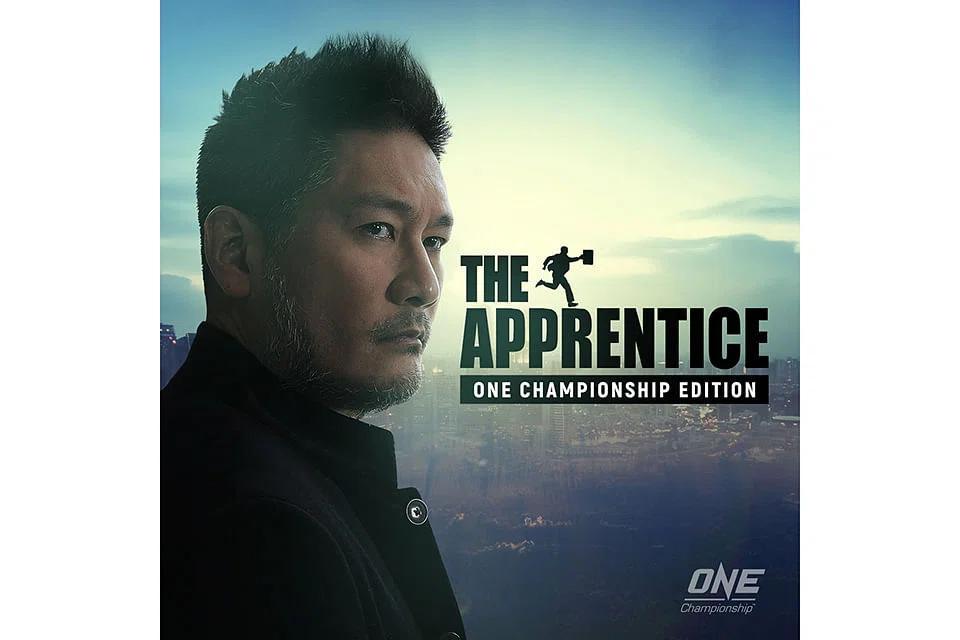
ITS live-audience events have had to take a four-month hiatus amid the Covid-19 pandemic, so mixed martial arts (MMA) promoter and sports media company One Championship has been teasing followers with details of its newest venture - its own edition of The Apprentice, the reality television show once hosted by Donald Trump.
Titled The Apprentice: One Championship Edition, it will be hosted by the firm's chairman and chief executive Chatri Sityodtong.
Sixteen contestants will undergo intellectual and physical challenges to become Mr Sityodtong's new business "protege". Guest CEOs will include Grab chief executive and co-founder Anthony Tan.
Set to air on both traditional and digital platforms later this year, the show will be the first venture of One Studios, a TV-and-film production unit set up in April 2019.
The marketing blitz, however, does not take away the economic challenges of original content production.
One Studios may succeed, or not, but its impact on One Championship's overall business remains to be seen.
Mr Sityodtong has positioned One Studios as a natural extension of One Championship's live sports business. Future projects could include documentaries that tap the firm's MMA intellectual property (IP), he told The Business Times in an interview.
"If you were starting a brand new studio and creating content with no fan base, it's very difficult. One Championship has millions of fans all over the world, so when we launch The Apprentice, we know that the viewership numbers are going to be big."
Meanwhile the show already has brand recognition among a "more mainstream" audience, he said. He declined to comment on whether One Championship has to pay licensing fees to MGM, the US studio behind The Apprentice franchise, but stressed that the project is a "joint IP" and co-owned collaboration. The show has already clinched a number of sponsors, he added.
One Championship's most valuable IP, however, may be the meticulously-cultivated persona of its own founder-chief executive.
Venture capitalist Jeffrey Seah, a media and advertising veteran, said: "In marrying the Chatri brand with The Apprentice's established franchise-machine, the collaboration can potentially unlock the commercial potential ... and might bring in the quality cash revenue streams One Championship has been seeking the past few years."
The challenge will lie in distinguishing the show from newer content formats. "Digital-economy content models might cast a shadow on the aged media model of The Apprentice," Mr Seah added.
Financials in focus
This new pursuit comes as One Championship's existing revenue streams and financials have begun drawing scrutiny, especially as it gains prominence as an IPO hopeful. This is particularly so after the company announced last month that it would axe a fifth of its global headcount.
One Championship's Singapore-incorporated entity Group One Holdings Pte Ltd has so far reported revenues from ticketing, sponsorship and broadcasting income, going by regulatory filings.
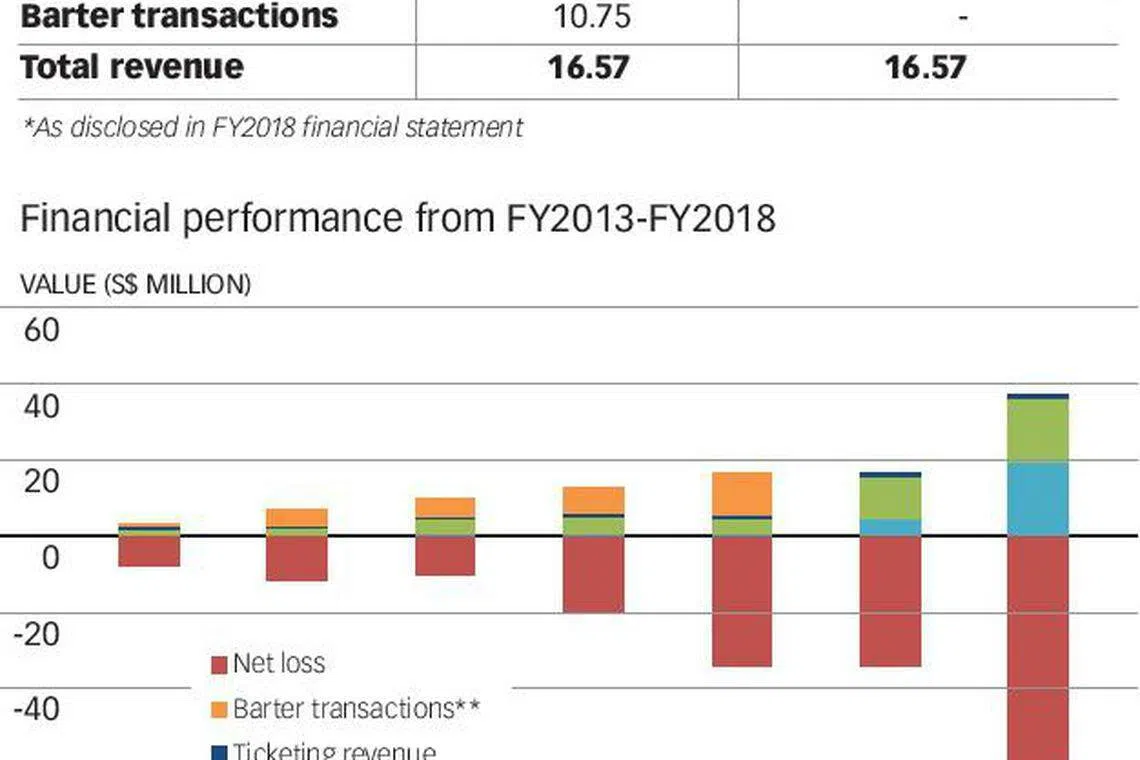
One Championship recorded S$12.8 million in revenue for FY2016, which rose to S$16.6 million in FY2017 and then S$37.3 million in FY2018.
But some have questioned the earnings quality, given that a large proportion of the company's revenue had comprised non-cash "barter transactions".
While barter transactions can be used to account for revenue when the fair value of the goods and services exchanged can be reliably estimated - such as industrial equipment or advertising spots - the public market tends to be wary of companies with significant amounts of barter transactions, because fair values cannot always be ascertained, said a senior accountant.
Angel investor Lim Der Shing reckons that while bartering is a common practice for media owners, he personally prefers that these transactions do not account for more than 5 per cent of total revenue, as they are "frequently at rate card values".
For FY2016, barter transactions made up 52.9 per cent of One Championship's revenue. Barters increased to 64.8 per cent of revenue or S$10.75 million in FY2017.
But in its latest filing for FY2018, barter transactions were no longer reported for both FY2017 and FY2018. While FY2018's revenue rose by 55.5 per cent from the previous year, it is unclear how much of it was barter transactions.
It is also unclear if barter transactions are now captured under the broadcast and sponsorship categories. For instance, the FY2017 revenue figures for these two categories now showed a collective increase of S$10.75 million from when they were first reported.
Asked to elaborate on the numbers, Teh Hua Fung, group president of One Championship, said in a statement to BT: "2017 was three years and also an entire three funding rounds ago, which is an eternity for a high-growth stage company, so we haven't spent much time looking back at our numbers then. Our business and revenues have evolved and changed so much since, so it's not so relevant for us today."
Mr Sityodtong would also not be drawn into discussing what proportion of FY2018's revenue came from barter transactions, except to say that it was a lower percentage than in the previous year.
He said his company's financial position has been misunderstood. "There's a big misconception, people don't understand that we do barter transactions only for essential services for our events to lower the cash cost. For example, if we get free event-production services in exchange for ad spots in One Championship, it's a big positive for our cost structure.
"The same thing goes for flights and hotels. If we exchange our ad spots to get free flights and hotels for athletes and our team, then it's cash that we don't have to pay. So, for us, exchanging ad spots to lower the cash cost of our events is very prudent."
He expects barter revenues to eventually "flatten out" and contribute to less than 5 per cent of revenue around the next five years.
Investors supportive
Investors have continued to signal their confidence. Mr Sityodtong said the company last month raised US$70 million from existing investors, including Temasek Holdings and Sequoia Capital, as well as a new undisclosed investor. He declined to disclose whether the fundraising comprised debt, equity or both.
Temasek and Sequoia declined comment for this story.
One Championship has raised US$346 million to date. Its US$166 million Series D round was led by Sequoia and joined by Temasek and Greenoaks Capital, among others. Its latest filings showed the firm had S$189.7 million in cash at end-2018.
One Championship's cap table also includes household name Osim International, which was an early-stage investor.
Ron Sim, chief executive and chairman of Osim's holding company V3 Group, said his firm did not participate in the latest fundraise. He is nevertheless optimistic about the reality TV show and the overall direction.
"As they progress, I am sure revenues will increase much more and therefore (the firm will turn) cash -flow positive," he said.
"MMA is a growing sport... and has been attracting millions worldwide. Asia is the biggest market for MMA and a founder and user of MMA is Bruce Lee. It is coming home to Asia."
Garage is BT's startup vertical. Read more news, analysis and opinions at bt.sg/garage