
Tencent-backed UK startup's 'Big Friendly Gun' achieves fusion breakthrough
 Add BT as a preferred source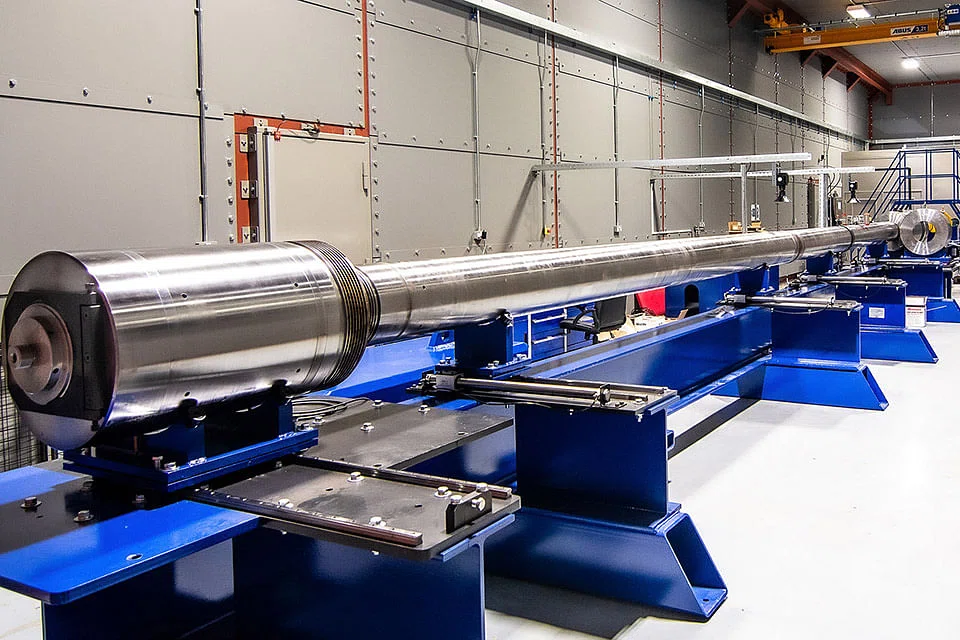
[NEW YORK] A UK startup backed by China's Tencent Holdings proved a novel approach to generating fusion energy in a breakthrough that could slash the technology's cost by providing cheap, clean nuclear fuel.
First Light Fusion is among about 2 dozen startups trying to harness the power that makes stars shine. Some focused on building machines that hold fused atoms together, while the Oxford-based company concentrated on the fuel elements that catalyse the reaction.
First Light used a hypervelocity gun, which engineers call their Big Friendly Gun, to fire a projectile at 6.5 kilometres a second into a fuel target to generate energy. Each thimble-sized target, which is heated and compressed at extreme density, could release enough energy to power an average UK home for 2 years, the company said.
"We have identified a genuine route to commercial fusion," First Light Chairman Bart Markus said in a statement. "Fusion must show it is more than an expensive science experiment."
UK Atomic Energy Authority regulators confirmed the achievement.
Rather than splitting atoms like in traditional fission reactors, fusion plants seek to bind them together at temperatures 10 times hotter than the sun. Doing so releases huge quantities of carbon-free energy with no atomic waste.
Navigate Asia in
a new global order
Get the insights delivered to your inbox.
Globally, more than US$3 billion has poured into private fusion startups such as TAE Technologies and Commonwealth Fusion Systems in the US.
First Light, which also is backed by IP Group and Oxford Sciences Innovation, plans to manufacture the fuel targets for US$10 to US$20 each, and it's working with UBS Investment Bank to explore "strategic options".
"This pursuit of practical and affordable fusion will give us the clean and abundant baseload power that we so desperately need in our effort to address - and hopefully reverse - global warming," co-founder Yiannis Ventikos said.
Laboratories such as the US$3.5 billion US National Ignition Facility have been inducing fusion for years by bombarding gold-encased exotic elements with high-energy lasers.
First Light worked to drive down costs by replacing lasers with gas guns and swapping out precious metals in the fuel. That approach is about 1,000 times cheaper, chief executive officer Nicholas Hawker said.
"The physics is simpler," Hawker said. BLOOMBERG
Decoding Asia newsletter: your guide to navigating Asia in a new global order. Sign up here to get Decoding Asia newsletter. Delivered to your inbox. Free.
Share with us your feedback on BT's products and services

