She turned her Kickstarter dream into a S$2.5m bag company
Mandy Chan hopes to launch her next big idea in San Francisco's tech startup scene
Singapore
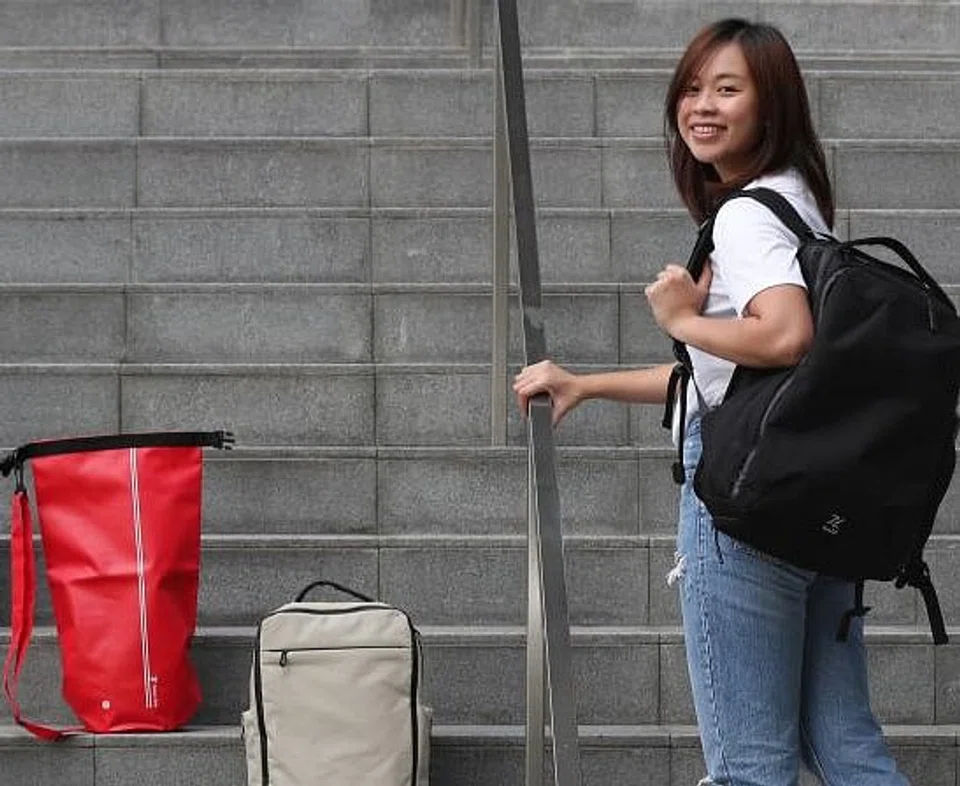
SIX years ago, when she was still a teenager, Mandy Chan co-founded a startup that has since raised more than S$150,000 - all from crowdfunding its products on the Kickstarter platform.
As the now 25-year-old explained, she "did not want to take the traditional route of going to university and getting a job like my parents expected". She added: "I wanted to take a chance on myself."
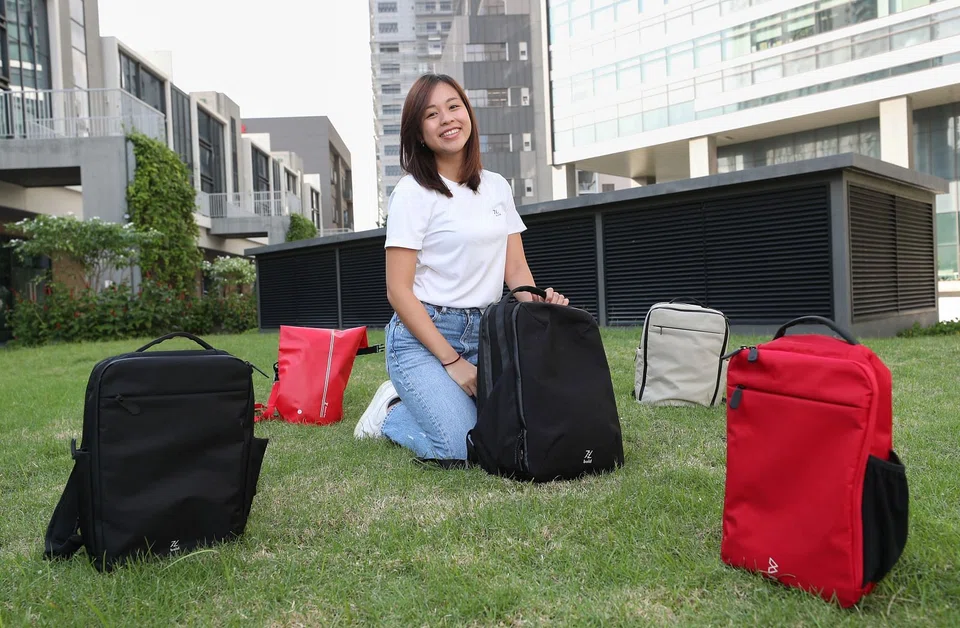
The startup, called The Bold Company, was incorporated in 2016. That same year, Chan took a gap year from university to pursue her business dream - to make backpacks that served multiple functions and could be carried in various ways.
When Bold put its first backpack up for fundraising on Kickstarter in 2017, it hit its S$15,000 goal within just 3 days.
In its fourth and most recent Kickstarter campaign in June, Bold reached that same amount in only 2 hours. This was to raise funds for a newly designed bag, Pytho, that compresses its volume by half with a pull of its straps.
At the end of the 30-day campaign, the company raised S$50,000 and sold 200 bags - at S$347 each - in pre-order sales.
Today, Bold has sold over 10,000 bags and the company is worth S$2.5 million - about 2 to 3 times its revenue, said Chan.
Chan came up with her business idea when she was fresh out of junior college. She was fixated on proving that heavy bags were a problem that needed to be solved for white-collar workers, based on her own uncomfortable experiences lugging a heavy bag daily to her internship at a tuition centre.
She recalled how, as a hopeful 19-year-old, she stood at the entrance of Raffles Place MRT with a portable luggage scale in hand, looking to weigh the bags of anyone who would stop for her. What she found was that many people had bags that weighed close to 7 kg.
She took to the streets again with a trolley-bag prototype she made using cardboard to find out if anyone would consider using her bag. She did not get a single interested response.
Refusing to give up on her bag-on-wheels idea, Chan flew to China to sell her idea to potential manufacturers there. When they met the young girl who had travelled alone, many asked: "Where's your boss?" One manufacturer quoted her S$20,000 for moulds - which she could not afford.
Chan returned to Singapore with no success and lightened pockets, having spent 9 months trying to prove there was a demand for her product.
The gap year she took from her studies came with several caveats. Her parents cut her off financially as they disapproved of the path she wanted to take, and Chan had promised them she would complete her degree if she did not earn a salary equivalent to a fresh graduate's starting pay - around S$3,000 - by the end of the startup's first year.
Unsurprisingly, the company was unprofitable after its first year. Sticking to her promise, Chan enrolled in the Singapore Management University the following year.
Over the next 4 years, she juggled studies and work - although she admits putting a greater priority on her company.
She rented a co-working space a couple of MRT stations away from the university, and would attend classes in the day then commute to work after.
To garner support for crowdfunding campaigns, Chan created "community hype" on social media and personally talked to her customers to gather feedback on her products. She even became friends with returning customers.
Chan said she takes customer feedback seriously, and incorporates their suggestions in her backpack designs.
In 2016, she produced her first viable product - the S$97 Quiver backpack - after rigorous prototyping and travelling to China once more to work with her current manufacturer.
"The working hours get crazy during funding periods. Having a Kickstarter is like having a second job," said Chan, who now wears multiple hats in the company.
On top of managing daily sales, she coordinates photoshoots, produces creative content, talks to clients and liaises with the manufacturer.
When asked her opinion of "hustle culture" - a phrase newly coined by Gen-Zs and Millennials to describe overworking as a lifestyle - she admits she is trying to escape that mentality.
"I had to hustle in the early part of the business when there was really no one else but I realised it is not sustainable," she said. These days, she enforces a "no-working rule" for herself on Saturdays.
"You can sprint a short distance, but you cannot sprint a marathon," said Chan, who is dedicated to her business for the long haul. Her perseverance and zeal paid off when The Bold Company chalked up a 7-figure revenue in 2020.
The pandemic has thrown a curveball in her plans, with this year's revenues falling by almost half due to supply issues.
Through this period, Chan has been able to lean on a support group of close friends and mentors. Her colleagues include Koh Choon Kiat, who is The Bold Company's co-founder and designer; a marketing head; and 2 operations employees who work remotely from the Philippines.
Over time, Chan's parents have also warmed to her startup. Her father bought 10 T-shirts during one of her Kickstarter campaigns. "That was the first time he bought any of my products. He's also a thrifty person who rarely buys things so I was surprised," she said.
The Bold Company is backed by an undisclosed angel investor who reached out to Chan on Facebook when he heard that she had received the National Youth Entrepreneurship Gold Award in 2017.
"He believed in our vision and invested about S$100,000 for less than 10 per cent of the company's shares," said Chan.
The startup has also received some offers from buyers. Chan said is not ready to sell just yet, as she still wants to expand her business abroad. She has plans to move to San Francisco next year and spend at least a year there, to test Bold's products on US retail shelves.
Attracted by the tech startup scene there, Chan hopes to launch her next big idea - an online community-driven platform - in the second half of next year.
This app will allow users to find a partner with whom to complete personal development goals, such as a fitness plan or completing a book, while keeping each other accountable through the process.
Chan is also exploring taking Bold's community into the metaverse, a virtual reality space that some now believe could be the next evolution of social connection.
As the pandemic showed her how more people will continue to live their lives online, she is seizing the opportunity to "create a tribe in the digital world that will stand together in tough times".