What's US$100m? MatchMove deal points to opacity in fundraising

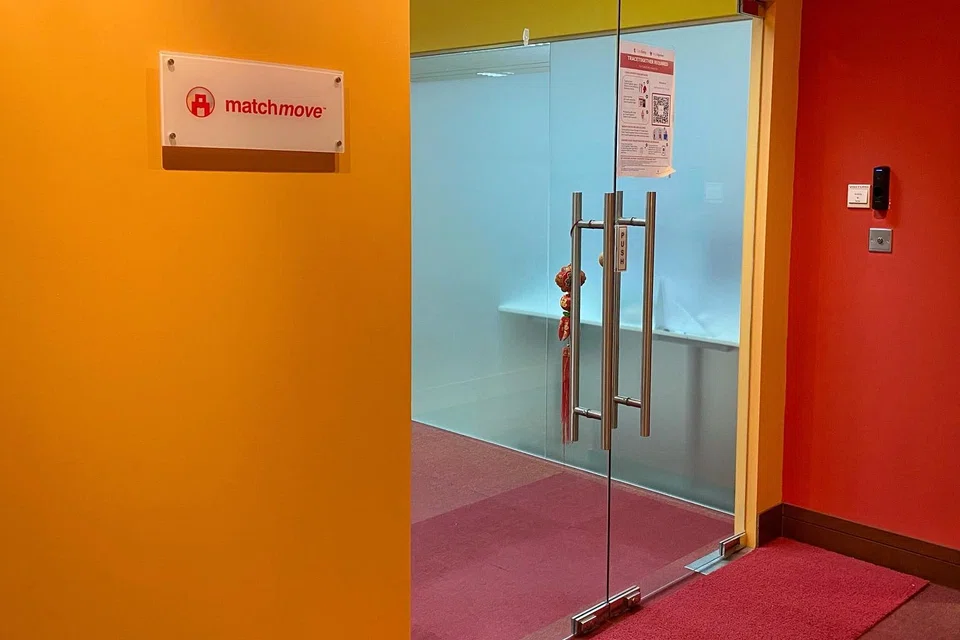
FINTECH startup MatchMove announced in June that it had secured US$100 million from IT services group Nityo Infotech. But more than five months on, regulatory records indicate that no funding has come through.
Nityo, a US-based outsourcing company, agreed to invest in MatchMove on the condition that a majority of the funding is in the form of services instead of cash, sources with knowledge of the matter said.
The deal is unusual because non-cash startup fundraising of this size is rare in South-east Asia and raises questions about the conditions surrounding such transactions and how they are publicly portrayed.
Singapore-based MatchMove helps companies offer digital payments, remittance, loans, insurance and investments to their customers by embedding these services into the companies' platforms or mobile apps.
Filings with Singapore's Accounting and Corporate Regulatory Authority showed that the most recent equity transaction in MatchMove was a sale of shareholder Credit Saison's entire remaining stake, comprising 3.7 million shares, to MatchMove founder Shailesh Naik in July this year.
"Credit Saison was not comfortable endorsing the MatchMove-Nityo transaction," Credit Saison said in a statement to BT, but declined to elaborate.
The Japan-headquartered company had invested a total of US$8 million in MatchMove's equity, according to data platform VentureCap Insights.
A lack of a green light from Credit Saison could imply that MatchMove and Nityo had publicly announced the US$100 million deal before fully seeking shareholder-approval for the potential investment.
Nityo said in a statement in June that its investment will value MatchMove at US$600 million post-money, though people familiar with the deal told The Business Times the valuation has been disputed.
MatchMove, in response to queries from BT in November, said the Nityo transaction is pending approval from the Monetary Authority of Singapore (MAS) as Nityo's subsidiary will become a significant shareholder.
MatchMove holds a major payment institution licence, according to MAS's directory. Under Singapore's Payment Services Act, a person must not become a 20 per cent controller of a licensee without first applying for and obtaining the approval of MAS.
The deal with MatchMove might not be the first time Nityo tried to attract companies with non-cash investment. Industry sources told BT that Nityo's CEO Naveen Kumar had approached their startups, offering to make an investment that included a non-cash component such as services or a promise to help increase the startup's revenue.
The parties walked away from the offer. Nityo declined to comment on the matter.
"In-kind" transactions
Nityo makes its investments through its corporate investment arm KFC Ventures, a relatively obscure name in venture capital (VC). KFC Ventures' website lists 12 portfolio companies, including companies owned by Nityo. It most recently did an equity investment of US$1 million in Singapore-based peer-to-peer car sharing platform Drive lah in October, according to VentureCap Insights.
An advisory professional told BT that non-cash investments are uncommon in the startup world.
"Cash is real, while other 'in kind' services are hard to value... You need extra due diligence and negotiation," he said. "Follow-on investors also question the commitment of the investor and might be hesitant to follow on or lead the next round."
But existing investors sometimes agree to non-cash dilution of their stakes if the "value in kind" is from a branded entity and if there is enough of a cash component in the investment, the professional added.
Sam Lee, head of mergers and acquisitions at advisory firm Paloe, has seen companies procure services and goods in exchange for equity.
"They call it 'sweat capital'. This is not limited to the technology sector. During the China boom, it was common for accounting firms to take equity stakes to help China companies to prepare for an initial public offering," he said.
"While it is common, we need to ensure that founders do not give up too much too early. This would hurt future fundraising rounds, for instance if founders end up owning too little shares relative to similar companies in the same phase."
MatchMove's potentially premature funding announcement and lack of disclosure about the nature of the investment agreement points to a larger trend of opacity and hype in the startup world.
Dmitry Levit, founder of VC firm Cento Ventures, said: "It's not unusual to structure an announcement that conflates equity, debt, and non-monetary arrangements into one headline number - unfortunately. Look at all the lending companies announcing their debt and equity raises with just one number."
Startups have included secondary sales of shares in their fundraising figure as well, as VentureCap Insights has pointed out. Secondary sales are transactions between an existing shareholder and another investor. None of that money actually goes to the startup.
Lagging financials
MatchMove was last valued at US$335.8 million, according to data provider VentureCap Insights. Kumar in June said he believes the company is the most qualified, out of those in South-east Asia's fintech space, to hit US$1 billion in valuation and become a tech unicorn.
But the startup's financials paint a vastly different picture. MatchMove's revenue in 2019 was mostly flat at US$7.7 million, driven heavily by transaction-based income. The company began shifting to a software-as-a-service model last year; more recent financials are unavailable.
Regulatory records also show operating loss in 2019 deepened to US$9.5 million from US$6.5 million after higher general and administrative costs and employee benefits expenses. Cash drain from operations deepened to US$7.1 million from US$3.5 million.
Asked about the non-cash component of Nityo's investment, MatchMove said: "Working with a global technology services provider with 18,000 staff in 36 markets and a hugely impressive client list will bring multiple benefits to MatchMove. The fact that Nityo's interests will be closely aligned with ours through their equity holding is very beneficial to MatchMove, our employees and our other shareholders."
MatchMove's largest shareholder is Vickers Venture Partners, which holds a more than 20 per cent equity stake in the company.
The VC firm said of its decision to accept the dilutive non-cash investment: "Nityo is a strategic investor and we value their investment in Matchmove. They are already contributing to the development of MatchMove across South and South-east Asia in ways that a financial investor would not have been able to."
New Jersey-based Nityo was founded in 2006 by current CEO Kumar. Its business spans services such as infrastructure management, staff outsourcing, system integration, application software development, IT consulting and cloud computing.
Before setting up Nityo, Kumar was vice president of software services company APAR Infotech, according to his LinkedIn profile. US-based APAR Infotech was sold in 2003 to Ness Technologies, an Israeli IT services company backed by Warburg Pincus, in a share swap valued at US$78 million.
Kumar spent two years at Ness before starting Nityo. In Singapore, a Nityo Infotech Corp-owned entity, Nityo Infotech Services, registered revenue of S$119.9 million in 2020 and a profit after tax of S$11.1 million, according to data platform Handshakes.
Other backers of MatchMove include foreign-registered entity Iconic World and Singapore-listed Singapura Finance. MatchMove's subsidiary and Singapura Finance were part of a consortium last year that applied for a digital banking licence in Singapore.
After the bid failed, Singapura Finance sold its stake in the subsidiary in exchange for a further 0.3 per cent stake in MatchMove, from a stake of 1.6 per cent.