

Will GrabPay lose lustre as banks tighten rewards for top-ups?

Claudia Chong
Singapore
ALL good things must come to an end. Users of mobile wallet GrabPay and its extension - the physical GrabPay Card - are fast learning this as more and more banks stop credit card rewards for GrabPay top-ups.
Up till recently, consumers have benefitted from being able to top up their Grab mobile wallets using credit cards that offer rebates or rewards with these top-ups.
Some users then make payments using GrabPay to earn Grab reward points, effectively stacking their Grab rewards and credit card rebates to maximise the value of each transaction.
A user of UOB One, which offers up to a 10 per cent rebate on Grab transactions, told The Business Times that he uses the card solely for GrabPay top-ups and has accumulated S$800 in rebates since signing up in September 2019.
"You don't need to use all of the (stored value) in the same month when you top up GrabPay. If you directly use your credit card to pay, you would need to be mindful to use it within a given window in order to earn the rebates," said the user, who declined to be named.
Enticing the rebates may be, but who's bearing the costs?
UOB on Feb 13 updated its terms and conditions for its UOB One credit card to say that Grab mobile wallet top-ups will be excluded from the awarding of cash rebates from March 16. American Express (Amex) also said it will stop awarding points for GrabPay top-ups from March 1 for credit cards issued in Singapore.
Other cards that have already done away with rewards on GrabPay top-ups include the DBS Woman's World Card, the UOB PRVI Miles Card, Amex and Mastercard, and Bank of China's BOC Elite Miles World Mastercard.
And since October last year, all OCBC Mastercard credit cards no longer issue rebates or rewards for top-ups to the GrabPay wallet.
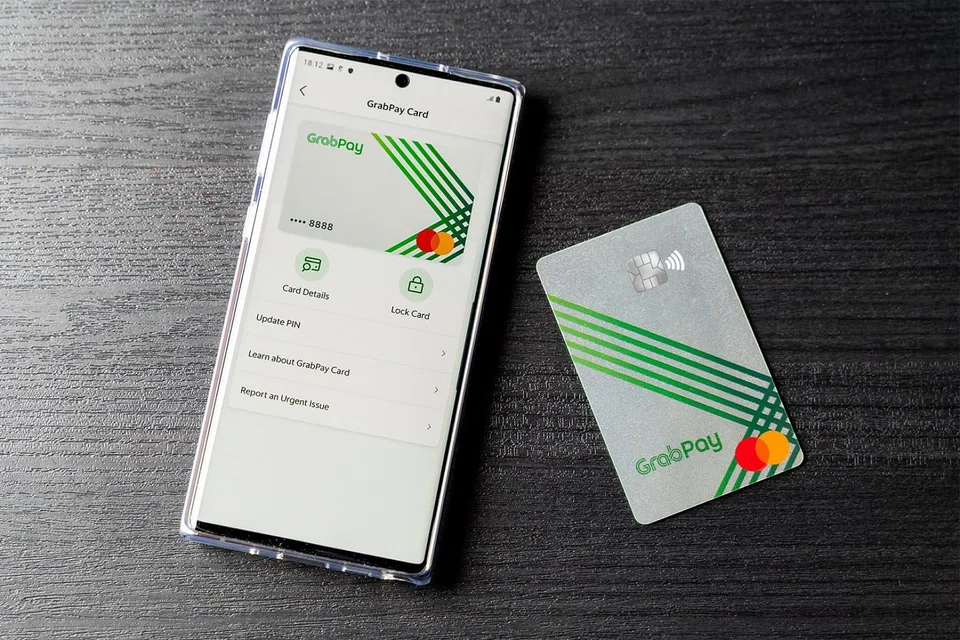
Grab launched the GrabPay Card - which is linked to the balance in the GrabPay wallet - just three months ago in December, boosting GrabPay's attractiveness by allowing users to pay a vastly wider pool of over 50 million merchants globally that accept Mastercard.
"Previously, Grab transactions were mostly limited to either in-app purchases or physical locations where QR codes are accepted. The GrabPay Card allows Grab to capture data from nearly any retail transaction offline or online," said Zennon Kapron, director of fintech consulting firm Kapronasia.
A surge in GrabPay usage gives a boost to Grab's super app strategy, which relies on having access to reams of data on consumer transactions.
But consumers will soon have fewer chances to double-dip into the rewards pot, and Grab must now find better ways to make its GrabPay Card more valuable to consumers, market watchers said.
DBS and UOB did not respond directly to queries from BT about the exclusion of GrabPay top-ups for credit card rewards, or how rebates are typically funded.
Vincent Tan, head of credit cards at OCBC Bank, explained that rebates and rewards are usually funded by the bank. There are also cases where the bank has specific collaborative efforts with merchants - those could be jointly-funded with the partners.
To be sure, not all GrabPay top-up transactions were actively excluded by the banks, said Aaron Wong, founder of online portal The Milelion, which discusses ways to maximise rewards.
Some were due to a change in merchant category code (MCC), a string of numbers used by payment networks to identify the type of transactions on credit and debit cards. Rebates and rewards are typically awarded based on MCCs.
When the MCCs for GrabPay top-ups were changed by Amex and Mastercard in December, a few cards instantly stopped awarding points or cashback for that transaction.
The move by banks to exclude top-ups of mobile wallets such as GrabPay from rebates is not new in the industry. E-wallets such as Singtel Dash and YouTrip have also gotten the same treatment.
Mr Wong pointed out that it does not work in the banks' favour to give bonus points for GrabPay top-ups if users are using their GrabPay Cards instead of credit cards for daily spending to maximise rewards. This would mean that the transaction data lies with Grab and not the banks, he said.
For now, it is not an "either-or" proposition for consumers. But if GrabPay top-ups become totally excluded from credit card rewards, the GrabPay Card is likely to become a competitor to credit cards in Singapore, which already have a strong rewards system and active user base, Mr Wong said.
Grab might suffer a hit to its super app strategy if it is unable to retain the attractiveness of its card. Consumer transactions are a data trove for the firm, which is gunning for a digital banking licence with partner Singtel - the more visibility it has over user preferences and lifestyles, the more streamlined and personalised its services and products can be.
Grab declined to disclose how the volume and value of GrabPay transactions have grown, but said about three-quarters of Grab users in Singapore use GrabPay. GrabPay was also the most commonly used e-wallet in Singapore over the two years to the end of Q3 2019, according to a report by meta-search website iPrice.
How long will this last? Grab announced on Jan 20 that it will reduce the number of reward points users can earn in a transaction from March 2, in some cases by up to 60 per cent. This hints at the challenge of sustaining a rewards system while the company is loss-making and transaction volumes are ballooning, market watchers previously told BT.
But the company said it believes GrabPay remains attractive to users. "We are also exploring different ways to keep our users engaged while earning points and rewards beyond their usual transactions," a Grab spokesperson said. Initiatives include challenges, flash sales and festive campaigns.
Grab's app user interface upgrade also simplifies the way customers manage their payments, explore new services and products, and review their spending activity.
Currently, over 75 per cent of GrabPay Card users are actively using the card every month, Grab said.
Mr Wong believes the current GrabRewards system is not strong enough to take on the banks' rewards programmes. If the GrabPay Card is to remain attractive, it would have to compete on other aspects such as card benefits, or bonus credits or reward points on top-ups.
Currently, users who book their flights with the GrabPay Card can have airport lounge access should their flight be delayed, under Mastercard's Flight Delay Pass service. Grab also offers phone insurance if the card is used to pay phone bills.
Yeap Ming Feng, head of growth at personal finance firm Seedly, is sanguine about the GrabPay Card's prospects.
"GrabPay Card can potentially be a huge competition to credit cards in Singapore, simply because of the ecosystem that Grab has built here. Having dominated the ride-hailing industry, and having a substantial market share in the food delivery business, Grab can basically build on more benefits and perks to their users with the ecosystem they have right now."
The card might appeal to millennials in Singapore who do not have a credit card, said Mr Kapron of Kapronasia, though he believes this would not be a large pool to tap.
As it is, the GrabPay Card might have a better chance at success when it is rolled out in other South-east Asian countries with a larger unbanked and underbanked population, he said.
TRENDING NOW

First Resources blames El Nino, outside fires for Kalimantan hotspots amid haze scrutiny

High Court rules against Julius Baer’s Singapore trust arm in US$50 million family trust dispute

Singapore key exports jump by higher-than-expected 68.4% in September, led by non-electronics

MSCI proposes downgrading Indonesia to standalone market status

