



Apac telcos seek pricing power, economies of scale through M&A
Global telco M&A deal value grows 48 per cent year on year to US$203 billion in 2021: Bain & Company

Singapore
TELCOS in the Asia-Pacific region are consolidating with their peers more aggressively as they pursue growth opportunities and try to spread out the cost of 5G capital expenditure over a larger customer base.
According to a report by Bain & Company, telco M&A deal value globally grew 48 per cent year on year to US$203 billion in 2021.
The consultancy's telecommunications practice partners Kiran Karunakaran and Tony May said the drive to improve economies of scale, particularly around building and running networks, has been driving consolidation.
They also noted that regulators in markets with 4 or more players appear increasingly open to full mobile consolidation.
The cost of new 5G-related upgrades is one major push factor.
Fitch Ratings analysts Nitin Soni and Duncan Innes-Ker said in a report published on Mar 1 that companies will need to invest in 5G spectrum and infrastructure to preserve their competitive positions.
"High capex requirements to roll out 5G networks, coupled with intense competition, have increased the pressure for industry consolidation in Apac, particularly for firms that are not market leaders," they said.
Earlier this year, Indonesian telcos Indosat and Hutchison 3 Indonesia completed a merger to form Indosat Ooredoo Hutchison. Indosat was already the second largest telco in Indonesia before the merger, with a market revenue share of 16 per cent as of the first half of 2021, according to Fitch.
But it was significantly smaller than Telkomsel, which had 53 per cent of the market. Hutchison, meanwhile, was ranked 4th, with a share of 9 per cent.
The combined entity now has around 26 per cent of revenue market share.
The combination has resulted in a stronger company, according to Fitch Ratings analysts. They have raised Indosat's standalone credit profile to 'bbb-' from 'bb' following the merger.
They noted that the combined entity would improve its revenue market share to around 26 per cent, retain its spectrum assets, reduce leverage and have greater financial flexibility.
"We expect its competitive position to improve, enabling it to compete more effectively with market leader Telkom," the analysts said.
Scale is increasingly necessary for telcos to stay ahead of their competitors. Fitch's analysts noted that in India, Reliance Jio and Singtel associate Bharti Airtel have grown their market share at the expense of the third-largest telco, Vodafone Idea, which is struggling to invest in capex to stay competitive.
Mergers can also lead to better networks and improved quality of service, making them desirable to regulators.
Sai Tunuguntla, managing director at consultancy Alix Partners and co-leader of telecoms, media and technology for the Apac region, noted that in India, after several consolidations, telcos were able to provide better call quality with fewer call drops as their networks were less fragmented.
But regulators will also differ on their positions depending on how many players there are and the level of competition.
"The onus will be on the telcos to show that the cost savings would help fund the necessary investments that would eventually benefit consumers," said Credit Suisse South-east Asia research analyst Johnson Loh.
He noted that regulators so far have shown themselves to be comfortable with a 3-player market. But it remains to be seen if they would be happy with a 2-player market.
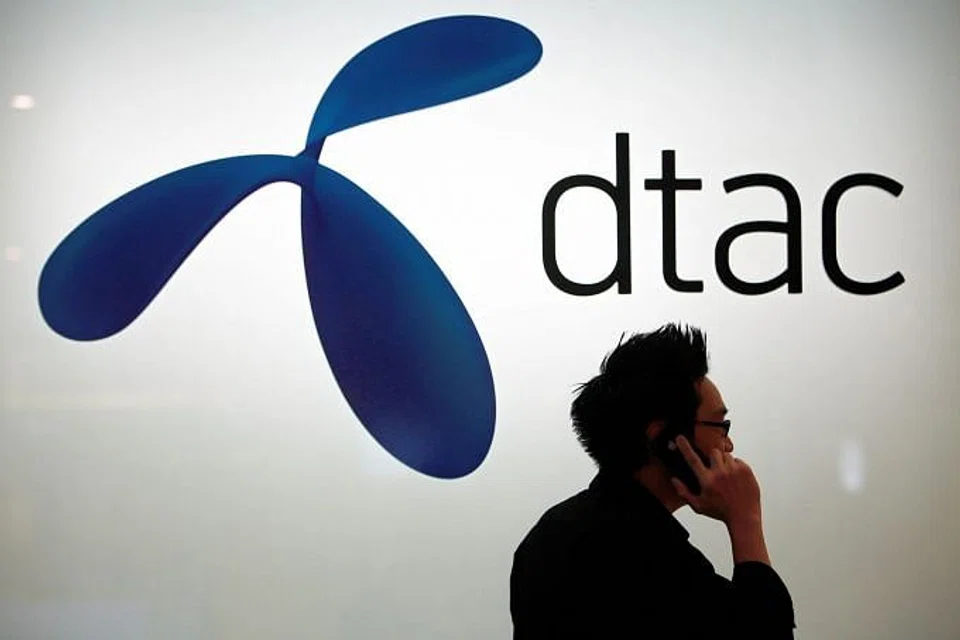
The first test will be in Thailand, where regulator approval is being sought for the proposed merger of Telenor majority-owned Total Access Communication (Dtac) and CP Group's True Corporation.
Fitch's data showed that both Dtac and True Corp had a combined service revenue market share of 53 per cent, while Singtel associate Advanced Info Services held the remainder as of the first 9 months of 2021.
Credit Suisse's Loh noted that inorganic options for growth will be attractive to telcos as they seek to rationalise their asset bases, scale up core businesses to drive synergies and invest in new capabilities for growth.
"Scale, in our opinion, will become an even more valuable competitive advantage as it allows telcos to drive tangible cost efficiencies and better manage cash flow amid an uncertain environment," Loh said.
Greater convergence between fixed and mobile networks is another driver of consolidation. Bain & Co's analysts said mergers of companies providing different services could improve customer experiences and operating synergies.
An example of this would be broadband Internet and cable TV provider Link Net's acquisition by XL Axiata and its parent company, Axiata Group, in Indonesia for US$606.2 million.
Link Net's president director and chief executive Marlo Budiman said the acquisition would provide significant opportunities for its partners to provide converged fixed-line broadband and mobile service to residential and enterprise customers.
Markets that are most likely to see consolidation are those that are crowded and facing slowing growth, said Alix's Tunuguntla.
He sees Hong Kong as one market that is ripe for consolidation. The city has a population of 7.5 million people served by 4 mobile network operators and 24 mobile virtual network operators as of March last year.
While telcos have explored other business opportunities in the past to diversify their revenue streams, Tunuguntla said that he has yet to see telcos successfully monetise their business-to-consumer segment through these adjacencies.
"They try a few options; but if it doesn't work then they need to take their next option, which is M&A," he said.
Bain's analysts also said that while there will continue to be pressure to improve industry structures, 2021 was a "bumper year" for announced deals and there could be a reduction in activity as options remain more limited.
"We do expect to see the volume of deals continue to grow, but value is tough to predict, and likely to be more modest than 2021 given the size of some of the deals announced last year," they said.
Decoding Asia newsletter: your guide to navigating Asia in a new global order. Sign up here to get Decoding Asia newsletter. Delivered to your inbox. Free.
Copyright SPH Media. All rights reserved.
TRENDING NOW

Fed hike throws Singapore banks a margin lifeline; UOB likely to benefit more

He built the Vingroup empire. Now South-east Asia’s richest man is handing some key roles to his sons
Chagee, Mixue and Luckin won the market. Sustaining their edge is the harder part

Canada is upping oil flows to Asia, but South-east Asia’s refineries aren’t ready to handle them yet

