Asia's 4 tigers have matured, but still burning bright

Angela Tan
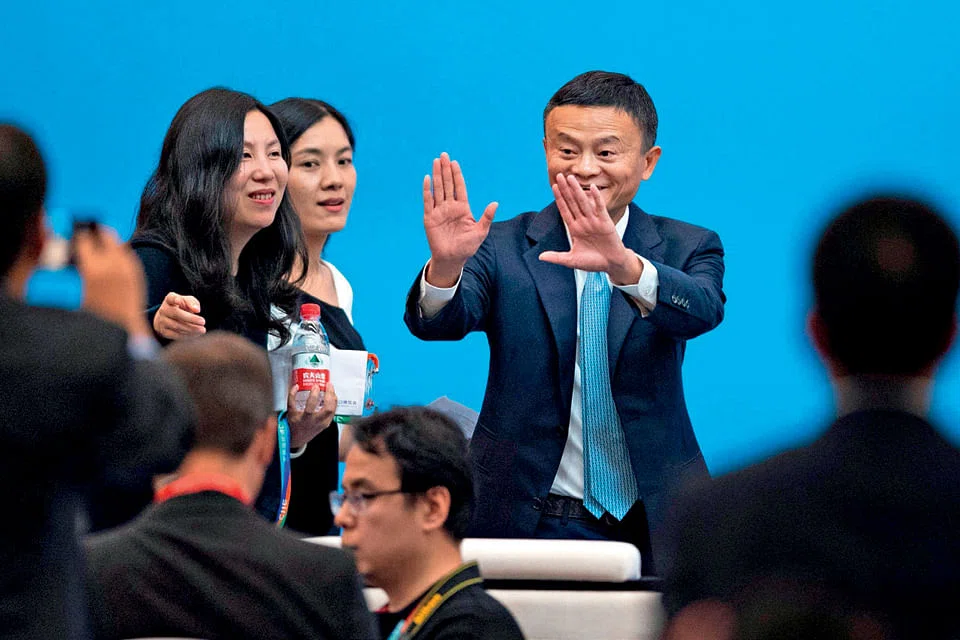



ASIA'S 4 early tiger economies of South Korea, Taiwan, Singapore and Hong Kong may have matured and been dethroned by China, but strategists say each continues to hold their own in world markets in the Year of the Tiger.
Instead of discounting them, investors ought to consider them carefully when screening the globe for opportunities, Martin Hennecke, head of Asia investment advisory and communications, St James's Place Wealth Management, told The Business Times.
"Firstly, China's economic success can both be a challenge but also a boon for the tigers, as the country's economy has grown to arguably the world's largest, when considering purchasing power parity based gross domestic product (GDP) rankings, certainly making it the key player in regional trade, further supported by the RCEP which has come into effect this year."
The RCEP, or Regional Comprehensive Economic Partnership, is a mega trade agreement signed by 15 countries, which collectively cover about a third of the world's population and make up 30 per cent of the global economy. It includes China, but excludes the US, and came into effect on Jan 1, 2022.
The trade pact opens up complementary opportunities for the tiger economies as long as they play to their respective unique strengths, and take advantage of opportunities where they can best add value. These include facilitating the Belt and Road Initiative and other developments related to China's opening up and globalisation drive.
Secondly, Hennecke said valuations are not demanding compared to the US. This is especially so for equity markets of South Korea, Singapore and Hong Kong with their low price-to-book ratios, an indicator of valuations. The China A-shares are also trading at a premium of about 40 per cent to their Hong Kong H-shares.
"This implies investors should be careful to consider listings across different exchanges to avoid overpaying," he said.
Investors should also bear in mind that a country's economic growth rate does not necessarily translate into stock market returns, especially when growth is slowing down in mature markets.
Significant changes have taken place since the export-led boom of the 1990s, when these economies were the front-runners in terms of growth and foreign direct investments (FDI). Their rapid industrialisation, trade and development of finance led to high rates of sustained growth, spurred by a stable political environment, strong governance, highly educated and skilled young workforce, and export-oriented economic policy.
Now they have to deal with ageing populations, rising automation and technological advances.
"In addition, rising standards of living and cost of manufacturing are closing the gap to the West. So all these factors combined resulted in a shift in the overall economic orientation for the 4 tigers," said Thomas Meichl, head of advisory at Kristal.AI, a digital wealth platform.
Local incomes, home sales and household consumption have risen along with economic growth and the development of more expensive, knowledge-intensive service sectors such as finance and technology.
Nick Marro, lead, global trade at EIU, said: "Higher input costs are challenging for low cost manufacturing, where margins are already thin."
Competition from other Asian emerging markets and China, in particular, is also very consequential. South-east Asian "Tiger Cub" economies - notably Vietnam and Indonesia - are leveraging their lower labour and operating costs that once made the 4 Asian tigers so attractive, luring manufacturing investment away from these more expensive Asian markets. China too enjoys strong manufacturing and logistics networks, which have been enhanced by its strong industrial clusters and various free-trade zones. The growth of its consumer has made China an important market in its own right.
"This has incentivised many global companies to set up shop in China, not just to use it as a manufacturing-for-export base, but also to tap into its vast consumer market," he said.
Despite these challenges, the 4 original tigers have carved out their own niches. Hong Kong and Singapore have made successful transitions to become world-leading financial hubs, while Taiwan and South Korea are known for their state-of-the-art manufacturing industries.
John Tsai, head of growth equities at Eastspring Investments, sees regional manufacturers using digital technologies to boost output and efficiency as well as build future-fit supply chains as they look to capitalise on FDIs reallocation away from China.
Tsai reckoned Taiwan's technical dominance in the global semiconductor foundry industry is unlikely to be rivalled in the near term, as "it comes from decades of intentional policy design and private sector entrepreneurship".
Taiwan's growth outlook in 2022 got a shot in the arm after Taiwan Semiconductor Manufacturing Co (TSMC) revealed plans to invest US$40-44 billion on new plants to ease the chip shortage. That is equivalent to 5 per cent of Taiwan's US$760 billion economy.
Marro expects the global chip shortage to remain a problem until end-2022, benefiting exporters from Taiwan, South Korea and other Asian markets in the interim.
Singapore is allocating more resources towards info-communications technology procurement and accelerating the adoption of online channels in many sectors from banking, education, healthcare to logistics and data centres.
The shift to sustainable investments will also spur growth, Tsai said. In Singapore, resources are being ploughed into the new Coastal and Flood Protection Fund to deal with climate change. In South Korea, its Hydrogen Economy Revitalisation Roadmap has catalysed companies to announce investment plans worth more than 43 trillion won (S$48.1 billion) by 2030 as the nation seeks to cut greenhouse gas emissions by 40 per cent come 2030, from 2018 levels.
The transitions, and shifts away from goods and back to services, will not be easy for everyone given each nation's Covid-19 approach. Marro said South Korea and Singapore which have moved away from a strict zero-Covid strategy could see a rebound in household expenditure. In contrast, Hong Kong and Taiwan, with their zero-Covid stance, will see recurring disruptions to retail activity due to lockdowns and social distancing will continue to erode consumer activity and confidence.
"That suggests a more challenging uphill climb, as officials try to strike a balance between effective healthcare policy and safeguarding people's livelihoods," Marro said.
And the new OECD (Organisation for Economic Co-operation and Development) tax regime, along with its minimum tax rule, will mean these nations which have historically depended on tax incentives to lure FDIs will have to compete using non-tax incentives. On this front, Singapore is looking strong with its ease of doing business, robust rule of law and stable political environment.
"Hong Kong however, is more of a wild card with the ongoing integration with China, and this has been showing up in recent data," said Meichl. He added that Singapore is further along its reopening than Hong Kong, giving it a big advantage as the 2 cities continue to compete for the international financial hub status.
"Singapore emerges even stronger now as we witness large fund outflows from Hong Kong to Singapore. Also, Singapore continues to rise as a regional - if not global, destination for high-net-worth individuals and family offices as they seek a safe haven for investment and take advantage of the zero capital gain tax here."
Decoding Asia newsletter: your guide to navigating Asia in a new global order. Sign up here to get Decoding Asia newsletter. Delivered to your inbox. Free.
Copyright SPH Media. All rights reserved.